






















































Generate your free Human Design chart—personal, relationship, or transit—and start exploring your design with guided insights.
Understanding the Logic Circuit
Jul 27, 2026
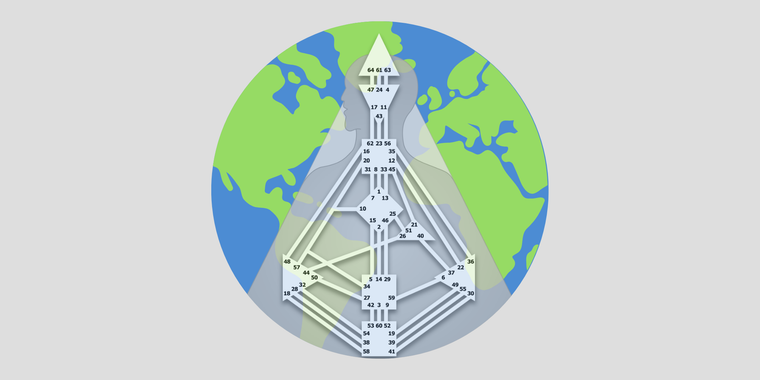
The Understanding (Logic) Circuit is one of two major circuits within the Collective Circuit Group. Its fundamental purpose is to observe the world, identify patterns, test whether those patterns hold up under scrutiny, and share what proves reliable with the wider collective.
Understanding the Logic Circuit
Where other circuits are concerned with personal empowerment or tribal support, Logic is oriented outward toward visualizing the future, asking a single persistent question: what can we count on? This circuitry is not interested in what feels true or what has always been done. It is interested in what can be proven, repeated, and refined.
Within the Collective Circuit Group, the Understanding Circuit forms one half of humanity's shared intelligence, providing the structural, evidence-based foundation upon which durable progress is built.
Logic in Everyday Life
We encounter logical circuitry in the quiet rhythms of everyday life. Someone notices that their morning goes more smoothly when they follow a particular sequence, and begins to protect that sequence as a reliable pattern. A recurring problem at work gets traced back through each step to find where the process broke down. Planning a week ahead, sorting information into categories, questioning whether a system that worked last year still works now: these are all the logical mind at work in ordinary life.
The Channel of Rhythm (5-15), connecting the Sacral and G Centers, powers much of it, describing an inner timing that, when honoured, allows life to unfold with ease and keeps a person naturally attuned to the larger patterns of how things move and cycle. The Understanding Circuit operates as a steady, observational presence, quietly cataloguing what works, what doesn't, and what might be improved.
The Scientific Mind
The sciences, medicine, engineering, mathematics, and technology are where the Logic Circuit becomes most visible, because they formalize the very process it describes. Every controlled experiment follows the same essential structure: form a hypothesis, test it, assess the results, refine the hypothesis, and test again.
The Channel of Logic (63-4), connecting the Head and Ajna Centers, embodies this scientific mind at its most precise, a design of mental ease mixed with doubt that constantly filters patterns to verify whether they are consistent and generates formulas that must be tested before they can be trusted.
The mirror to that mental pressure, the physical pressure of the Channel of Concentration (9-52) describes the capacity to still the body and senses, focus energy with precision, and gather every pertinent detail required to perfect a pattern. Modern medicine is built on this kind of iterative, detail-attentive process, from the development of medicinal drugs to the calibration of surgical techniques. Mathematics is perhaps the purest expression of it, a discipline where nothing is accepted as true until it has been demonstrated to hold across all relevant conditions.
Beyond the Technical Disciplines
It would be a mistake to confine Logic to the technical disciplines. An architect designing a building must reconcile aesthetic intention with load-bearing realities, material properties, and the long-term needs of the people who will use the space. A musician perfecting their craft and an engineer refining a system are drawing on the same underlying process, which the Channel of Wavelength (48-16), connecting the Spleen and Throat Centers, names as talent: intuitive depth combined with committed practice until skill eventually transcends the pattern itself.
Business strategy at its best is applied logic, reading market patterns, testing assumptions, and building models that can adapt as conditions change. This is clearly seen in the Channel of Acceptance (17-62), connecting the Ajna and Throat Centers, with its capacity for organizing information conceptually, substantiating it with facts, and expressing the bigger picture through carefully assembled detail. Logic, in this sense, is not a narrow technical skill. It is one of the foundational processes through which human civilization builds anything meant to last.
The Necessity of Doubt
The Logic Circuit carries within it an inherent and necessary tension, and that tension is doubt (Gate 63). When a doubt cannot be resolved, when there is no workable formula yet available, the pressure that builds can create genuine anxiety and a restless mind, a dynamic the Channel of Logic (63-4) makes explicit. Logical understanding is never declared final, and every pattern that has been validated remains subject to re-examination as new evidence accumulates.
The Channel of Judgment (58-18) adds another dimension through its design of insatiability, a sense that things can always be better and a vigilance for what is flawed or out of balance that never fully switches off. This is not a weakness in the logical process but its most essential feature. The skepticism built into this circuitry is what prevents premature certainty from calcifying into dogma, and the discomfort of unresolved doubt is the pressure that keeps the process moving forward.
Logic as Evolutionary Advantage
From an evolutionary perspective, the Logic Circuit represents one of humanity's most significant adaptive capacities. The ability to recognize a pattern, predict its likely continuation, test that prediction, and share the results with others is what allows knowledge to accumulate across generations rather than being lost with each individual life.
Fueling this is the Channel of Judgment (58-18), and specifically Gate 58, the Gate of Vitality, which carries the drive to challenge conditions and patterns that need improving and provides the energy that ensures humanity's safe progress into the future. The Channel of Concentration (52-9) supports the same work through its quality of determination, the perseverance to gather all pertinent details and perfect the pattern of any endeavour worth focusing on.
Where other species adapt primarily through biological change across long timescales, human beings can adapt through shared understanding within a single generation, building a body of reliable knowledge that grows more robust over time.
Logic in Leadership and Governance
Leadership and governance show both the highest expression and the clearest limitation of logical circuitry in collective life. Its most direct form is the Channel of the Alpha (7-31), connecting the G and Throat Centers, a design of leadership oriented toward the collective with the ability to understand patterns and trends and point others toward a more reliable future.
Crucially, that influence must be recognized and selected rather than imposed, a reminder that logical authority in public life earns its legitimacy through demonstrated understanding rather than self-appointment. Logic in governance tends to be most effective when paired with genuine responsiveness to the full range of human needs that data alone does not always capture, and when its leaders remain in service to those they were elected to serve.
Famous Chart Example: Terence Tao
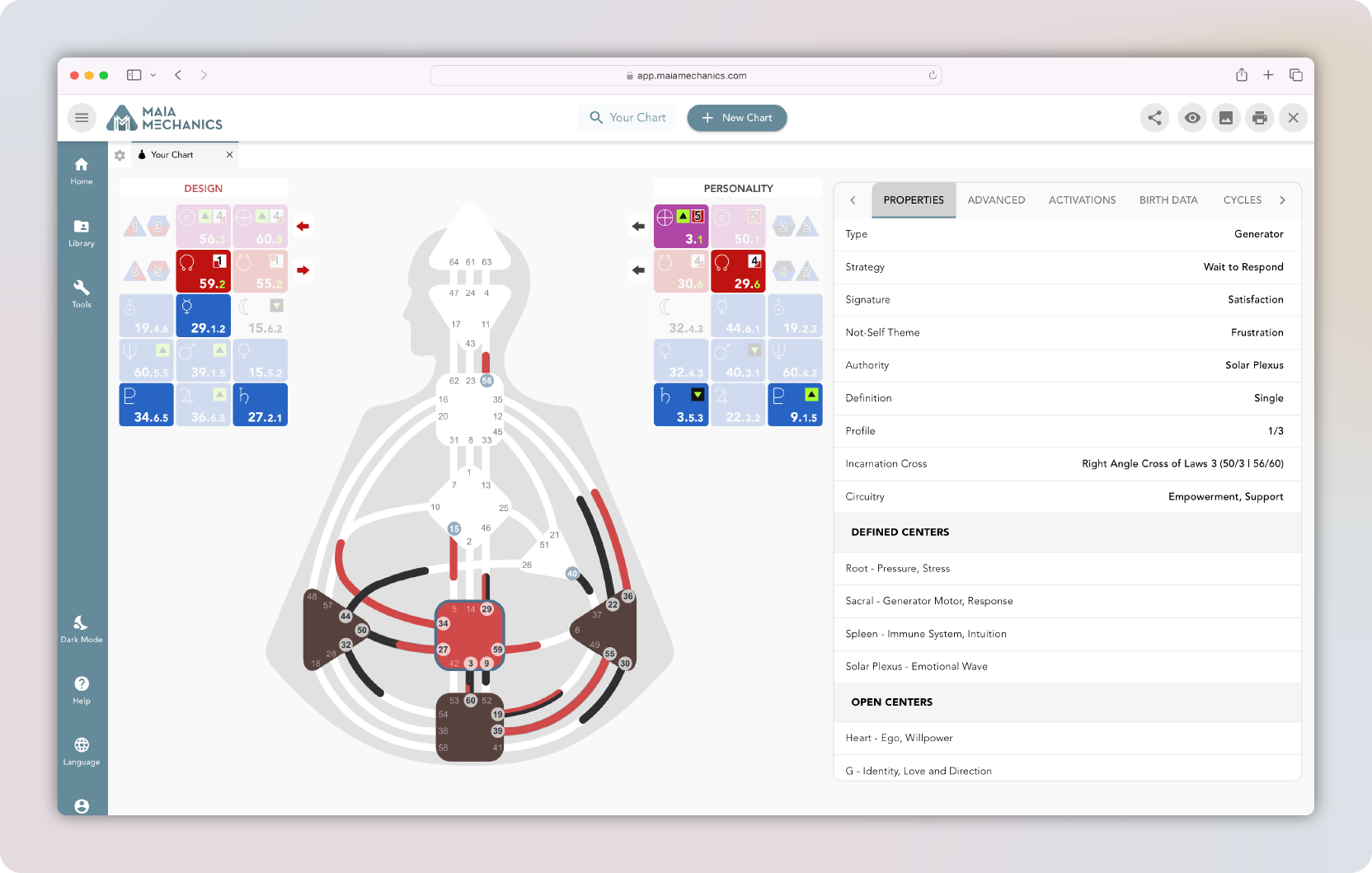
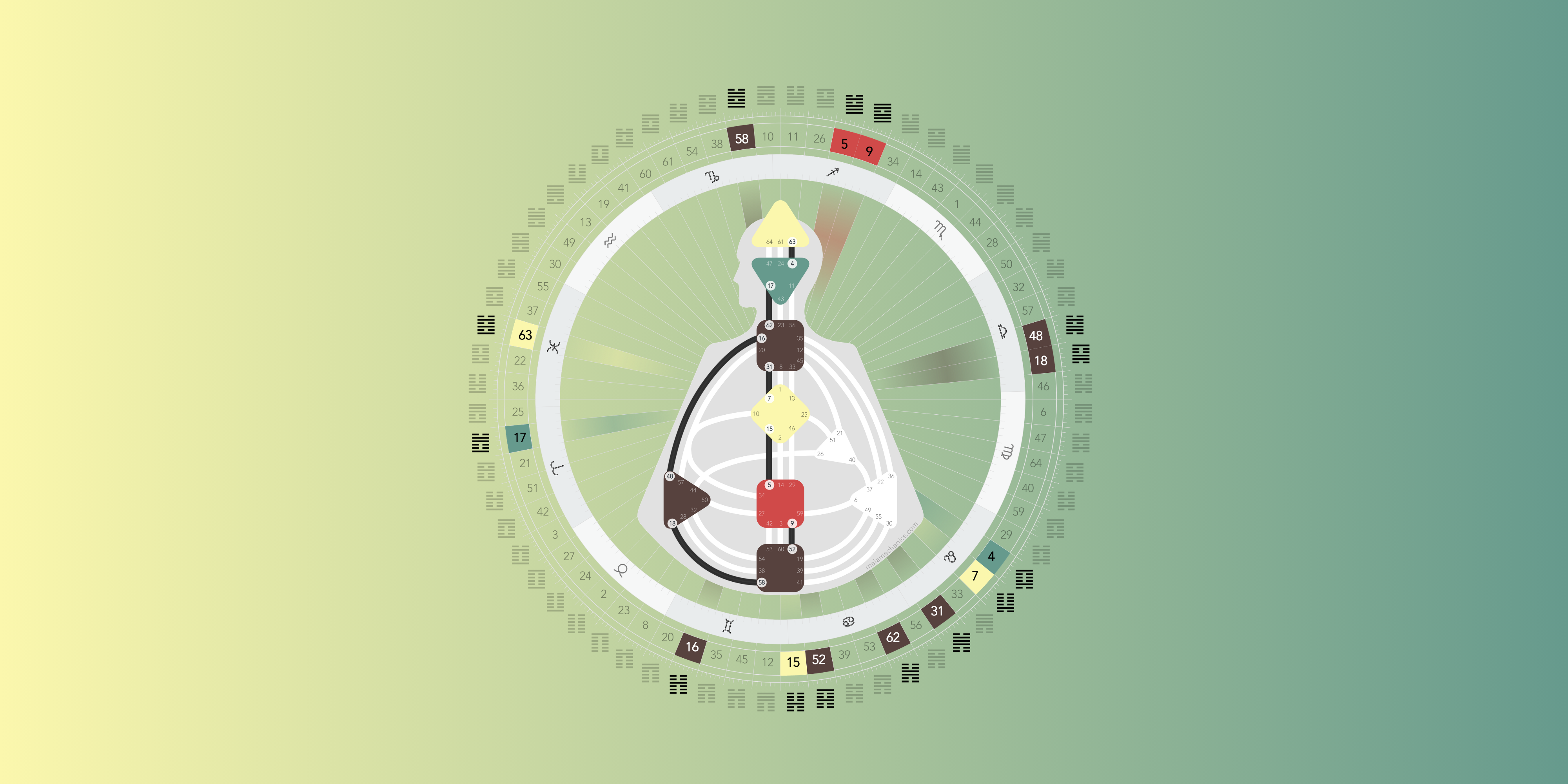
The everyday and scientific expressions of Logic described above take on a striking coherence in the design of a working mathematician. Terence Tao is one of the world's leading mathematicians, a Fields Medalist known for prolific work across harmonic analysis, combinatorics, and many other fields, and among the channels in his design are two that belong to the Understanding Circuit of the Collective.

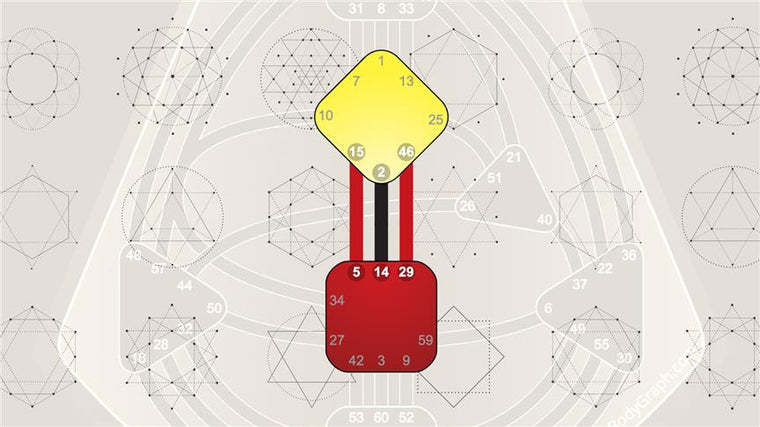
Terence Tao is a 4/6 Manifesting Generator with two Logic channels in his design, the (52-9) and (17-62). Notice that his Personality Sun is the 62nd Gate of Details, part of the Channel of Acceptance, a Design of an Organizational Being. (AA Rodden Rating) Image Source: MaiaMechanics.com
The Channel of Concentration (52-9) is his engine of determination. The Sacral supplies raw life force while the adrenal gate at the Root (Gate 52) provides the pressure to stay seated and locked in, letting him hold a single problem for hours, days, or weeks without scattering. This is the physical fuel that makes prolonged engagement with dense mathematical detail sustainable.
The Channel of Acceptance (17-62) handles the communication side. Gate 17 organizes patterns into a logical opinion and Gate 62 names it in precise, substantiated language, forming the logical voice that turns his Ajna's conclusions into communicable, carefully worded detail.
Together these two channels reinforce his logical process, with Root and Sacral fueling sustained concentration and Ajna and Throat converting that focus into clearly expressed, testable, shareable understanding. It's a large part of what makes his output as a mathematician so consistent from a mechanical standpoint.
What Logic Provides
The Logic Circuit is concerned with reliability. Its purpose is to recognize patterns, test them through experimentation, and continually refine what proves to be true. Mastery here is not achieved through a single flash of insight but through consistent effort, repetition, and the drive to keep refining until depth and skill become something that can be shared in service to others.
The function of this circuitry is the patient, disciplined practice of observing carefully, questioning honestly, testing rigorously, and sharing what proves reliable with others who can use it.
Humanity does not move safely into the future because it has found permanent answers. It moves forward because it has developed the capacity to keep asking better questions, refining its understanding with each cycle of experiment and reflection.
Logic contributes its enduring sense of security through consistency, through the insistence that what we build together should be worth trusting, and through the impetus to keep improving what we thought we already understood.
To learn more about the reading services Ryan provides, visit his IHDS professional profile here.
Frequently Asked Questions
What is the difference between the Understanding Circuit and the Sensing Circuit? +
Both circuits belong to the Collective Circuit Group and share the super-keynote of sharing, meaning their energy is oriented toward what benefits the larger group rather than the individual. Where they differ is in their method and their relationship to time. The Understanding Circuit works with logic, pattern recognition, and forward projection: it looks ahead, tests formulas, and asks what can be relied upon to carry us safely into the future. The Sensing Circuit works with experience, memory, and reflection: it looks back, collects what has been lived through, and shares those reflections as stories, lessons, and emotional wisdom. Logic asks what will work. Sensing asks what it meant to be here. Both are essential. Together they cover the full arc of collective human intelligence, from the patterns we project forward to the experiences we carry with us.
Do I need defined channels in the Logic Circuit to think logically? +
Not at all. Having defined channels in this circuit means you carry the logical frequency consistently as part of your own energy field, broadcasting it into your aura and returning to it reliably throughout your life. But logical thinking is available to everyone. If your Logic Circuit is open or undefined, you will be receptive to this frequency when it is present around you, and over time that sensitivity can become its own kind of wisdom: the ability to recognize reliable patterns and assess logical frameworks without being fixed to any single one. The difference is consistency, not capacity.
Why does the Logic Circuit place so much emphasis on being invited before sharing? +
Because logical insight, however precise, only serves the collective when it reaches people who are ready to receive it. Several channels within this circuit, including the Channel of the Alpha and the Channel of Logic, make clear that the impact of logical understanding depends on timing and recognition, as they are Projected Channels. An opinion offered before someone is ready to hear it tends to be dismissed or resisted, regardless of its accuracy. An analysis shared into the right context, at the right moment, with the right person, has the potential to genuinely shift how someone understands their situation. The invitation is not a social nicety. It is the condition under which logical gifts actually do what they are designed to do: help the collective move forward more reliably.
What does it feel like when the Logic Circuit is working well, versus when it isn't? +
When it is working well, there is a quality of flow and clarity. Patterns become visible. Details assemble into a coherent picture. Questions that were creating pressure find their answers, or at least find a workable formula to test. There is a sense of purpose in the process of refining and improving, and when insights are shared with people who genuinely want them, the exchange feels useful and satisfying. When it is not working well, the experience tends toward chronic doubt, restlessness, and a dissatisfaction that has no clear object. The critical faculty that is meant to identify what needs improving can turn inward or become indiscriminate, finding fault everywhere without the counterbalance of genuine vitality and forward movement. Recognizing that distinction, between productive questioning and unanchored criticism, is one of the key navigational challenges this circuit presents.
Is the Logic Circuit only relevant to people who are naturally analytical or scientifically minded? +
No. The Logic Circuit expresses across an enormous range of human activity, most of which has nothing to do with formal analysis. A parent who refines their approach to a difficult conversation with their child, a chef who adjusts a recipe based on what consistently produces the best result, a community organizer who studies what has worked in similar situations before designing an initiative: all of these are expressions of logical circuitry in lived practice. The circuit's keynote is sharing, and what gets shared through this circuit is not just data or research but any form of understanding that has been tested, refined, and proven reliable enough to help others navigate their own lives. The analytical mind is one expression of this. It is not the only one.

Ryan Hanna




































Teachings by Topic
Type & Strategy
Explore Ra Uru Hu's lectures by Human Design topic.

Basics for Beginners
Sale price$10.00
Are you new to Human Design, or looking for a solid understanding of the BodyGraph, its mechanics, and an overview of the Types and major Inner Authorities? This 1-hour introduction to the basics of Human De...
Generator and Manifesting Generator
Sale price$9.00
The type that is essential to the well-being of our species as a whole is the Generator, who represent around 70% of the human population (Half of which are pure Generators, the other half are Manifesting Ge...
The Way of the Generator
Sale price$57.00
Living our Design involves setting the mind and its Not-Self urgings aside, and relying instead on Strategy and Authority. It’s a process of learning to “surrender to the experiment”, as Ra puts it. That sur...

Fallen Angels
Sale price$9.00
The way of the Generator is everybody's way in the homogenized world while the planet is run by and dominated by the frustrated, enslaved spirit of Generators.
In order for Generators to be able to live acco...
Frustration or Satisfaction | RC8.10
Sale price$19.00
Generators represent almost 70% of the world’s population. As a vital source of productive energy, they generally have a great impact on everyone around them, making their awareness and well-being important ...
The Art of Reading Generators
Sale price$57.00
If you are interested in understanding Generators, either because you are one yourself or you want to learn about the dominant Type on this planet, this package is an excellent learning opportunity. The Art ...
Sex and the Generator
Sale price$19.00
The nature of sexuality varies greatly among the different Types. And the primary difference stems from the Sacral Center itself, which is the core and essence of what a Generator is.
Through response, the n...
Generator Transformation - The Color of Envelopment
Sale price$19.00
A detailed guide to the Generator aura and its unique relationship to each Type, this lecture explores the theme of conditioning through Color Transference and how varied this phenomenon is for Generators—of...
Projector
Sale price$9.00
Projectors are a non-energy Type and represent just over 20% of the population. As a relatively new form, they are only now beginning to come into their natural power and position. Join Ra as he discusses ho...
Projectors - A Clarion's Alert
Sale price$9.00
Projectors, your focused and penetrating aura is needed through invitation to take in knowledge bases and master the systems that organize and hold humanity together. You are needed as an enormous resource f...
The Art of Reading Projectors
Sale price$57.00
The Art of Reading Projectors is an invaluable audio experience for anyone wanting deeper insight into the Projector Aura Type. Ra takes us through six overviews of unique Projectors, each approximately 30 m...

Projector Empowerment 1 | Lectures
Sale price$47.00
Projectors have the potential to make tremendous contributions to those in their lives. By Design, Projectors are about the other. The insight and guidance they bring to others when they are in alignment wit...

Projector Empowerment 2 | Analysis
Sale price$67.00
Acknowledging how each Projector offers their unique guidance to the world can help empower their signature of success.
Projector Empowerment | Part II: Analysis focuses on Ra’s examination of individual Pro...
Projector Transformation - Color Transference Recognition
Sale price$19.00
This lecture dives into substructure, offering the practical value of understanding Personality Motivation and Perspective to Projector success. As the youngest Type historically, Projectors are on the rise,...
Manifestor
Sale price$9.00
Only about 9% of the population are Manifestors. As we move towards 2027, statistically there will be a real burst in the number of their births. This theme of the Manifestor and particularly how to raise Ma...

Manifestor Manifesto
Sale price$67.00
Do you remember the song, “It’s Not Easy Being Green”? The same could be said of the challenges of being a Manifestor. Manifestors currently account for 9% of the population — a small percentage, but with qu...

Manifestor Manifesto (eBook)
Sale price$49.00
This guide for Manifestors came out of a five-week program in which Ra informed Manifestors how to transform their lives and fully embrace their manifesting potential and gifts. Although this material was ex...

Manifestor Encore
Sale price$9.00
We are living in a time of transition, a time of change, a time of deep mutation. Everything about the nature of the world we live in, in a sense, can be understood from the current background frequency.
The...
Manifestor Transformation - Motivation and Impact
Sale price$19.00
This is a deeper exploration of the Manifestor process through aura and Color, and a guide to correctness for Manifestors and those who are impacted by them.
Historically, Manifestors were the alphas of huma...
Reflector
Sale price$9.00
Reflectors represent around 1.3 or 1.4% of the human population, and as such are very different from the other Types.
A Reflector’s design is unique in that there is no definition in the Bodygraph, and there...
Reflector Reflections
Sale price$19.00
This is a practical guide to understanding the Reflector process and purpose along with new tools for aiding them in their experiment.
Reflectors are the rarest Type on the planet. WIthout any definition in ...

The Signature Question
Sale price$9.00
Signposts are something that allow you to have a way for your mind to measure. Signature is the positive side of the not-self theme of any Type. In The Signature Question, Ra explains the signposts for each ...

The Type Series: Strategy, Signature and Aura
Sale price$22.00
Regular price$36.00
Everyone has the potential for differentiation in this life.
What is actualized through Type—Generator (and Manifesting Generator), Manifestor, Projector, Reflector—is an extraordinary potential inherent in ...

Type Sexual Signatures
Sale price$19.00
We all have the potential for sexual fulfillment. However, most human beings don't enter into bonds correctly. With most of the population being made up of Generators, this leaves much of the world giving of...

You and the Other
Sale price$19.00
Type is one of the most influential aspects of the connection between two people. The inherent aura mechanics of each person in a partnership determine how each can relate to the other — or how the relations...

A Human Design Guide to Parenting
Sale price$19.00
Raising children can be challenging in many ways. Knowing what to do and how to approach them based on their uniqueness takes awareness of specific techniques that parents are often not equipped with.
Human ...

Raising Children According to Their Design
Sale price$17.00
For many of us, learning to live according to our Design is eye-opening. So many things change and make sense when our approaches and choices are informed by our unique Design. As we recognize more and more ...

Nurturing a Unique Being
Sale price$29.00
There are many perspectives on how children should be raised. How do we know which ones are best?
Everything from what to eat, how to create bedtime habits, and the best methods to educate are often taught i...
Design Concepts
Sale price$97.00
The Maia? The Monopole? And what is the G Center?
If you’re looking for an in-depth introductory teaching to Human Design, the 10-lesson Design Concepts course is a valuable guide to the foundational element...

Design Concepts (eBook)
Sale price$49.00
If you’re new to Human Design, this ebook will greatly expand your understanding of Human Design fundamentals. Taught by Ra Uru Hu, Design Concepts is an ideal opportunity for Human Design students and newco...

The Four Views
Sale price$99.00
Do you want to learn more about Human Design but don’t know where to begin? Knowing how to look at the BodyGraph is key to understanding foundational concepts to start your own experiment.
After years of tea...

The Four Views (eBook)
Sale price$49.00
Do you want to learn more about Human Design but don’t know where to begin? Knowing how to look at the BodyGraph is key to understanding foundational concepts to start your own experiment.
After years of tea...
Keynoting
Sale price$29.00
Looking at a Human Design chart can be overwhelming. There is simply so much information available. Some people see the Gates first, others the Channels, and some the Centers. But, what is the "correct" meth...
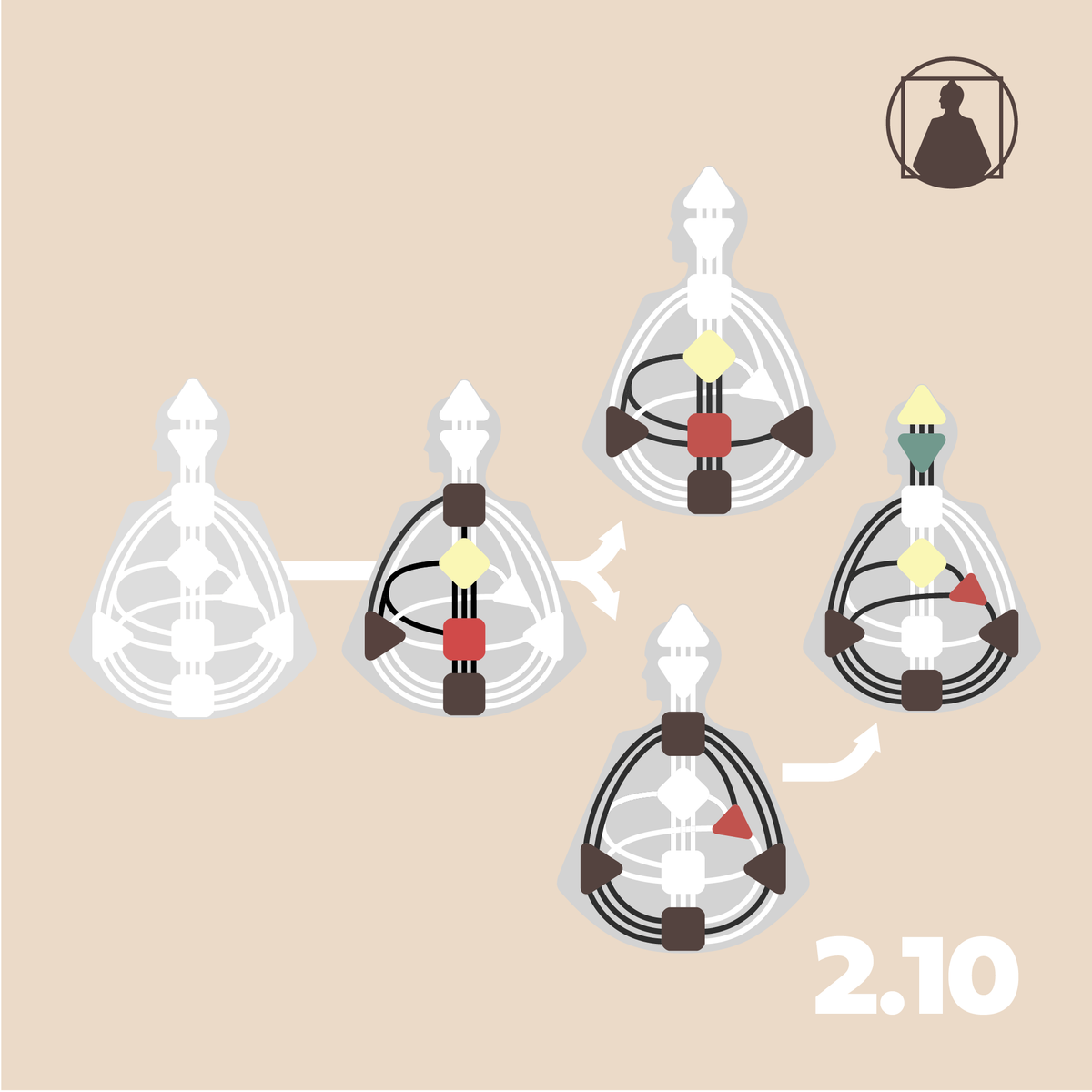
The History of the Types - An Evolutionary View | RA 2.10
Sale price$19.00
In 1994, Ra Uru Hu published a collection of graphics and keynotes he called “Rave Anatomy: Mapping the Mechanics of the Maia.” In 2007, he updated those graphics and recorded Rave Anatomy 1. The following y...

Beginner 1: Fundamentals of the Human Design System
Sale price$249.00
Regular price$411.00
Beginner 1 is your gateway into the original teachings of Ra Uru Hu. This immersive course delivers a carefully curated learning experience designed to ground you in the essential mechanics, language, and co...

Beginner 2: Type, Strategy, and Inner Authority
Sale price$249.00
Regular price$426.00
This course offers a clear and practical introduction to the four Human Design Types and the vital role of Strategy and Inner Authority. Through a curated series of Ra Uru Hu’s most accessible teachings, you...

Your Own Authority - A Beginner's Guide to Human Design
Sale price$22.00
Your Own Authority – A Beginner’s Guide to Human Design by Dharmen and Leela Swann Herbert - e-Book with full-color illustrations, 138 pages.
This beginner’s guide is a general introduction to the Human Desi...

Intermediate 3: Relationships, Sex, and Family
Sale price$349.00
Regular price$589.00
Relationships are one of the most powerful mirrors for awakening—and one of the most complex arenas of conditioning. In this course, Ra Uru Hu explores how Human Design reveals the true mechanics of how we b...
Ra's Guide to the Rave Chart
Sale price$29.00
Human Design BodyGraphs display an intricate synthesis of 26 activations across 9 Centers and 64 Gates. Is there a simple way to extract and benefit from the information being displayed without needing to kn...

Ra's Guide to the Movie
Sale price$39.00
Behind its practical aspects, Human Design has roots in deeply mystical concepts. When one is beginning to investigate those deeper aspects of the knowledge, one needs to study the foundational concepts to s...

The Ra Uru Hu Lectures | Ibiza 2009
Sale price$57.00
Regular price$76.00
This 4-part video collection explores how we navigate the changing mechanics of life and consciousness—uncovering the impact of shifting financial structures, the role of the Moon in shaping our experiences,...

The Just About You Series
Sale price$117.00
Regular price$172.00
The Just About You series brings together six essential lectures that explore the many ways Human Design shapes our lives and relationships. From uncovering the wisdom hidden in our shadows and understanding...

The Mystic Monologues Series
Sale price$77.00
Regular price$108.00
The Mystic Monologues invites you into the extraordinary journey of Ra Uru Hu, a skeptic turned mystic, whose life was transformed by a profound encounter with “The Voice” on January 3, 1987. This series of ...
Teachings by Theme
Decision-Making
Explore Ra Uru Hu's lectures categorized into life themes and goals.
Basics for Beginners
Sale price$10.00
Are you new to Human Design, or looking for a solid understanding of the BodyGraph, its mechanics, and an overview of the Types and major Inner Authorities? This 1-hour introduction to the basics of Human De...
Your Own Authority - A Beginner's Guide to Human Design
Sale price$22.00
Your Own Authority – A Beginner’s Guide to Human Design by Dharmen and Leela Swann Herbert - e-Book with full-color illustrations, 138 pages.
This beginner’s guide is a general introduction to the Human Desi...
Generator and Manifesting Generator
Sale price$9.00
The type that is essential to the well-being of our species as a whole is the Generator, who represent around 70% of the human population (Half of which are pure Generators, the other half are Manifesting Ge...
The Way of the Generator
Sale price$57.00
Living our Design involves setting the mind and its Not-Self urgings aside, and relying instead on Strategy and Authority. It’s a process of learning to “surrender to the experiment”, as Ra puts it. That sur...
Fallen Angels
Sale price$9.00
The way of the Generator is everybody's way in the homogenized world while the planet is run by and dominated by the frustrated, enslaved spirit of Generators.
In order for Generators to be able to live acco...
Frustration or Satisfaction | RC8.10
Sale price$19.00
Generators represent almost 70% of the world’s population. As a vital source of productive energy, they generally have a great impact on everyone around them, making their awareness and well-being important ...
Generator Transformation - The Color of Envelopment
Sale price$19.00
A detailed guide to the Generator aura and its unique relationship to each Type, this lecture explores the theme of conditioning through Color Transference and how varied this phenomenon is for Generators—of...
Projector
Sale price$9.00
Projectors are a non-energy Type and represent just over 20% of the population. As a relatively new form, they are only now beginning to come into their natural power and position. Join Ra as he discusses ho...
Projectors - A Clarion's Alert
Sale price$9.00
Projectors, your focused and penetrating aura is needed through invitation to take in knowledge bases and master the systems that organize and hold humanity together. You are needed as an enormous resource f...
Projector Transformation - Color Transference Recognition
Sale price$19.00
This lecture dives into substructure, offering the practical value of understanding Personality Motivation and Perspective to Projector success. As the youngest Type historically, Projectors are on the rise,...
Manifestor
Sale price$9.00
Only about 9% of the population are Manifestors. As we move towards 2027, statistically there will be a real burst in the number of their births. This theme of the Manifestor and particularly how to raise Ma...
Manifestor Manifesto
Sale price$67.00
Do you remember the song, “It’s Not Easy Being Green”? The same could be said of the challenges of being a Manifestor. Manifestors currently account for 9% of the population — a small percentage, but with qu...
Manifestor Manifesto (eBook)
Sale price$49.00
This guide for Manifestors came out of a five-week program in which Ra informed Manifestors how to transform their lives and fully embrace their manifesting potential and gifts. Although this material was ex...
Manifestor Encore
Sale price$9.00
We are living in a time of transition, a time of change, a time of deep mutation. Everything about the nature of the world we live in, in a sense, can be understood from the current background frequency.
The...
Manifestor Transformation - Motivation and Impact
Sale price$19.00
This is a deeper exploration of the Manifestor process through aura and Color, and a guide to correctness for Manifestors and those who are impacted by them.
Historically, Manifestors were the alphas of huma...
Reflector
Sale price$9.00
Reflectors represent around 1.3 or 1.4% of the human population, and as such are very different from the other Types.
A Reflector’s design is unique in that there is no definition in the Bodygraph, and there...
Reflector Reflections
Sale price$19.00
This is a practical guide to understanding the Reflector process and purpose along with new tools for aiding them in their experiment.
Reflectors are the rarest Type on the planet. WIthout any definition in ...
The Signature Question
Sale price$9.00
Signposts are something that allow you to have a way for your mind to measure. Signature is the positive side of the not-self theme of any Type. In The Signature Question, Ra explains the signposts for each ...
The Type Series: Strategy, Signature and Aura
Sale price$22.00
Regular price$36.00
Everyone has the potential for differentiation in this life.
What is actualized through Type—Generator (and Manifesting Generator), Manifestor, Projector, Reflector—is an extraordinary potential inherent in ...
Projector Empowerment 1 | Lectures
Sale price$47.00
Projectors have the potential to make tremendous contributions to those in their lives. By Design, Projectors are about the other. The insight and guidance they bring to others when they are in alignment wit...
Projector Empowerment 2 | Analysis
Sale price$67.00
Acknowledging how each Projector offers their unique guidance to the world can help empower their signature of success.
Projector Empowerment | Part II: Analysis focuses on Ra’s examination of individual Pro...
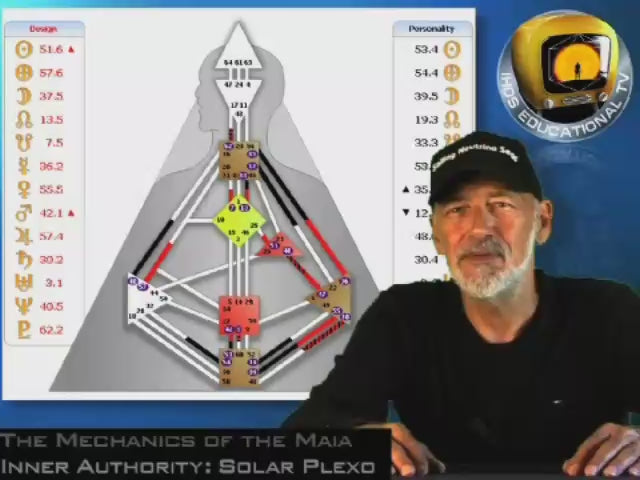
Solar Plexus Inner Authority
Sale price$9.00
If you have a defined Solar Plexus Center, this is automatically your decision making authority. It is the most common of all inner authorities, belonging to about 51% of humanity.
The Solar Plexus center op...
Sacral Inner Authority
Sale price$9.00
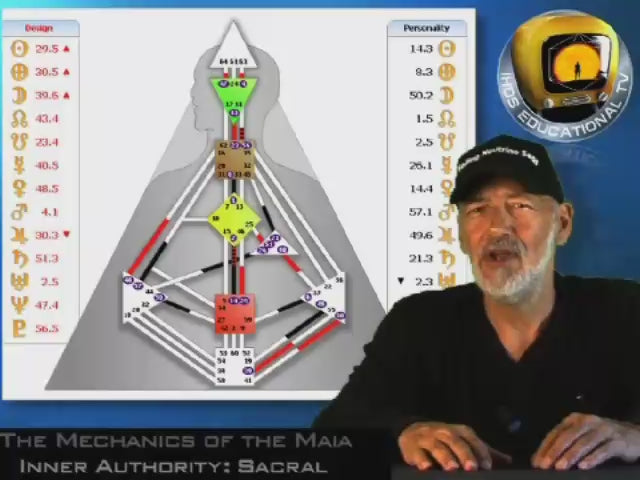
Sacral Authority belongs to non-emotional Generators, including Manifesting Generators, who have an undefined Solar Plexus Center. Correct Sacral Authority responds existentially, in each moment, to what li...
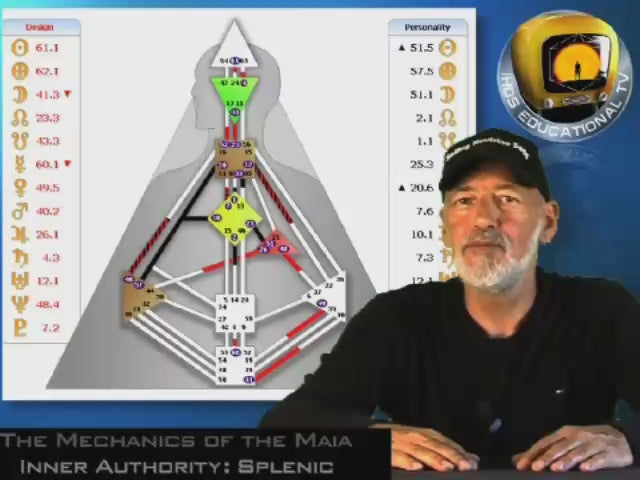
Splenic Inner Authority
Sale price$9.00
In order to have Splenic authority, you cannot have a defined Solar Plexus or Sacral Center but must have a defined Splenic Center.
Splenic authority operates only in the Now. It is not a motor and can be d...
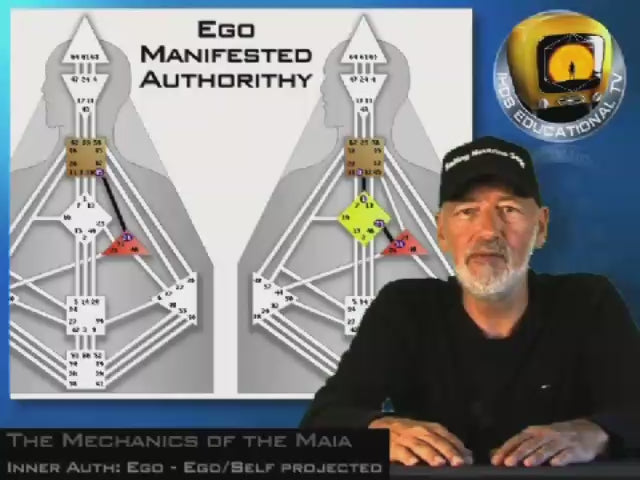
Minor Authorities
Sale price$9.00
Ra looks at a group of rare authorities that represent about 4% of people. They can be quickly recognized as designs with at least one defined channel and an open Solar Plexus Center, an open Sacral Center a...
No Direct Inner Authority
Sale price$9.00
Definition is what leads us to see both Type and where the decision making Authority lies. In this lecture, Ra takes us through the two very different variations of those who have no direct inner authority: ...

The Inner Authority Series
Sale price$27.00
Regular price$45.00
Inner Authority is a transformative series where Ra Uru Hu guides you through the core mechanics of decision-making within the Human Design System. This series provides a comprehensive understanding of Inner...
Outer Authority - The Truth About Mind
Sale price$19.00
How much do you trust your mind when making decisions? Human Design states that giving the Mind this authority frequently leads to resistance and getting stuck in the themes of our open centers.
When using S...
The Just About You Series
Sale price$117.00
Regular price$172.00
The Just About You series brings together six essential lectures that explore the many ways Human Design shapes our lives and relationships. From uncovering the wisdom hidden in our shadows and understanding...
Design Concepts
Sale price$97.00
The Maia? The Monopole? And what is the G Center?
If you’re looking for an in-depth introductory teaching to Human Design, the 10-lesson Design Concepts course is a valuable guide to the foundational element...
Design Concepts (eBook)
Sale price$49.00
If you’re new to Human Design, this ebook will greatly expand your understanding of Human Design fundamentals. Taught by Ra Uru Hu, Design Concepts is an ideal opportunity for Human Design students and newco...
The Four Views
Sale price$99.00
Do you want to learn more about Human Design but don’t know where to begin? Knowing how to look at the BodyGraph is key to understanding foundational concepts to start your own experiment.
After years of tea...
The Four Views (eBook)
Sale price$49.00
Do you want to learn more about Human Design but don’t know where to begin? Knowing how to look at the BodyGraph is key to understanding foundational concepts to start your own experiment.
After years of tea...

The Human Design System: A Complete Guide Series
Sale price$197.00
Regular price$285.00
In this multi-lesson video series Ra Uru Hu offers a profound and comprehensive journey through the full architecture of Human Design. Spanning topics from the origin of consciousness and the mechanics of th...
Beginner 1: Fundamentals of the Human Design System
Sale price$249.00
Regular price$411.00
Beginner 1 is your gateway into the original teachings of Ra Uru Hu. This immersive course delivers a carefully curated learning experience designed to ground you in the essential mechanics, language, and co...
Beginner 2: Type, Strategy, and Inner Authority
Sale price$249.00
Regular price$426.00
This course offers a clear and practical introduction to the four Human Design Types and the vital role of Strategy and Inner Authority. Through a curated series of Ra Uru Hu’s most accessible teachings, you...

Beginner 3: The Not-Self and Conditioned Mind
Sale price$199.00
Regular price$307.00
Beginner 3 offers an essential introduction to one of the most transformative teachings in Human Design: the Not-Self. Through Ra Uru Hu’s foundational lectures and in-depth analysis, you’ll explore how ment...
The Mystic Monologues Series
Sale price$77.00
Regular price$108.00
The Mystic Monologues invites you into the extraordinary journey of Ra Uru Hu, a skeptic turned mystic, whose life was transformed by a profound encounter with “The Voice” on January 3, 1987. This series of ...