

















































Generate your free Human Design chart—personal, relationship, or transit—and start exploring your design with guided insights.
Part 1: Keynoting Stephen King's Human Design
Jun 24, 2026
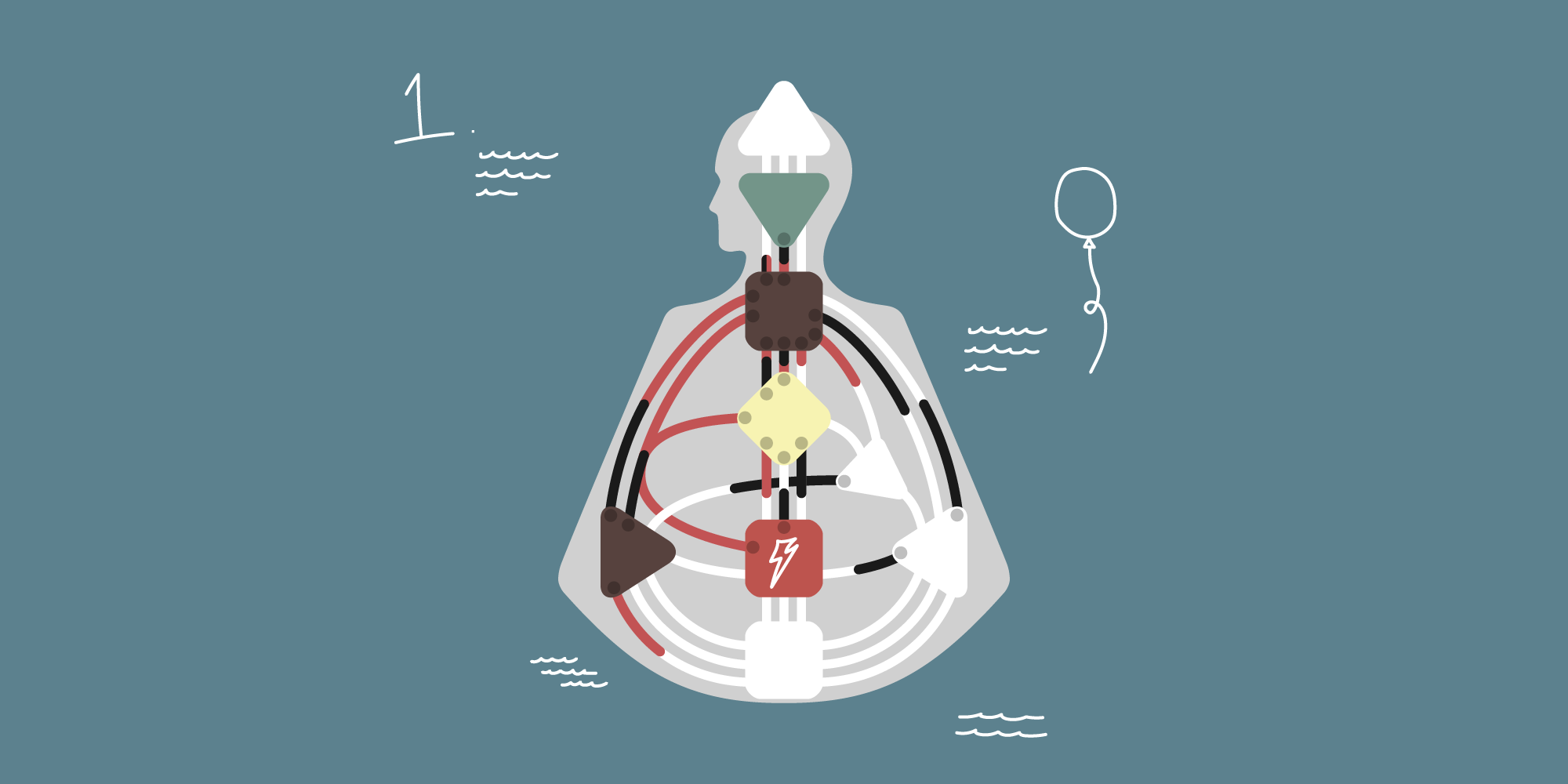
Keynoting Stephen King's Human Design - Part 1
When you first look at a chart, it can seem like a tremendous amount of information to digest all at once. From determining the Type, Inner Authority, and Profile, to getting a grasp on the Centers, Channels, and Gates, there's so much to explore and make sense of. This is where the art of keynoting, also called synthesis, comes in. It allows you to link together the various elements of a chart and begin to tell the story of the unique energetic configuration in front of you.
Ra used to point to the example of the classic children's activity, connect the dots. You'd see a page full of numbered dots that needed to be joined with a single continuous line before the image could come alive. What started as a jumble of seemingly random points would gradually reveal itself to be a lion, an elephant, an airplane, etc. Before those dots are connected, the image is unclear, and the story or meaning behind it is nearly impossible to describe accurately.

An example of connect the dots. The face is only revealed once you connect them all.
A unique BodyGraph is no different. With keynoting, you're connecting the dots between the various elements of a chart to build out a story of what's there, making the interpretation, and the interconnected relationships within the chart, come alive through words.
A Famous Chart Example
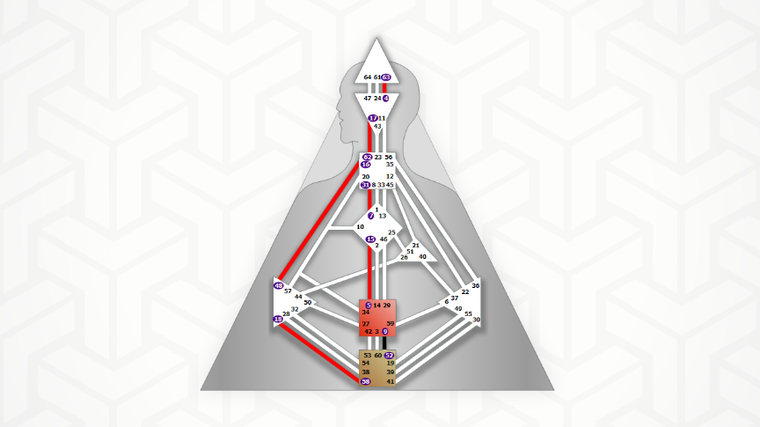
Let's walk through the elements of Stephen King's chart together and build out what is essentially a reading of his design. All we're doing is connecting the dots between the various pieces and revealing what's already there.

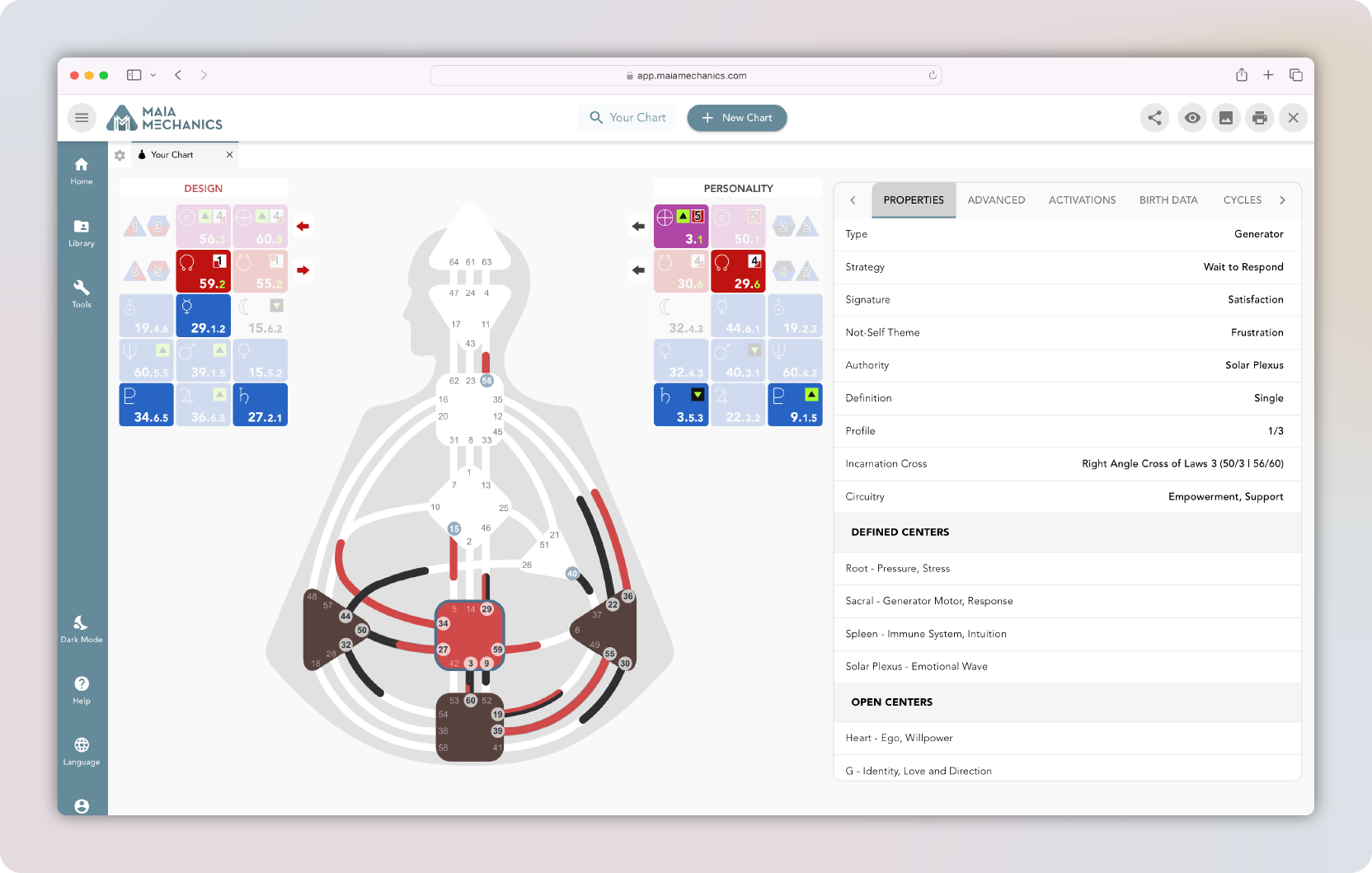
Stephen King's Human Design Chart (A Rodden Rating) Image Source: MaiaMechanics
Here's how we'll approach it. We'll start by identifying his Type, Strategy, Inner Authority, and Profile. From there, we'll weave in his Channel definition, and a synthesis of his openness, where he is most susceptible to conditioning. At the end, we'll tie in his Incarnation Cross and summarize the chart as a whole. Each component is a "dot" in the sequence, and as we connect them, the chart comes alive and we can begin to appreciate the energetic "story" of the design.
Type, Strategy, Inner Authority, and Profile
Stephen King is a Manifesting Generator. That is the first thing to understand about the man, and it explains more about his output than any biography can. A Manifesting Generator carries the same defined Sacral Center as every Generator, that deep, fertile, almost inexhaustible motor that generates creative life force, but with an added speed from a motor connection to the Throat that brings a capacity to move fast, multitask, and get things into the world with startling efficiency. The Sacral is the body's primary engine for sustained life force, and King has had consistent access to it his entire life. This is a man designed to be busy. Not busy in the hollow, distracted sense, but busy in the way that a river is busy, always moving, always generating, always spending the day's energy fully and regenerating overnight to do it again.
The aura of a Generator type is open and enveloping. It takes everything in. King has talked about this in his own way for years, the way he absorbs the world around him, the way ordinary details of American life, roadside diners, small-town politics, the sound a screen door makes, pour into him and come back out as fiction. That absorptive quality is the Generator aura doing what it does. It pulls in the full texture of life. And because a Manifesting Generator is so open to conditioning, to being shaped by everything it takes in, King's writing has always had that quality of feeling deeply, almost uncomfortably real, even when the subject matter is supernatural or extreme. He is not inventing from thin air. He is responding to what he has absorbed.
Strategy: To Respond
The Generator's strategy is to respond. Not to initiate from the mind, not to decide what to write next based on what the market wants, but to wait for something to show up, an image, a phrase, a situation, and feel the body say yes or no. When the Sacral says yes, the energy commits. Sometimes for a scene, sometimes for a thousand-page novel.
The signature of this type, when it's working correctly, is satisfaction. The not-self theme, the signal that something has gone wrong, is frustration. Anyone who has read King's memoir "On Writing" can see this mechanic in action. He has described again and again how his best work comes not from planning but from responding to whatever image or situation grabs him, then following it with that relentless daily output. The Manifesting Generator's particular trap is busyness for its own sake, or initiating from the mind rather than responding from the gut. King's well-documented struggles with addiction in the 1980s could be read, at least in part, through this lens, the motor running at full speed on fuel the body never actually said yes to.
Inner Authority: Sacral
His Sacral Authority means the body itself is the decision-maker, not the rational mind. The body knows before the head catches up. King has been remarkably consistent in describing his creative process as something that happens below conscious thought, characters doing things he didn't plan, stories going directions he didn't map out. He has said many times that he doesn't outline. He follows the energy. That is a Sacral Authority at work, whether he would use that language or not. The body leads. The mind watches. The risk, always, is committing energy to things the body didn't actually agree to, which leads to frustration and exhaustion rather than satisfaction.
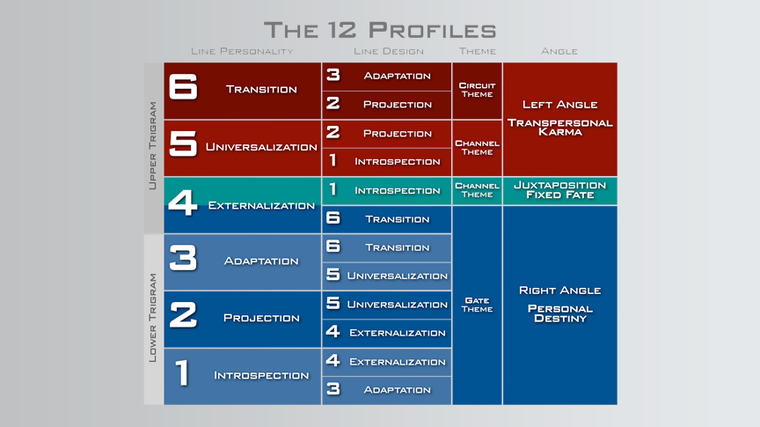
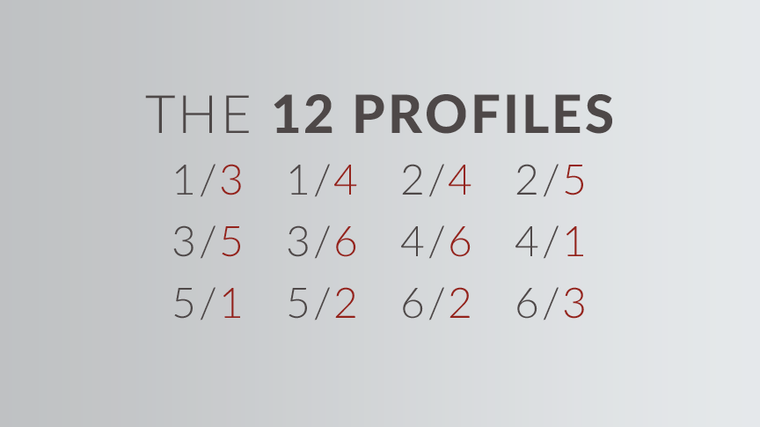
Profile: 6/2, the Role Model Hermit
King carries a 6/2 Profile, the Role Model Hermit. This is one of the most distinctive profiles in Human Design, because it moves through three clearly defined life phases, and with King, all three are visible in the public record.
The first phase, roughly the first thirty years, is trial and error at its most raw. Pure experimentation. Getting burned, making mistakes, trying things that don't work, being pulled from one experience to the next. King's early life fits this precisely. The difficult childhood. The poverty. The early attempts at writing that went nowhere or went to small magazines for tiny checks. The drinking that started young. The teaching jobs he didn't want. The rejection slips he famously pinned to a nail on the wall. This is the first-phase sixth line living through everything the hard way, gathering experience that will matter later but doesn't feel like wisdom at the time. It feels like chaos. It feels like things keep not working.
Around thirty, the sixth line moves onto the roof, a period of withdrawal and observation that lasts roughly until fifty. This doesn't mean disappearing from life entirely; it means developing a more detached, objective perspective. For King, this period roughly coincides with the years of enormous commercial success, from the late 1970s through the 1990s. He was productive, yes, but he was also increasingly removed from ordinary life by fame, by money, and frankly by addiction. The roof can be a literal withdrawal from the mess of the world, or it can be a psychological distance. King was watching American life from a very particular vantage point during those years, close enough to absorb it, far enough away to see patterns. His fiction during that period is full of that observer quality, that ability to look at how people actually behave and report it with unsettling accuracy. It was also in this phase, in the late 1980s, that he got sober, after an intervention led by his wife Tabitha. That clarity, gathered mid-phase, shaped everything that followed.
The second line, the Hermit, reinforces this withdrawal. The 2 line is the natural. It has an inherent talent that operates best when left alone, and it needs solitude to function. King's daily writing routine, hours alone in a room, door closed, the world kept out, is the Hermit line in its element. He has described this need for solitude in practical, unglamorous terms. It is not romantic isolation. It is a body that does its best work when no one is watching. The 2 line also carries a quality that others notice and want to call out. People see the talent before the person themselves fully recognizes it. Tabitha King pulling the early pages of "Carrie" out of the trash is a perfect example. She saw what he could not yet see in himself.
The third phase, from fifty onward, is the return from the roof, the Role Model phase. The sixth line comes back down into life and begins to embody what it learned during the first two phases. For King, this has been the period since roughly the late 1990s and especially the 2000s onward. The near-fatal accident in 1999 is an almost too-neat marker for this transition. He had already been sober for about a decade by then, but the accident and its long, painful recovery reshaped his relationship to his own work and to his public role. He wrote "On Writing," published in 2000, which is as close to a role model's handbook as any author has produced: here is what I learned, here is what works, here is what nearly destroyed me. He became more openly engaged with political life, with mentoring younger writers, with speaking plainly about craft and about the costs of doing it wrong. That is the sixth line doing what it was always designed to do. Not teaching from theory, but from lived experience. Not offering rules, but offering the hard-won knowledge of someone who went through all of it and came out the other side with something useful to say.

King, a 6/2 writing alone in his office. Image Source: Forbes
At seventy-eight, King is deep in this Role Model phase. The 6/2 at this stage is not trying to prove anything. The experimentation is done. The retreat is done. What remains is the embodiment, being the example, not explaining the example. People seek him out not because he markets himself as a guru of writing but because his life and his body of work demonstrate something real about what it means to commit fully to creative labor over a lifetime. The Sacral motor is still running. The Hermit still needs the closed door and the daily pages. But the quality of the engagement is different now. It is the engagement of someone who has nothing left to figure out about who he is, and everything to offer simply by continuing to be that person in plain view.
In short, King is a Manifesting Generator with Sacral Authority and a 6/2 Profile who has moved fully into his role model phase, a life-force being whose enormous creative output is rooted in responding to what grabs him, working alone with natural talent, and now standing as an example of how a self-directed creative life actually works.
Join us next week for Part 2, where we'll explore Kings' Definition and Channels.
Frequently Asked Questions
What is keynoting in Human Design? +
Keynoting, also called synthesis, is the practice of connecting the separate elements of a chart, such as Type, Authority, Profile, Channels, and Openness, into one coherent story. Rather than reading each piece in isolation, you weave them together so the interconnected relationships of the design come alive and the chart can be understood as a whole.
In what order should I read a chart? +
There is no single right or wrong way to approach it. One reliable sequence is to begin with Type, Strategy, Inner Authority, and Profile, then move to the Channel definition, then to the Openness where the chart is most susceptible to conditioning, and finally to the Incarnation Cross before summarizing the whole. Each element is a "dot," and connecting them in sequence lets the chart come alive.
Do I need to read the Gates and Lines to synthesize a chart? +
No. A complete and meaningful synthesis can be built at the level of Type, Authority, Profile, Channels, and Openness alone. The Gates, Lines, and planetary activations are a deeper layer you can add once the foundation is clear, and they reveal an even more comprehensive picture that speaks to the very essence of a design.
Can I practice synthesis on my own chart? +
Yes, and it is the best way to learn. Take your own chart, follow the same basic sequence, and sit with the results for yourself. Working through your own design is how you gain a deeper understanding and appreciation of the unique connections within it, and begin to unravel what your Human Design actually has to say about you.
To learn more about the reading services Ryan provides, visit his IHDS professional profile here.

Ryan Hanna



























Teachings by Topic
Type & Strategy
Explore Ra Uru Hu's lectures by Human Design topic.
Basics for Beginners
Sale price$10.00
Are you new to Human Design, or looking for a solid understanding of the BodyGraph, its mechanics, and an overview of the Types and major Inner Authorities? This 1-hour introduction to the basics of Human De...
Generator and Manifesting Generator
Sale price$9.00
The type that is essential to the well-being of our species as a whole is the Generator, who represent around 70% of the human population (Half of which are pure Generators, the other half are Manifesting Ge...
The Way of the Generator
Sale price$57.00
Living our Design involves setting the mind and its Not-Self urgings aside, and relying instead on Strategy and Authority. It’s a process of learning to “surrender to the experiment”, as Ra puts it. That sur...

Fallen Angels
Sale price$9.00
The way of the Generator is everybody's way in the homogenized world while the planet is run by and dominated by the frustrated, enslaved spirit of Generators.
In order for Generators to be able to live acco...
Frustration or Satisfaction | RC8.10
Sale price$19.00
Generators represent almost 70% of the world’s population. As a vital source of productive energy, they generally have a great impact on everyone around them, making their awareness and well-being important ...
The Art of Reading Generators
Sale price$57.00
If you are interested in understanding Generators, either because you are one yourself or you want to learn about the dominant Type on this planet, this package is an excellent learning opportunity. The Art ...
Sex and the Generator
Sale price$19.00
The nature of sexuality varies greatly among the different Types. And the primary difference stems from the Sacral Center itself, which is the core and essence of what a Generator is.
Through response, the n...
Generator Transformation - The Color of Envelopment
Sale price$19.00
A detailed guide to the Generator aura and its unique relationship to each Type, this lecture explores the theme of conditioning through Color Transference and how varied this phenomenon is for Generators—of...
Projector
Sale price$9.00
Projectors are a non-energy Type and represent just over 20% of the population. As a relatively new form, they are only now beginning to come into their natural power and position. Join Ra as he discusses ho...
Projectors - A Clarion's Alert
Sale price$9.00
Projectors, your focused and penetrating aura is needed through invitation to take in knowledge bases and master the systems that organize and hold humanity together. You are needed as an enormous resource f...
The Art of Reading Projectors
Sale price$57.00
The Art of Reading Projectors is an invaluable audio experience for anyone wanting deeper insight into the Projector Aura Type. Ra takes us through six overviews of unique Projectors, each approximately 30 m...

Projector Empowerment 1 | Lectures
Sale price$47.00
Projectors have the potential to make tremendous contributions to those in their lives. By Design, Projectors are about the other. The insight and guidance they bring to others when they are in alignment wit...

Projector Empowerment 2 | Analysis
Sale price$67.00
Acknowledging how each Projector offers their unique guidance to the world can help empower their signature of success.
Projector Empowerment | Part II: Analysis focuses on Ra’s examination of individual Pro...
Projector Transformation - Color Transference Recognition
Sale price$19.00
This lecture dives into substructure, offering the practical value of understanding Personality Motivation and Perspective to Projector success. As the youngest Type historically, Projectors are on the rise,...
Manifestor
Sale price$9.00
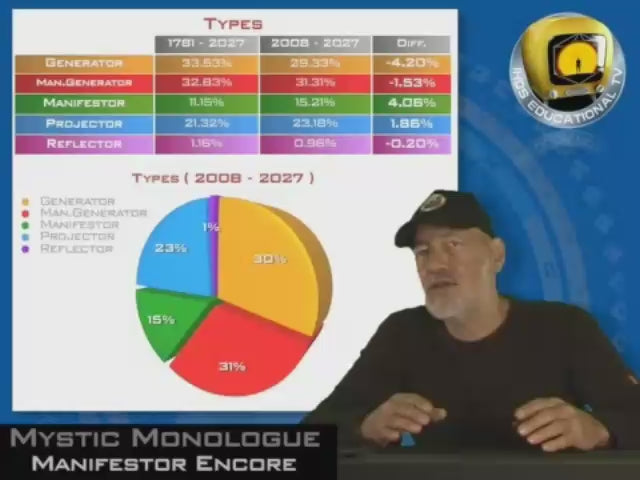
Only about 9% of the population are Manifestors. As we move towards 2027, statistically there will be a real burst in the number of their births. This theme of the Manifestor and particularly how to raise Ma...

Manifestor Manifesto
Sale price$67.00
Do you remember the song, “It’s Not Easy Being Green”? The same could be said of the challenges of being a Manifestor. Manifestors currently account for 9% of the population — a small percentage, but with qu...
Manifestor Manifesto (eBook)
Sale price$49.00
This guide for Manifestors came out of a five-week program in which Ra informed Manifestors how to transform their lives and fully embrace their manifesting potential and gifts. Although this material was ex...
Manifestor Encore
Sale price$9.00
We are living in a time of transition, a time of change, a time of deep mutation. Everything about the nature of the world we live in, in a sense, can be understood from the current background frequency.
The...
Manifestor Transformation - Motivation and Impact
Sale price$19.00
This is a deeper exploration of the Manifestor process through aura and Color, and a guide to correctness for Manifestors and those who are impacted by them.
Historically, Manifestors were the alphas of huma...
Reflector
Sale price$9.00
Reflectors represent around 1.3 or 1.4% of the human population, and as such are very different from the other Types.
A Reflector’s design is unique in that there is no definition in the Bodygraph, and there...
Reflector Reflections
Sale price$19.00
This is a practical guide to understanding the Reflector process and purpose along with new tools for aiding them in their experiment.
Reflectors are the rarest Type on the planet. WIthout any definition in ...
The Signature Question
Sale price$9.00
Signposts are something that allow you to have a way for your mind to measure. Signature is the positive side of the not-self theme of any Type. In The Signature Question, Ra explains the signposts for each ...

The Type Series: Strategy, Signature and Aura
Sale price$22.00
Regular price$36.00
Everyone has the potential for differentiation in this life.
What is actualized through Type—Generator (and Manifesting Generator), Manifestor, Projector, Reflector—is an extraordinary potential inherent in ...
Type Sexual Signatures
Sale price$19.00
We all have the potential for sexual fulfillment. However, most human beings don't enter into bonds correctly. With most of the population being made up of Generators, this leaves much of the world giving of...

You and the Other
Sale price$19.00
Type is one of the most influential aspects of the connection between two people. The inherent aura mechanics of each person in a partnership determine how each can relate to the other — or how the relations...

A Human Design Guide to Parenting
Sale price$19.00
Raising children can be challenging in many ways. Knowing what to do and how to approach them based on their uniqueness takes awareness of specific techniques that parents are often not equipped with.
Human ...

Raising Children According to Their Design
Sale price$17.00
For many of us, learning to live according to our Design is eye-opening. So many things change and make sense when our approaches and choices are informed by our unique Design. As we recognize more and more ...
Nurturing a Unique Being
Sale price$29.00
There are many perspectives on how children should be raised. How do we know which ones are best?
Everything from what to eat, how to create bedtime habits, and the best methods to educate are often taught i...
Design Concepts
Sale price$97.00
The Maia? The Monopole? And what is the G Center?
If you’re looking for an in-depth introductory teaching to Human Design, the 10-lesson Design Concepts course is a valuable guide to the foundational element...

Design Concepts (eBook)
Sale price$49.00
If you’re new to Human Design, this ebook will greatly expand your understanding of Human Design fundamentals. Taught by Ra Uru Hu, Design Concepts is an ideal opportunity for Human Design students and newco...

The Four Views
Sale price$99.00
Do you want to learn more about Human Design but don’t know where to begin? Knowing how to look at the BodyGraph is key to understanding foundational concepts to start your own experiment.
After years of tea...

The Four Views (eBook)
Sale price$49.00
Do you want to learn more about Human Design but don’t know where to begin? Knowing how to look at the BodyGraph is key to understanding foundational concepts to start your own experiment.
After years of tea...
Keynoting
Sale price$29.00
Looking at a Human Design chart can be overwhelming. There is simply so much information available. Some people see the Gates first, others the Channels, and some the Centers. But, what is the "correct" meth...
The History of the Types - An Evolutionary View | RA 2.10
Sale price$19.00
In 1994, Ra Uru Hu published a collection of graphics and keynotes he called “Rave Anatomy: Mapping the Mechanics of the Maia.” In 2007, he updated those graphics and recorded Rave Anatomy 1. The following y...

Beginner 1: Fundamentals of the Human Design System
Sale price$249.00
Regular price$411.00
Beginner 1 is your gateway into the original teachings of Ra Uru Hu. This immersive course delivers a carefully curated learning experience designed to ground you in the essential mechanics, language, and co...

Beginner 2: Type, Strategy, and Inner Authority
Sale price$249.00
Regular price$426.00
This course offers a clear and practical introduction to the four Human Design Types and the vital role of Strategy and Inner Authority. Through a curated series of Ra Uru Hu’s most accessible teachings, you...

Your Own Authority - A Beginner's Guide to Human Design
Sale price$22.00
Your Own Authority – A Beginner’s Guide to Human Design by Dharmen and Leela Swann Herbert - e-Book with full-color illustrations, 138 pages.
This beginner’s guide is a general introduction to the Human Desi...

Intermediate 3: Relationships, Sex, and Family
Sale price$349.00
Regular price$589.00
Relationships are one of the most powerful mirrors for awakening—and one of the most complex arenas of conditioning. In this course, Ra Uru Hu explores how Human Design reveals the true mechanics of how we b...
Ra's Guide to the Rave Chart
Sale price$29.00
Human Design BodyGraphs display an intricate synthesis of 26 activations across 9 Centers and 64 Gates. Is there a simple way to extract and benefit from the information being displayed without needing to kn...

Ra's Guide to the Movie
Sale price$39.00
Behind its practical aspects, Human Design has roots in deeply mystical concepts. When one is beginning to investigate those deeper aspects of the knowledge, one needs to study the foundational concepts to s...

The Ra Uru Hu Lectures | Ibiza 2009
Sale price$57.00
Regular price$76.00
This 4-part video collection explores how we navigate the changing mechanics of life and consciousness—uncovering the impact of shifting financial structures, the role of the Moon in shaping our experiences,...

The Just About You Series
Sale price$117.00
Regular price$172.00
The Just About You series brings together six essential lectures that explore the many ways Human Design shapes our lives and relationships. From uncovering the wisdom hidden in our shadows and understanding...

The Mystic Monologues Series
Sale price$77.00
Regular price$108.00
The Mystic Monologues invites you into the extraordinary journey of Ra Uru Hu, a skeptic turned mystic, whose life was transformed by a profound encounter with “The Voice” on January 3, 1987. This series of ...
Teachings by Theme
Decision-Making
Explore Ra Uru Hu's lectures categorized into life themes and goals.
Basics for Beginners
Sale price$10.00
Are you new to Human Design, or looking for a solid understanding of the BodyGraph, its mechanics, and an overview of the Types and major Inner Authorities? This 1-hour introduction to the basics of Human De...
Your Own Authority - A Beginner's Guide to Human Design
Sale price$22.00
Your Own Authority – A Beginner’s Guide to Human Design by Dharmen and Leela Swann Herbert - e-Book with full-color illustrations, 138 pages.
This beginner’s guide is a general introduction to the Human Desi...
Generator and Manifesting Generator
Sale price$9.00
The type that is essential to the well-being of our species as a whole is the Generator, who represent around 70% of the human population (Half of which are pure Generators, the other half are Manifesting Ge...
The Way of the Generator
Sale price$57.00
Living our Design involves setting the mind and its Not-Self urgings aside, and relying instead on Strategy and Authority. It’s a process of learning to “surrender to the experiment”, as Ra puts it. That sur...
Fallen Angels
Sale price$9.00
The way of the Generator is everybody's way in the homogenized world while the planet is run by and dominated by the frustrated, enslaved spirit of Generators.
In order for Generators to be able to live acco...
Frustration or Satisfaction | RC8.10
Sale price$19.00
Generators represent almost 70% of the world’s population. As a vital source of productive energy, they generally have a great impact on everyone around them, making their awareness and well-being important ...
Generator Transformation - The Color of Envelopment
Sale price$19.00
A detailed guide to the Generator aura and its unique relationship to each Type, this lecture explores the theme of conditioning through Color Transference and how varied this phenomenon is for Generators—of...
Projector
Sale price$9.00
Projectors are a non-energy Type and represent just over 20% of the population. As a relatively new form, they are only now beginning to come into their natural power and position. Join Ra as he discusses ho...
Projectors - A Clarion's Alert
Sale price$9.00
Projectors, your focused and penetrating aura is needed through invitation to take in knowledge bases and master the systems that organize and hold humanity together. You are needed as an enormous resource f...
Projector Transformation - Color Transference Recognition
Sale price$19.00
This lecture dives into substructure, offering the practical value of understanding Personality Motivation and Perspective to Projector success. As the youngest Type historically, Projectors are on the rise,...
Manifestor
Sale price$9.00
Only about 9% of the population are Manifestors. As we move towards 2027, statistically there will be a real burst in the number of their births. This theme of the Manifestor and particularly how to raise Ma...
Manifestor Manifesto
Sale price$67.00
Do you remember the song, “It’s Not Easy Being Green”? The same could be said of the challenges of being a Manifestor. Manifestors currently account for 9% of the population — a small percentage, but with qu...
Manifestor Manifesto (eBook)
Sale price$49.00
This guide for Manifestors came out of a five-week program in which Ra informed Manifestors how to transform their lives and fully embrace their manifesting potential and gifts. Although this material was ex...
Manifestor Encore
Sale price$9.00
We are living in a time of transition, a time of change, a time of deep mutation. Everything about the nature of the world we live in, in a sense, can be understood from the current background frequency.
The...
Manifestor Transformation - Motivation and Impact
Sale price$19.00
This is a deeper exploration of the Manifestor process through aura and Color, and a guide to correctness for Manifestors and those who are impacted by them.
Historically, Manifestors were the alphas of huma...
Reflector
Sale price$9.00
Reflectors represent around 1.3 or 1.4% of the human population, and as such are very different from the other Types.
A Reflector’s design is unique in that there is no definition in the Bodygraph, and there...
Reflector Reflections
Sale price$19.00
This is a practical guide to understanding the Reflector process and purpose along with new tools for aiding them in their experiment.
Reflectors are the rarest Type on the planet. WIthout any definition in ...
The Signature Question
Sale price$9.00
Signposts are something that allow you to have a way for your mind to measure. Signature is the positive side of the not-self theme of any Type. In The Signature Question, Ra explains the signposts for each ...
The Type Series: Strategy, Signature and Aura
Sale price$22.00
Regular price$36.00
Everyone has the potential for differentiation in this life.
What is actualized through Type—Generator (and Manifesting Generator), Manifestor, Projector, Reflector—is an extraordinary potential inherent in ...
Projector Empowerment 1 | Lectures
Sale price$47.00
Projectors have the potential to make tremendous contributions to those in their lives. By Design, Projectors are about the other. The insight and guidance they bring to others when they are in alignment wit...
Projector Empowerment 2 | Analysis
Sale price$67.00
Acknowledging how each Projector offers their unique guidance to the world can help empower their signature of success.
Projector Empowerment | Part II: Analysis focuses on Ra’s examination of individual Pro...
Solar Plexus Inner Authority
Sale price$9.00
If you have a defined Solar Plexus Center, this is automatically your decision making authority. It is the most common of all inner authorities, belonging to about 51% of humanity.
The Solar Plexus center op...
Sacral Inner Authority
Sale price$9.00
Sacral Authority belongs to non-emotional Generators, including Manifesting Generators, who have an undefined Solar Plexus Center. Correct Sacral Authority responds existentially, in each moment, to what li...
Splenic Inner Authority
Sale price$9.00
In order to have Splenic authority, you cannot have a defined Solar Plexus or Sacral Center but must have a defined Splenic Center.
Splenic authority operates only in the Now. It is not a motor and can be d...
Minor Authorities
Sale price$9.00
Ra looks at a group of rare authorities that represent about 4% of people. They can be quickly recognized as designs with at least one defined channel and an open Solar Plexus Center, an open Sacral Center a...
No Direct Inner Authority
Sale price$9.00
Definition is what leads us to see both Type and where the decision making Authority lies. In this lecture, Ra takes us through the two very different variations of those who have no direct inner authority: ...

The Inner Authority Series
Sale price$27.00
Regular price$45.00
Inner Authority is a transformative series where Ra Uru Hu guides you through the core mechanics of decision-making within the Human Design System. This series provides a comprehensive understanding of Inner...
Outer Authority - The Truth About Mind
Sale price$19.00
How much do you trust your mind when making decisions? Human Design states that giving the Mind this authority frequently leads to resistance and getting stuck in the themes of our open centers.
When using S...
The Just About You Series
Sale price$117.00
Regular price$172.00
The Just About You series brings together six essential lectures that explore the many ways Human Design shapes our lives and relationships. From uncovering the wisdom hidden in our shadows and understanding...
Design Concepts
Sale price$97.00
The Maia? The Monopole? And what is the G Center?
If you’re looking for an in-depth introductory teaching to Human Design, the 10-lesson Design Concepts course is a valuable guide to the foundational element...
Design Concepts (eBook)
Sale price$49.00
If you’re new to Human Design, this ebook will greatly expand your understanding of Human Design fundamentals. Taught by Ra Uru Hu, Design Concepts is an ideal opportunity for Human Design students and newco...
The Four Views
Sale price$99.00
Do you want to learn more about Human Design but don’t know where to begin? Knowing how to look at the BodyGraph is key to understanding foundational concepts to start your own experiment.
After years of tea...
The Four Views (eBook)
Sale price$49.00
Do you want to learn more about Human Design but don’t know where to begin? Knowing how to look at the BodyGraph is key to understanding foundational concepts to start your own experiment.
After years of tea...

The Human Design System: A Complete Guide Series
Sale price$197.00
Regular price$285.00
In this multi-lesson video series Ra Uru Hu offers a profound and comprehensive journey through the full architecture of Human Design. Spanning topics from the origin of consciousness and the mechanics of th...
Beginner 1: Fundamentals of the Human Design System
Sale price$249.00
Regular price$411.00
Beginner 1 is your gateway into the original teachings of Ra Uru Hu. This immersive course delivers a carefully curated learning experience designed to ground you in the essential mechanics, language, and co...
Beginner 2: Type, Strategy, and Inner Authority
Sale price$249.00
Regular price$426.00
This course offers a clear and practical introduction to the four Human Design Types and the vital role of Strategy and Inner Authority. Through a curated series of Ra Uru Hu’s most accessible teachings, you...

Beginner 3: The Not-Self and Conditioned Mind
Sale price$199.00
Regular price$307.00
Beginner 3 offers an essential introduction to one of the most transformative teachings in Human Design: the Not-Self. Through Ra Uru Hu’s foundational lectures and in-depth analysis, you’ll explore how ment...
The Mystic Monologues Series
Sale price$77.00
Regular price$108.00
The Mystic Monologues invites you into the extraordinary journey of Ra Uru Hu, a skeptic turned mystic, whose life was transformed by a profound encounter with “The Voice” on January 3, 1987. This series of ...