











































Generate your free Human Design chart—personal, relationship, or transit—and start exploring your design with guided insights.
Part 4: Stephen King's Incarnation Cross
Jul 13, 2026
Keynoting Stephen King's Human Design - Part 4
All of the channels, the open centers, the Type and Profile, those are the mechanics of how King operates. But the Incarnation Cross is what all of that machinery is in service of. It is the overarching life theme, the purpose that the individual is designed to fulfill, whether that person knows it or not.
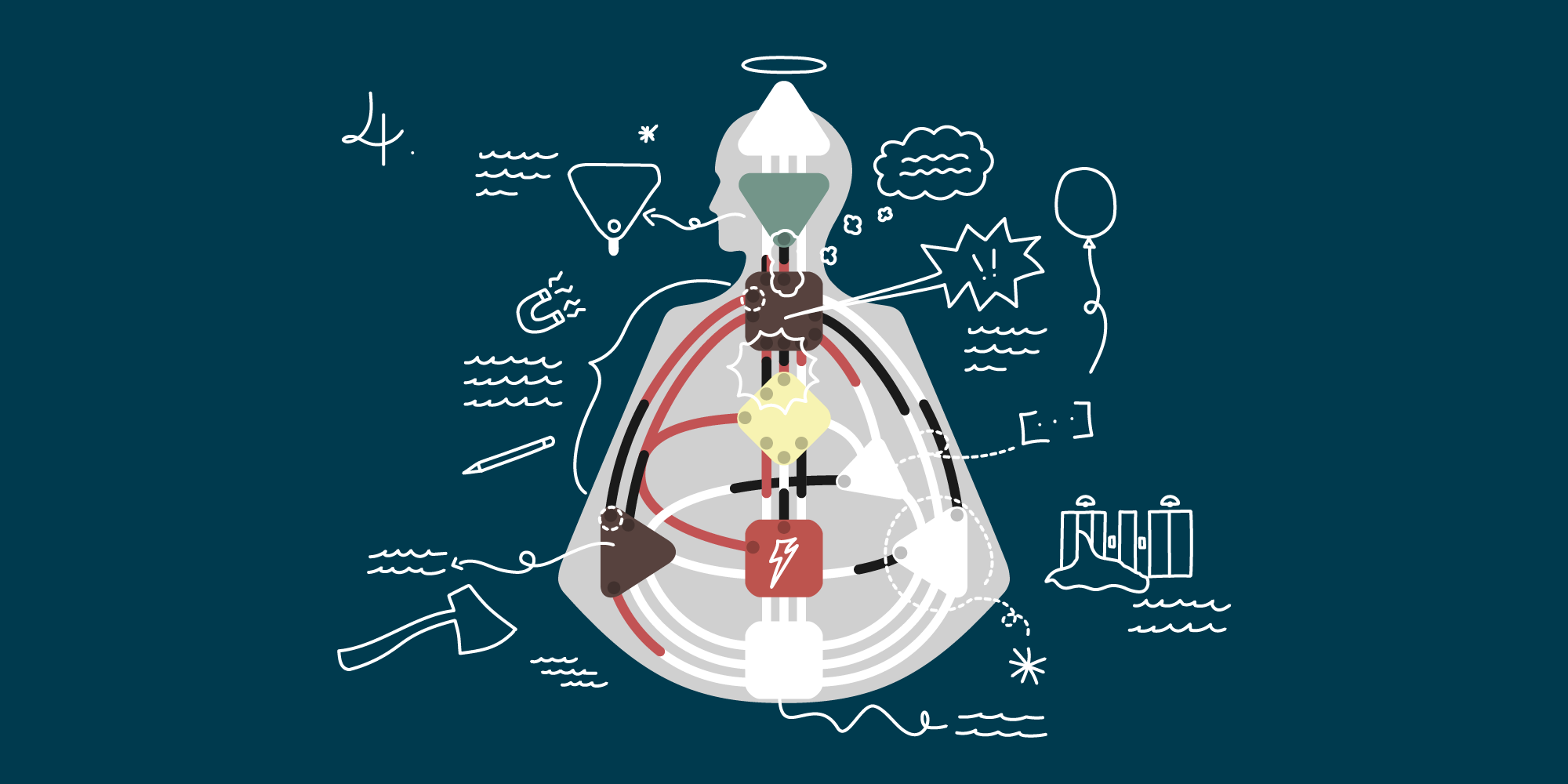
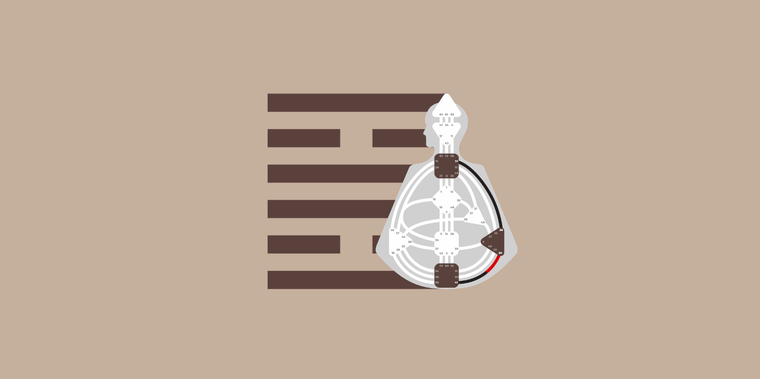
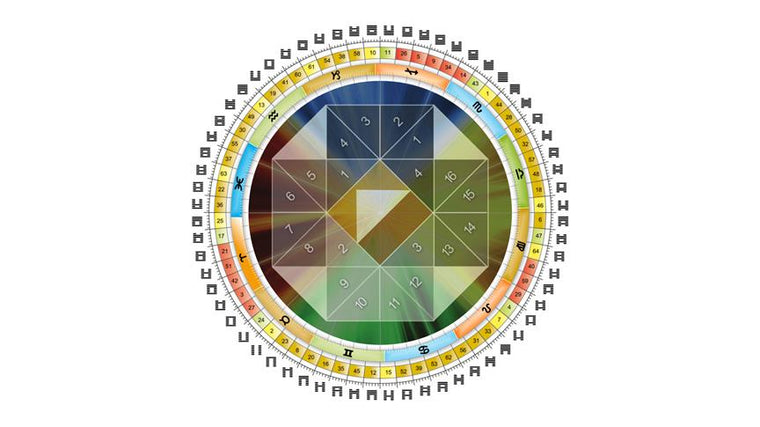
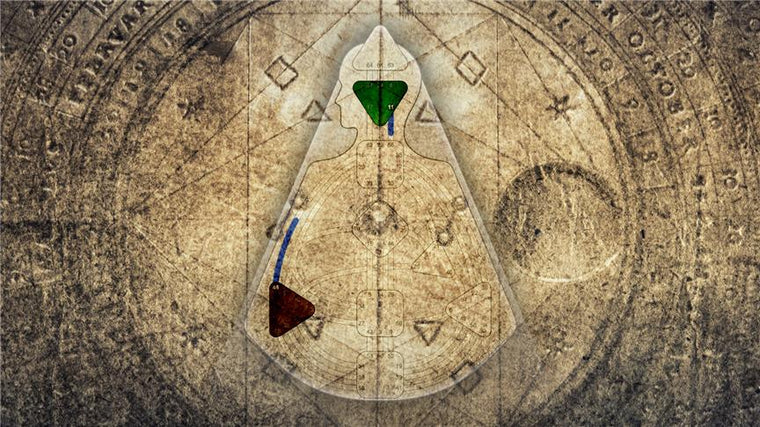
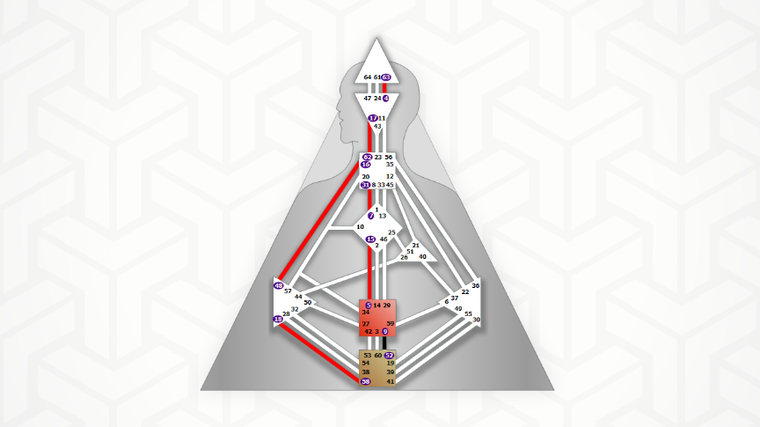
King carries the Left Angle Cross of the Plane, Gates 6 and 36, Gates 15 and 10. This is the cross of someone who is here to understand the material world, not the spiritual world, not the abstract world of philosophy or theory, but the physical, tangible, mundane reality that human beings live in every day. The material plane. The world of bodies, objects, towns, weather, money, work, sickness, aging, broken screen doors, rusted cars, the smell of a diner at six in the morning, the sound of a lawnmower on a Saturday. This cross describes a person who grasps, at a level deeper than intellect, that we are inextricably part of this material reality, that we cannot escape it and were never meant to, and that the grace available in human life is found inside the ordinary, not above it or beyond it.

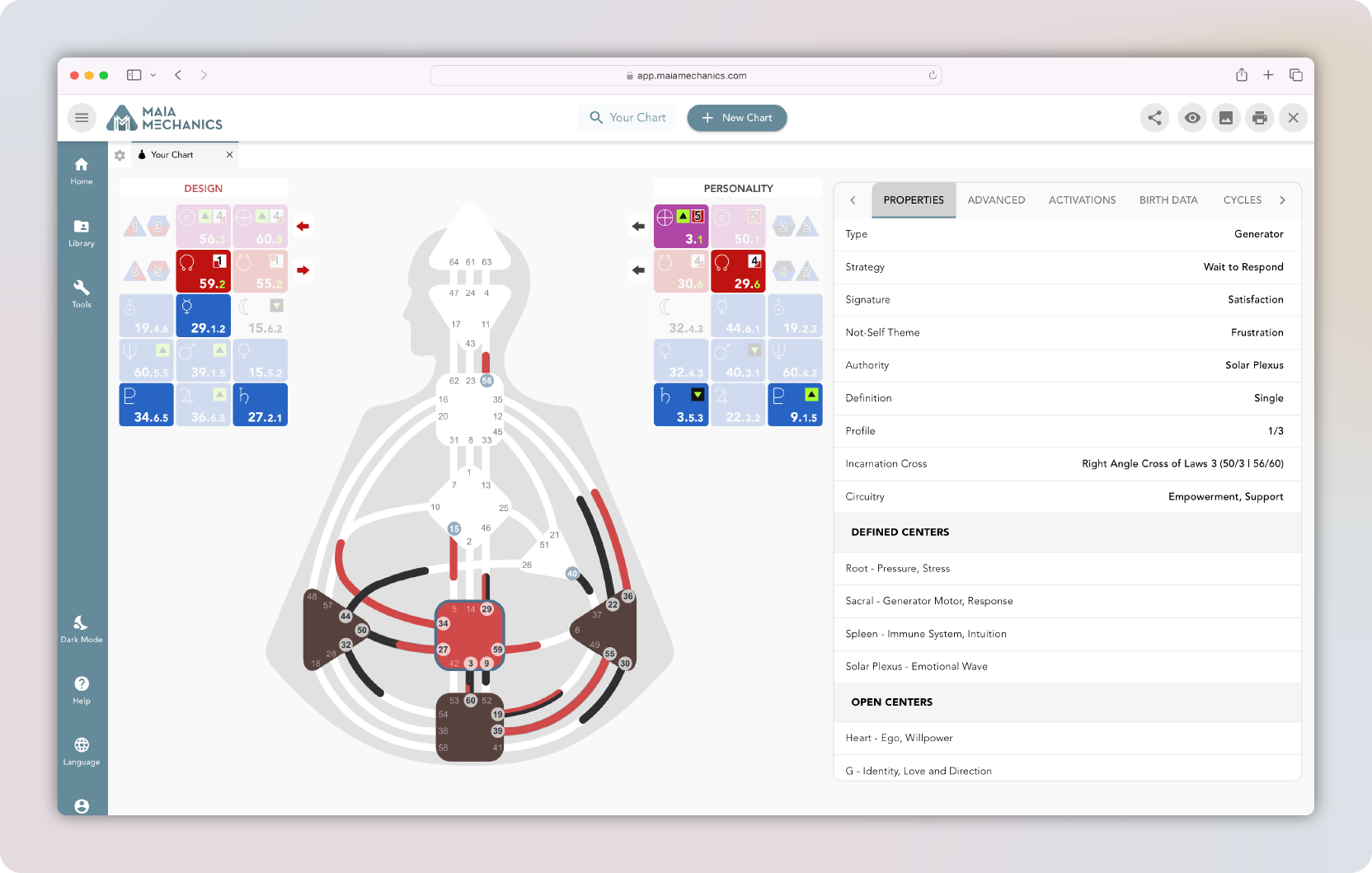
King's Incarnation Cross: A 6/2 on The Left Angle Cross of the Plane (6/36 | 15/10)
Image Source: MaiaMechanics.com
If you have read Stephen King with any attention at all, you already know this is exactly right. Every major theme of his work points here. King has spent sixty years insisting that horror is not about monsters. It is about people. Real people in real places doing real things when something goes wrong. The terror in his fiction comes not from the supernatural element but from how precisely he renders the material world that the supernatural disrupts. Castle Rock is not a symbol. It is a town. It has a gas station and a general store and people who gossip and a sheriff who is tired. Derry is not an abstraction. It has storm drains and a library and a standpipe and neighborhoods where the sidewalks buckle. The Overlook Hotel has a boiler that needs to be checked. The car in "Christine" needs bodywork. The dog in "Cujo" has specific veterinary symptoms. King does not use the material world as a backdrop. He inhabits it. He understands it the way someone understands their own hands.
This is the Cross of the Plane doing what it does. The person with this cross has a deep, almost bodily comprehension of material reality. They know how things work, not in a mechanical genius sense, but in the sense of being fully present in the physical world and finding it endlessly interesting. King has always been interested in how things actually function. How a small town's social structure operates. How a family's finances shape its choices. How the layout of a house affects who sees what and when. This is not detail for detail's sake. It is the expression of a life theme that says: the material world is where life happens, and it deserves your full attention.
The Left Angle orientation of this cross matters. Left Angle crosses are transpersonal. They are not about the individual working out their own process, and they are not about carrying something forward from past lives in the way a Right Angle cross might suggest. The Left Angle is about meeting others and influencing them through the interaction. King's purpose is not just to understand the material plane for himself. It is to guide others toward that understanding, to help people accept material reality, not as something to transcend or escape, but as the place where everything that matters actually happens.
This is what "On Writing" does. This is what the best of his fiction does. This is what his public presence as an older, established figure in American letters does. He keeps pointing people back to the ground. Back to the real. Back to the physical facts of life. His writing advice is almost aggressively material: sit in a chair, close the door, put words on paper, do it again tomorrow. His political commentary is rooted in material consequences, who gets hurt, who loses their house, who can't afford medicine. His interviews circle back, again and again, to the concrete. He does not float. He does not abstract. He stays on the plane.
The cross includes Gate 6, the Gate of Friction, which sits in his open Solar Plexus. This is the gate of emotional intimacy and conflict, the gate that governs how close we let people get and what happens when boundaries are crossed. In King's open Solar Plexus, this gate is activated by the cross but not part of a defined channel, meaning it is a theme he carries without having consistent, reliable access to its energy. He absorbs other people's emotions and amplifies it. His fiction is full of this, marriages under pressure, friendships tested past their limits, the excruciating intimacy of people trapped together in small spaces with something terrible happening. He writes about emotional friction with the accuracy of someone who has spent a lifetime feeling it from every direction without generating it himself.
Gate 36, the Gate of Crisis, also sits in his open Solar Plexus. This is the gate of darkening of the light, the experience of moving into unknown emotional territory, the feeling that something bad is coming and there is no way to prepare for it. This is, almost literally, the description of a Stephen King novel. The sense of approaching crisis. The darkening. The knowledge that ordinary life is about to be disrupted by something that cannot be controlled. Gate 36 in an open Solar Plexus means King does not generate emotional energy himself. He receives it. He picks it up from the world around him, amplifies it, and pours it into stories that millions of people recognize as true to their own experience of dread. The cross places this gate as one of its four cornerstones, meaning the experience of emotional crisis is not incidental to King's purpose. It is central. His life theme requires him to engage with the darkening, to bring it into the material world of his fiction, and to show that even in crisis, the material plane holds.
Gate 15, the Gate of Extremes, sits in his defined G Center. This is the gate of love of humanity, a broad, rhythmic capacity to embrace the full range of human behavior, from the saintly to the monstrous, without flinching. King's range as a writer of human character has always been remarkable. He writes killers and kindergarten teachers with the same level of engagement. He does not moralize. He does not sort his characters into good and evil and then treat them differently on the page. He treats them all as human. That evenness of attention, that willingness to look at the full spectrum of what people do and find it all worth rendering, is Gate 15 operating through the G Center's sense of identity and direction. It says: all of this is part of the material world. All of it belongs here. None of it should be looked away from.
Gate 10, the Gate of the Behavior of the Self, is also in his defined G Center, and it participates in several of the channels discussed earlier. But in the context of the cross, it takes on an additional dimension. Gate 10 is about love of self, about living as oneself, behaving in ways that are true to one's own nature. The Cross of the Plane puts this gate in a position where loving oneself and being oneself is directly connected to understanding and accepting material reality. The implication is that for King, being himself, writing what he writes, living how he lives, refusing to pretend to be a different kind of writer or a different kind of person, is not separate from his purpose. It is his purpose. By being fully himself in the material world, he demonstrates that the material world is enough. That you do not need to be somewhere else, someone else, doing something else. That the grace of ordinary life is available to anyone who stops trying to escape it.
This is what the Cross of the Plane ultimately points to, and it is visible in King's entire body of work and public life: the material world is not fallen. It is not a prison. It is not a waiting room for something better. It is the place where human beings live, and it contains everything we need. King's fiction takes ordinary towns, ordinary families, ordinary fears, and treats them as worthy of the same attention and craft that literary fiction reserves for supposedly more elevated subjects. His nonfiction says the same thing in plainer terms: do the work, pay attention to what is in front of you, stop pretending that the life you are living is less important than the life you wish you were living.
At seventy-eight, deep in the Role Model phase of his 6/2 Profile, this is the message King's entire existence communicates. Not through lectures or philosophy. Through the visible fact of a man who has spent his life on the material plane, fully engaged with it, fully present in it, and still here, still working, still paying attention, still treating the ordinary world as the most interesting thing there is. That is the Left Angle Cross of the Plane fulfilled.

King working in his office, then and now. Image Source: Instagram
Bringing It All Together
Stephen King is a Manifesting Generator with Sacral Authority and a 6/2 Profile, a self-contained creative engine built almost entirely for individuation, whose enormous response-driven output is fueled by a Sacral motor that never stops generating, guided by a fast Splenic survival instinct, and refined over a lifetime into a mastered craft that is unmistakably his own; around that defined core sit four open centers where the world pours in, the emotions he absorbs and amplifies into terror and grief on the page, the borrowed pressure that drove both his superhuman output and his addiction, the willpower he never had to prove, and the endless questions that gave his wide-open mind anything at all to write about; and beneath it all runs the theme of his life's work, the Left Angle Cross of the Plane, the man who stays on the ground, insisting that the material world, the small towns and broken screen doors and ordinary fears, is not something to escape but the very place where everything that matters actually happens, which is exactly what he has spent a lifetime, and seventy-eight years of being unmistakably himself, showing us.
Going Deeper: Gates Lines and Planetary Themes
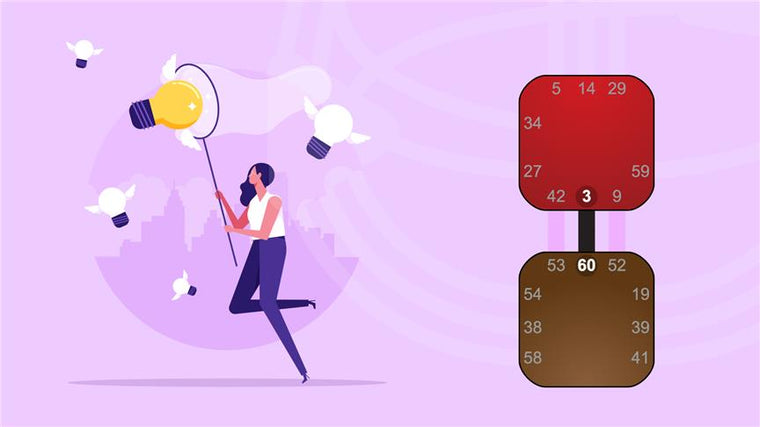
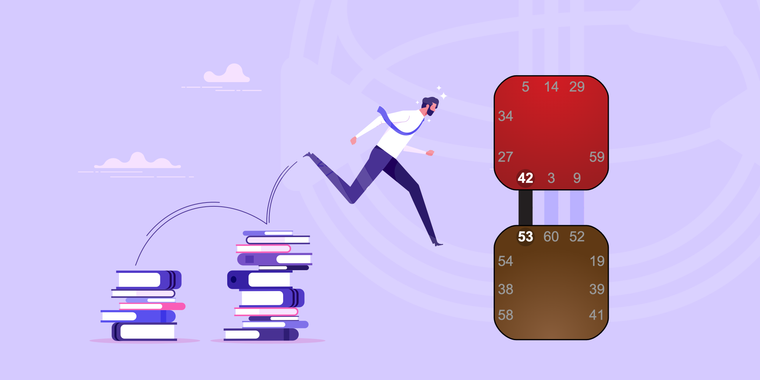
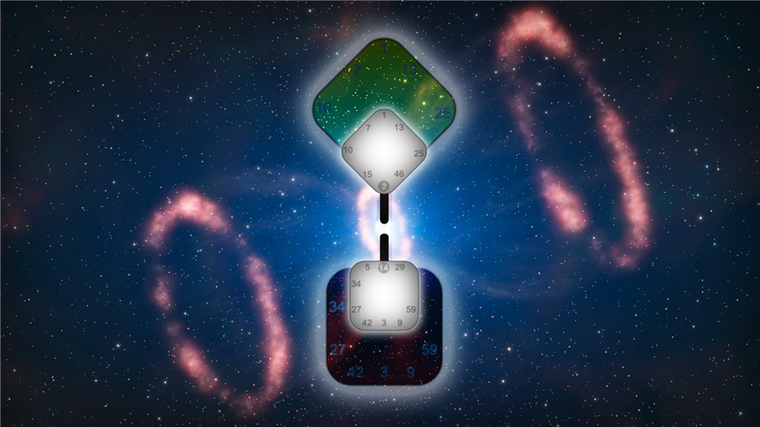
Beyond the surface-level reading above, you can go deeper into the nuances of the Planets, Gates, and Lines as they appear in a chart. As you begin to weave in these qualities, an even more comprehensive picture unfolds, one that speaks to the very essence of a design. With King, we'll use his Channel of Structuring (43-23), a design of individuality, as the anchor. But this time we'll also travel beyond the channel itself and pull in a related gate, Gate 62, to show how you can move around a chart and integrate gates and channels in combination, rather than reading any single piece in isolation. In this example, we have a mix of both conscious and unconscious gate activations.

Jupiter 43.6 Mars 23.5 Mars 62.4 Mercury 62.4
Image Source: MaiaMechanics.com
King's mind has a design hardwired for sudden, deeply individual knowing that demands to be explained, paired with a gift for language, detail, and the disciplined withdrawal needed to get that knowing out in a form others can actually absorb. That combination, individual insight meeting painstaking verbal craft, is the engine behind decades of novels that mutated how millions of people think about fear, storytelling, and the ordinary world.
Start with his Personality 43.6, the Gate of Insight at the sixth line. This is the line that carries the name of the whole hexagram: Breakthrough. The 43 is the gate of the inner voice, a mind that knows things suddenly, not through step-by-step reasoning but through spontaneous flashes. The sixth-line version of this is very deep. It has the potential to wait long enough in its knowing process to become genuinely clear about what it knows before it says anything. And if it cannot get clear, it says nothing at all. It just sits there and evaluates whether other people's explanations are valid or not. The shadow side is real too. The 43 carries the fear that no one will ever understand what it means, that no one will know who it is or what it knows. That anxiety lives in the awareness center, and for someone like King, who spent years writing in a laundry room, unpublished, wondering if anyone would ever read his work, that fear would have been a constant companion. The sixth line also carries a detriment quality associated with Mars, where the ego can use its insight to justify its lesser attributes and drag those into whatever new order it establishes. There is a tendency to let the value of knowing override everything else in life. King has written openly about his years of alcoholism and drug addiction, periods where his brilliance as a knower coexisted with serious self-destruction. The 43.6 detriment warns exactly about this: carrying the old mess into the new breakthrough instead of letting the mutation clean house.
Jupiter activates this 43.6. Jupiter brings expansion, growth, abundance; it inflates whatever it touches. So the insight capacity of the 43.6 gets amplified, bigger knowing, bigger breakthroughs, but also bigger anxiety about whether anyone will understand. Jupiter on this gate helps explain the sheer volume of King's output. The man has published well over sixty novels. That is Jupiter expanding the breakthrough process again and again, insight after insight, each one demanding to be brought into form.
Now move to the Design 23.5, the Gate of Assimilation at the fifth line. Gate 23 is the other half of the 43-23 channel, the throat side, the voice that says "I know" or "I don't know." This is the gate of individual expression through language, and it is specifically amoral. It does not care about conventional morality. It cares about getting the unique knowing out. The fifth line is the transpersonal line, the heretic's gift. A person with the 23.5 does not have to shout "I know." Other people project onto them that they know something. They are asked. And when they reveal their knowing and the explanation makes sense to others, they are rewarded for it and respected. King did not have to chase his audience after a certain point. People came to him expecting that he would know something about the dark, the strange, the terrifying. They projected onto him that he was the authority on those territories. And when his explanations, his novels, delivered, that projection was confirmed and he was rewarded enormously. The detriment side of the 23.5 is a motive-driven assimilation, where you know people are projecting on you and you use that strategically to get your knowing out. Whether King operated more from the exalted gift or the calculated detriment probably shifted across different periods of his career. But in either case, the 23 only really cares about one thing: that somebody is listening to its "I know."
Mars activates this 23.5. Mars brings energy, drive, sometimes aggression. On this fifth-line expression of individual knowing, Mars gives the explanation a forceful, pushing quality. King's prose is famously relentless. It does not politely suggest. It grabs. That Mars energy on the 23.5 means the explanation comes out with real muscle behind it, sometimes with an edge that can be confrontational. His voice as a writer is not gentle. It is direct, blunt, occasionally brutal. Mars does that.
Here is where we leave the 43-23 channel itself and travel to another part of the chart, because a design is not a set of isolated channels but a web you can move through. King's knowing does not stop at the individual voice of the 23. It also gets built out, named, and made concrete somewhere else entirely, through Gate 62.
His Personality Gate 62, line 4, is the Gate of Details in the line of Asceticism. This is a completely different circuit. Gate 62 is logical, not individual. It is the gate of naming things. Its voice says "I think" or "I don't think." It transforms mental opinions into language, and it does so through careful, patient detail. The fourth line here is about ascetic withdrawal. The detail can only be expressed properly after periods of isolation and reflection. You pull back from the world, work out the specifics in private, and wait for the right moment to share them. Anyone who has read about King's daily writing discipline knows this pattern. He writes every single day. He goes into his room, shuts the door, and works the detail, page after page. He has described his writing process as fundamentally solitary, a withdrawal into the work where the details get assembled one at a time. The 62.4 is not a motor. It is not emotional. It is patient, step-by-step construction, the opposite of the 43's sudden flash of insight. And yet King clearly has both operating: the flash comes first, and then the 62.4 sits down and names everything, describes everything, builds the logical architecture around it.
Mars activates this first appearance of the 62.4, pushing energy into the withdrawal-and-detail process. This means the isolation is not passive or peaceful. There is a driven quality to it, an urgency. King did not just retreat to write; he drove himself into it. Two thousand words a day, every day, even on holidays. Mars on the 62.4 makes the ascetic withdrawal feel more like a campaign than a vacation. And the detriment quality of the fourth line under pressure is strategic: organizing your detail in isolation and then waiting for the exact right moment to release it. King's relationship with his publishers, his timing of releases, his management of his own output, all of that has a strategic quality entirely consistent with Mars fueling this gate.
His Design 62.4 appears a second time, now activated by Mercury. Mercury is about communication, messaging, mental articulation. Mercury on the 62.4 doubles down on the linguistic function of this gate. Remember, the 62 is specifically the gate of naming things. Mercury here means the way King talks about what he knows, the way he articulates detail, is itself a defining feature of his design. His writing is famous for the accumulation of small, precise, ordinary details, the brand name of the beer on the counter, the specific sound a screen door makes, the way a character's shirt is tucked in. Those details are not decorative. They are the mechanism through which his logical mind translates its perceptions into language other people can process. Mercury on this gate means the communication of detail is not an afterthought; it is the point.
So here is the picture, drawn from moving across the whole chart rather than a single channel: King's design gives him a mind that knows things suddenly and uniquely through the 43.6, expanded by Jupiter into enormous productive capacity. That knowing moves into expression through the 23.5, the amoral individual voice that people project authority onto, driven hard by Mars. And then the whole thing gets built out, named, and detailed through the 62.4, first with Mars pushing the solitary discipline of daily writing, and then with Mercury refining the actual language, the naming, the articulation of every small particular thing. The man who scared a hundred million readers did it with sudden insight, a voice people could not stop listening to, and an almost monastic devotion to getting the details exactly right.
Try Yourself and Have Fun
There's no "right or wrong" way to keynote a chart. This is simply one way of doing it. Take some time with your own BodyGraph, follow this basic process, and sit with the results for yourself. Experiment with weaving in the different Gates as they relate to your Defined and Open Centers, and take time to ponder the meaning of the planetary accents. It's the best way to gain a deeper understanding and appreciation of the unique connections in your own design, and to begin unraveling the mysteries of what your chart actually has to say about you.
To learn more about the reading services Ryan provides, visit his IHDS professional profile here.

Ryan Hanna




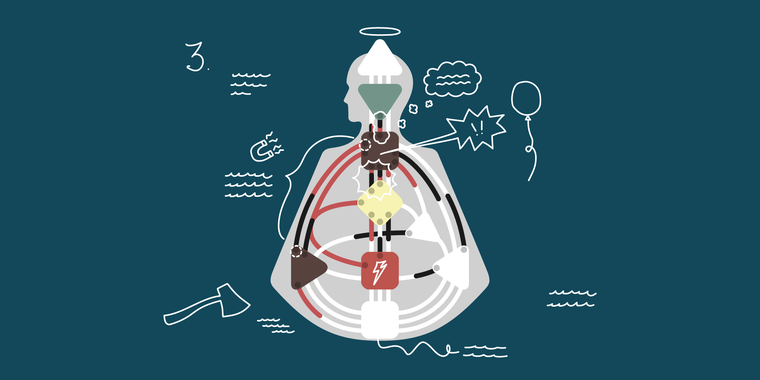
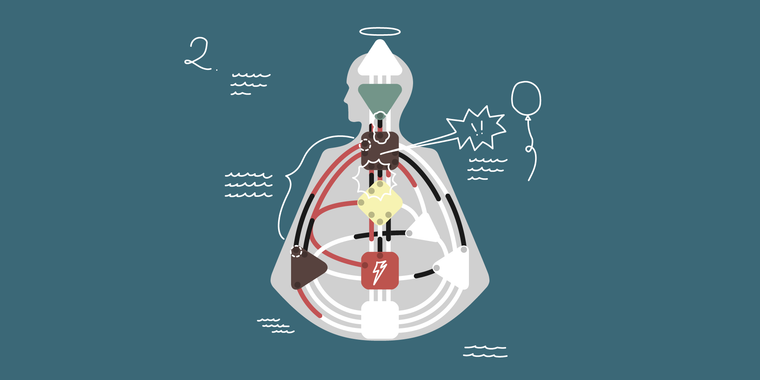
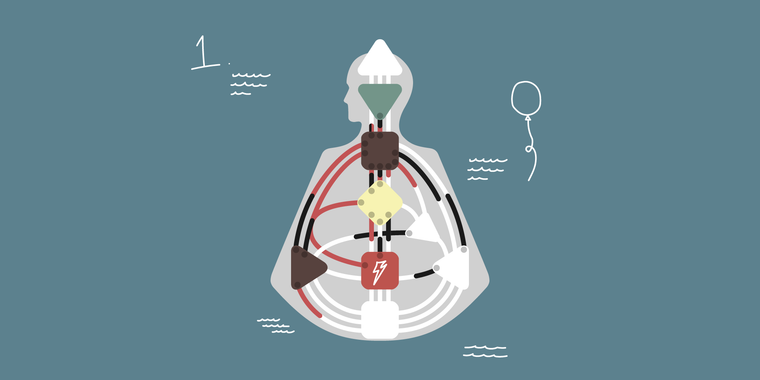

















Teachings by Topic
Type & Strategy
Explore Ra Uru Hu's lectures by Human Design topic.
Basics for Beginners
Sale price$10.00
Are you new to Human Design, or looking for a solid understanding of the BodyGraph, its mechanics, and an overview of the Types and major Inner Authorities? This 1-hour introduction to the basics of Human De...
Generator and Manifesting Generator
Sale price$9.00
The type that is essential to the well-being of our species as a whole is the Generator, who represent around 70% of the human population (Half of which are pure Generators, the other half are Manifesting Ge...
The Way of the Generator
Sale price$57.00
Living our Design involves setting the mind and its Not-Self urgings aside, and relying instead on Strategy and Authority. It’s a process of learning to “surrender to the experiment”, as Ra puts it. That sur...
Fallen Angels
Sale price$9.00
The way of the Generator is everybody's way in the homogenized world while the planet is run by and dominated by the frustrated, enslaved spirit of Generators.
In order for Generators to be able to live acco...
Frustration or Satisfaction | RC8.10
Sale price$19.00
Generators represent almost 70% of the world’s population. As a vital source of productive energy, they generally have a great impact on everyone around them, making their awareness and well-being important ...
The Art of Reading Generators
Sale price$57.00
If you are interested in understanding Generators, either because you are one yourself or you want to learn about the dominant Type on this planet, this package is an excellent learning opportunity. The Art ...
Sex and the Generator
Sale price$19.00
The nature of sexuality varies greatly among the different Types. And the primary difference stems from the Sacral Center itself, which is the core and essence of what a Generator is.
Through response, the n...
Generator Transformation - The Color of Envelopment
Sale price$19.00
A detailed guide to the Generator aura and its unique relationship to each Type, this lecture explores the theme of conditioning through Color Transference and how varied this phenomenon is for Generators—of...
Projector
Sale price$9.00
Projectors are a non-energy Type and represent just over 20% of the population. As a relatively new form, they are only now beginning to come into their natural power and position. Join Ra as he discusses ho...
Projectors - A Clarion's Alert
Sale price$9.00
Projectors, your focused and penetrating aura is needed through invitation to take in knowledge bases and master the systems that organize and hold humanity together. You are needed as an enormous resource f...
The Art of Reading Projectors
Sale price$57.00
The Art of Reading Projectors is an invaluable audio experience for anyone wanting deeper insight into the Projector Aura Type. Ra takes us through six overviews of unique Projectors, each approximately 30 m...
Projector Empowerment 1 | Lectures
Sale price$47.00
Projectors have the potential to make tremendous contributions to those in their lives. By Design, Projectors are about the other. The insight and guidance they bring to others when they are in alignment wit...
Projector Empowerment 2 | Analysis
Sale price$67.00
Acknowledging how each Projector offers their unique guidance to the world can help empower their signature of success.
Projector Empowerment | Part II: Analysis focuses on Ra’s examination of individual Pro...
Projector Transformation - Color Transference Recognition
Sale price$19.00
This lecture dives into substructure, offering the practical value of understanding Personality Motivation and Perspective to Projector success. As the youngest Type historically, Projectors are on the rise,...
Manifestor
Sale price$9.00
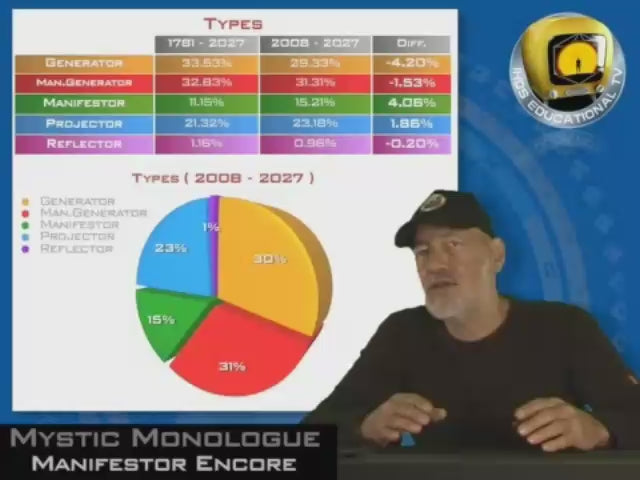
Only about 9% of the population are Manifestors. As we move towards 2027, statistically there will be a real burst in the number of their births. This theme of the Manifestor and particularly how to raise Ma...

Manifestor Manifesto
Sale price$67.00
Do you remember the song, “It’s Not Easy Being Green”? The same could be said of the challenges of being a Manifestor. Manifestors currently account for 9% of the population — a small percentage, but with qu...
Manifestor Manifesto (eBook)
Sale price$49.00
This guide for Manifestors came out of a five-week program in which Ra informed Manifestors how to transform their lives and fully embrace their manifesting potential and gifts. Although this material was ex...
Manifestor Encore
Sale price$9.00
We are living in a time of transition, a time of change, a time of deep mutation. Everything about the nature of the world we live in, in a sense, can be understood from the current background frequency.
The...
Manifestor Transformation - Motivation and Impact
Sale price$19.00
This is a deeper exploration of the Manifestor process through aura and Color, and a guide to correctness for Manifestors and those who are impacted by them.
Historically, Manifestors were the alphas of huma...
Reflector
Sale price$9.00
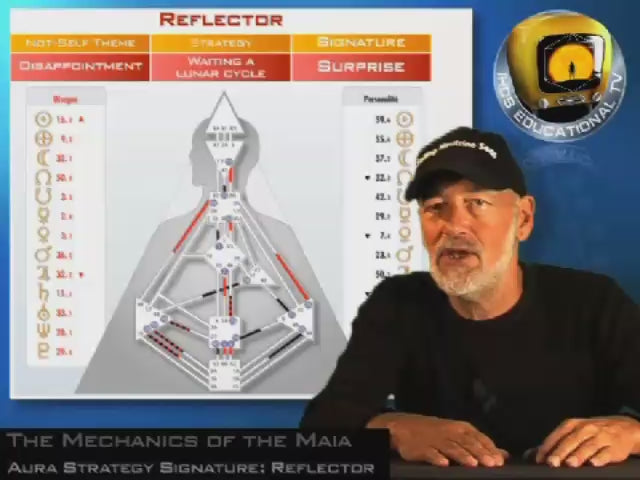
Reflectors represent around 1.3 or 1.4% of the human population, and as such are very different from the other Types.
A Reflector’s design is unique in that there is no definition in the Bodygraph, and there...
Reflector Reflections
Sale price$19.00
This is a practical guide to understanding the Reflector process and purpose along with new tools for aiding them in their experiment.
Reflectors are the rarest Type on the planet. WIthout any definition in ...
The Signature Question
Sale price$9.00
Signposts are something that allow you to have a way for your mind to measure. Signature is the positive side of the not-self theme of any Type. In The Signature Question, Ra explains the signposts for each ...
The Type Series: Strategy, Signature and Aura
Sale price$22.00
Regular price$36.00
Everyone has the potential for differentiation in this life.
What is actualized through Type—Generator (and Manifesting Generator), Manifestor, Projector, Reflector—is an extraordinary potential inherent in ...
Type Sexual Signatures
Sale price$19.00
We all have the potential for sexual fulfillment. However, most human beings don't enter into bonds correctly. With most of the population being made up of Generators, this leaves much of the world giving of...

You and the Other
Sale price$19.00
Type is one of the most influential aspects of the connection between two people. The inherent aura mechanics of each person in a partnership determine how each can relate to the other — or how the relations...

A Human Design Guide to Parenting
Sale price$19.00
Raising children can be challenging in many ways. Knowing what to do and how to approach them based on their uniqueness takes awareness of specific techniques that parents are often not equipped with.
Human ...

Raising Children According to Their Design
Sale price$17.00
For many of us, learning to live according to our Design is eye-opening. So many things change and make sense when our approaches and choices are informed by our unique Design. As we recognize more and more ...
Nurturing a Unique Being
Sale price$29.00
There are many perspectives on how children should be raised. How do we know which ones are best?
Everything from what to eat, how to create bedtime habits, and the best methods to educate are often taught i...
Design Concepts
Sale price$97.00
The Maia? The Monopole? And what is the G Center?
If you’re looking for an in-depth introductory teaching to Human Design, the 10-lesson Design Concepts course is a valuable guide to the foundational element...
Design Concepts (eBook)
Sale price$49.00
If you’re new to Human Design, this ebook will greatly expand your understanding of Human Design fundamentals. Taught by Ra Uru Hu, Design Concepts is an ideal opportunity for Human Design students and newco...

The Four Views
Sale price$99.00
Do you want to learn more about Human Design but don’t know where to begin? Knowing how to look at the BodyGraph is key to understanding foundational concepts to start your own experiment.
After years of tea...

The Four Views (eBook)
Sale price$49.00
Do you want to learn more about Human Design but don’t know where to begin? Knowing how to look at the BodyGraph is key to understanding foundational concepts to start your own experiment.
After years of tea...
Keynoting
Sale price$29.00
Looking at a Human Design chart can be overwhelming. There is simply so much information available. Some people see the Gates first, others the Channels, and some the Centers. But, what is the "correct" meth...
The History of the Types - An Evolutionary View | RA 2.10
Sale price$19.00
In 1994, Ra Uru Hu published a collection of graphics and keynotes he called “Rave Anatomy: Mapping the Mechanics of the Maia.” In 2007, he updated those graphics and recorded Rave Anatomy 1. The following y...

Beginner 1: Fundamentals of the Human Design System
Sale price$249.00
Regular price$411.00
Beginner 1 is your gateway into the original teachings of Ra Uru Hu. This immersive course delivers a carefully curated learning experience designed to ground you in the essential mechanics, language, and co...

Beginner 2: Type, Strategy, and Inner Authority
Sale price$249.00
Regular price$426.00
This course offers a clear and practical introduction to the four Human Design Types and the vital role of Strategy and Inner Authority. Through a curated series of Ra Uru Hu’s most accessible teachings, you...
Your Own Authority - A Beginner's Guide to Human Design
Sale price$22.00
Your Own Authority – A Beginner’s Guide to Human Design by Dharmen and Leela Swann Herbert - e-Book with full-color illustrations, 138 pages.
This beginner’s guide is a general introduction to the Human Desi...

Intermediate 3: Relationships, Sex, and Family
Sale price$349.00
Regular price$589.00
Relationships are one of the most powerful mirrors for awakening—and one of the most complex arenas of conditioning. In this course, Ra Uru Hu explores how Human Design reveals the true mechanics of how we b...
Ra's Guide to the Rave Chart
Sale price$29.00
Human Design BodyGraphs display an intricate synthesis of 26 activations across 9 Centers and 64 Gates. Is there a simple way to extract and benefit from the information being displayed without needing to kn...

Ra's Guide to the Movie
Sale price$39.00
Behind its practical aspects, Human Design has roots in deeply mystical concepts. When one is beginning to investigate those deeper aspects of the knowledge, one needs to study the foundational concepts to s...

The Ra Uru Hu Lectures | Ibiza 2009
Sale price$57.00
Regular price$76.00
This 4-part video collection explores how we navigate the changing mechanics of life and consciousness—uncovering the impact of shifting financial structures, the role of the Moon in shaping our experiences,...

The Just About You Series
Sale price$117.00
Regular price$172.00
The Just About You series brings together six essential lectures that explore the many ways Human Design shapes our lives and relationships. From uncovering the wisdom hidden in our shadows and understanding...

The Mystic Monologues Series
Sale price$77.00
Regular price$108.00
The Mystic Monologues invites you into the extraordinary journey of Ra Uru Hu, a skeptic turned mystic, whose life was transformed by a profound encounter with “The Voice” on January 3, 1987. This series of ...
Teachings by Theme
Decision-Making
Explore Ra Uru Hu's lectures categorized into life themes and goals.
Basics for Beginners
Sale price$10.00
Are you new to Human Design, or looking for a solid understanding of the BodyGraph, its mechanics, and an overview of the Types and major Inner Authorities? This 1-hour introduction to the basics of Human De...
Your Own Authority - A Beginner's Guide to Human Design
Sale price$22.00
Your Own Authority – A Beginner’s Guide to Human Design by Dharmen and Leela Swann Herbert - e-Book with full-color illustrations, 138 pages.
This beginner’s guide is a general introduction to the Human Desi...
Generator and Manifesting Generator
Sale price$9.00
The type that is essential to the well-being of our species as a whole is the Generator, who represent around 70% of the human population (Half of which are pure Generators, the other half are Manifesting Ge...
The Way of the Generator
Sale price$57.00
Living our Design involves setting the mind and its Not-Self urgings aside, and relying instead on Strategy and Authority. It’s a process of learning to “surrender to the experiment”, as Ra puts it. That sur...
Fallen Angels
Sale price$9.00
The way of the Generator is everybody's way in the homogenized world while the planet is run by and dominated by the frustrated, enslaved spirit of Generators.
In order for Generators to be able to live acco...
Frustration or Satisfaction | RC8.10
Sale price$19.00
Generators represent almost 70% of the world’s population. As a vital source of productive energy, they generally have a great impact on everyone around them, making their awareness and well-being important ...
Generator Transformation - The Color of Envelopment
Sale price$19.00
A detailed guide to the Generator aura and its unique relationship to each Type, this lecture explores the theme of conditioning through Color Transference and how varied this phenomenon is for Generators—of...
Projector
Sale price$9.00
Projectors are a non-energy Type and represent just over 20% of the population. As a relatively new form, they are only now beginning to come into their natural power and position. Join Ra as he discusses ho...
Projectors - A Clarion's Alert
Sale price$9.00
Projectors, your focused and penetrating aura is needed through invitation to take in knowledge bases and master the systems that organize and hold humanity together. You are needed as an enormous resource f...
Projector Transformation - Color Transference Recognition
Sale price$19.00
This lecture dives into substructure, offering the practical value of understanding Personality Motivation and Perspective to Projector success. As the youngest Type historically, Projectors are on the rise,...
Manifestor
Sale price$9.00
Only about 9% of the population are Manifestors. As we move towards 2027, statistically there will be a real burst in the number of their births. This theme of the Manifestor and particularly how to raise Ma...
Manifestor Manifesto
Sale price$67.00
Do you remember the song, “It’s Not Easy Being Green”? The same could be said of the challenges of being a Manifestor. Manifestors currently account for 9% of the population — a small percentage, but with qu...
Manifestor Manifesto (eBook)
Sale price$49.00
This guide for Manifestors came out of a five-week program in which Ra informed Manifestors how to transform their lives and fully embrace their manifesting potential and gifts. Although this material was ex...
Manifestor Encore
Sale price$9.00
We are living in a time of transition, a time of change, a time of deep mutation. Everything about the nature of the world we live in, in a sense, can be understood from the current background frequency.
The...
Manifestor Transformation - Motivation and Impact
Sale price$19.00
This is a deeper exploration of the Manifestor process through aura and Color, and a guide to correctness for Manifestors and those who are impacted by them.
Historically, Manifestors were the alphas of huma...
Reflector
Sale price$9.00
Reflectors represent around 1.3 or 1.4% of the human population, and as such are very different from the other Types.
A Reflector’s design is unique in that there is no definition in the Bodygraph, and there...
Reflector Reflections
Sale price$19.00
This is a practical guide to understanding the Reflector process and purpose along with new tools for aiding them in their experiment.
Reflectors are the rarest Type on the planet. WIthout any definition in ...
The Signature Question
Sale price$9.00
Signposts are something that allow you to have a way for your mind to measure. Signature is the positive side of the not-self theme of any Type. In The Signature Question, Ra explains the signposts for each ...
The Type Series: Strategy, Signature and Aura
Sale price$22.00
Regular price$36.00
Everyone has the potential for differentiation in this life.
What is actualized through Type—Generator (and Manifesting Generator), Manifestor, Projector, Reflector—is an extraordinary potential inherent in ...
Projector Empowerment 1 | Lectures
Sale price$47.00
Projectors have the potential to make tremendous contributions to those in their lives. By Design, Projectors are about the other. The insight and guidance they bring to others when they are in alignment wit...
Projector Empowerment 2 | Analysis
Sale price$67.00
Acknowledging how each Projector offers their unique guidance to the world can help empower their signature of success.
Projector Empowerment | Part II: Analysis focuses on Ra’s examination of individual Pro...
Solar Plexus Inner Authority
Sale price$9.00
If you have a defined Solar Plexus Center, this is automatically your decision making authority. It is the most common of all inner authorities, belonging to about 51% of humanity.
The Solar Plexus center op...
Sacral Inner Authority
Sale price$9.00
Sacral Authority belongs to non-emotional Generators, including Manifesting Generators, who have an undefined Solar Plexus Center. Correct Sacral Authority responds existentially, in each moment, to what li...
Splenic Inner Authority
Sale price$9.00
In order to have Splenic authority, you cannot have a defined Solar Plexus or Sacral Center but must have a defined Splenic Center.
Splenic authority operates only in the Now. It is not a motor and can be d...
Minor Authorities
Sale price$9.00
Ra looks at a group of rare authorities that represent about 4% of people. They can be quickly recognized as designs with at least one defined channel and an open Solar Plexus Center, an open Sacral Center a...
No Direct Inner Authority
Sale price$9.00
Definition is what leads us to see both Type and where the decision making Authority lies. In this lecture, Ra takes us through the two very different variations of those who have no direct inner authority: ...

The Inner Authority Series
Sale price$27.00
Regular price$45.00
Inner Authority is a transformative series where Ra Uru Hu guides you through the core mechanics of decision-making within the Human Design System. This series provides a comprehensive understanding of Inner...
Outer Authority - The Truth About Mind
Sale price$19.00
How much do you trust your mind when making decisions? Human Design states that giving the Mind this authority frequently leads to resistance and getting stuck in the themes of our open centers.
When using S...
The Just About You Series
Sale price$117.00
Regular price$172.00
The Just About You series brings together six essential lectures that explore the many ways Human Design shapes our lives and relationships. From uncovering the wisdom hidden in our shadows and understanding...
Design Concepts
Sale price$97.00
The Maia? The Monopole? And what is the G Center?
If you’re looking for an in-depth introductory teaching to Human Design, the 10-lesson Design Concepts course is a valuable guide to the foundational element...
Design Concepts (eBook)
Sale price$49.00
If you’re new to Human Design, this ebook will greatly expand your understanding of Human Design fundamentals. Taught by Ra Uru Hu, Design Concepts is an ideal opportunity for Human Design students and newco...
The Four Views
Sale price$99.00
Do you want to learn more about Human Design but don’t know where to begin? Knowing how to look at the BodyGraph is key to understanding foundational concepts to start your own experiment.
After years of tea...
The Four Views (eBook)
Sale price$49.00
Do you want to learn more about Human Design but don’t know where to begin? Knowing how to look at the BodyGraph is key to understanding foundational concepts to start your own experiment.
After years of tea...

The Human Design System: A Complete Guide Series
Sale price$197.00
Regular price$285.00
In this multi-lesson video series Ra Uru Hu offers a profound and comprehensive journey through the full architecture of Human Design. Spanning topics from the origin of consciousness and the mechanics of th...
Beginner 1: Fundamentals of the Human Design System
Sale price$249.00
Regular price$411.00
Beginner 1 is your gateway into the original teachings of Ra Uru Hu. This immersive course delivers a carefully curated learning experience designed to ground you in the essential mechanics, language, and co...
Beginner 2: Type, Strategy, and Inner Authority
Sale price$249.00
Regular price$426.00
This course offers a clear and practical introduction to the four Human Design Types and the vital role of Strategy and Inner Authority. Through a curated series of Ra Uru Hu’s most accessible teachings, you...

Beginner 3: The Not-Self and Conditioned Mind
Sale price$199.00
Regular price$307.00
Beginner 3 offers an essential introduction to one of the most transformative teachings in Human Design: the Not-Self. Through Ra Uru Hu’s foundational lectures and in-depth analysis, you’ll explore how ment...
The Mystic Monologues Series
Sale price$77.00
Regular price$108.00
The Mystic Monologues invites you into the extraordinary journey of Ra Uru Hu, a skeptic turned mystic, whose life was transformed by a profound encounter with “The Voice” on January 3, 1987. This series of ...