























































Generate your free Human Design chart—personal, relationship, or transit—and start exploring your design with guided insights.
Part 2: Stephen King's Definition & Channels
Jun 30, 2026
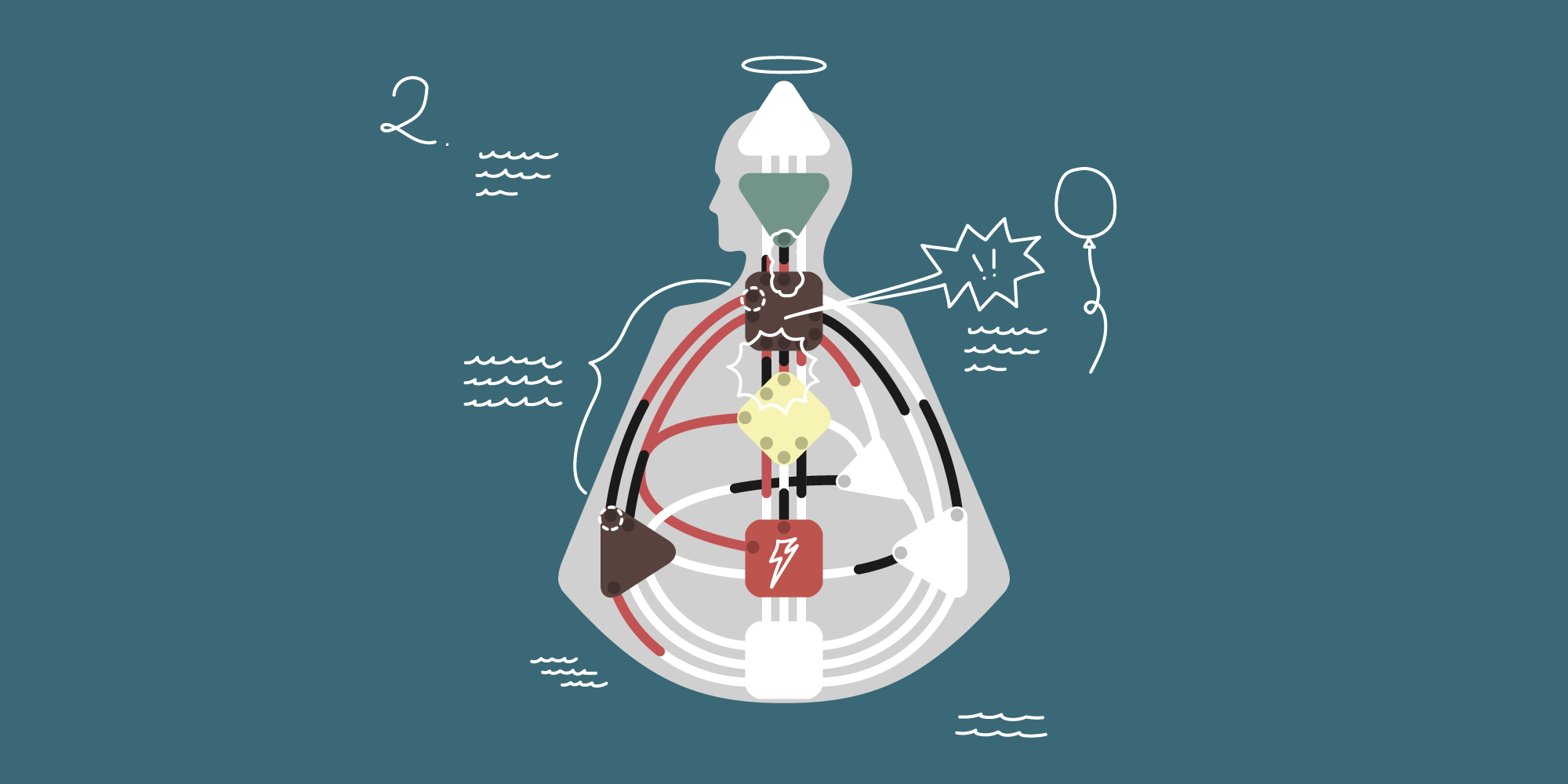
Keynoting Stephen King's Human Design - Part 2
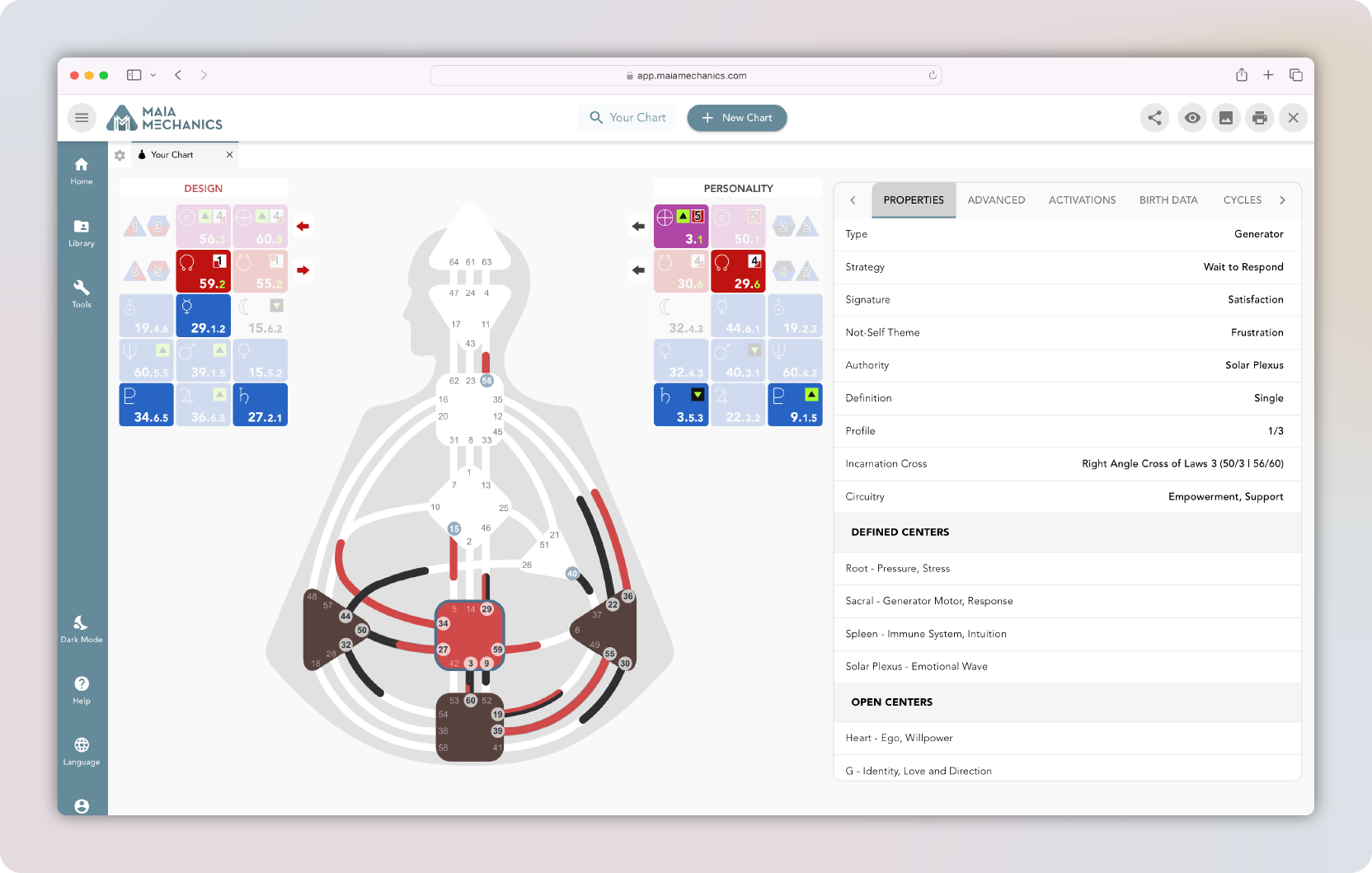
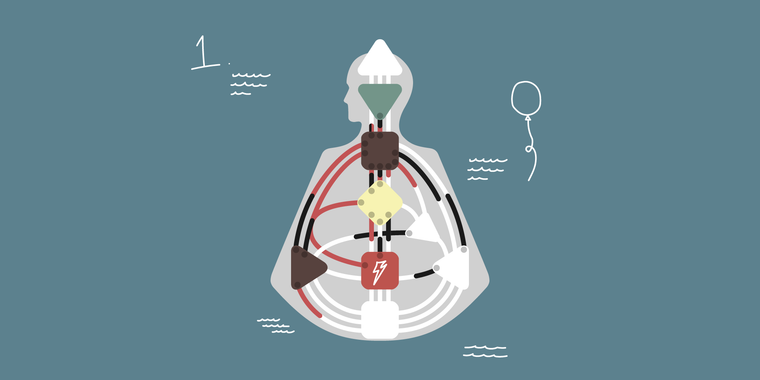
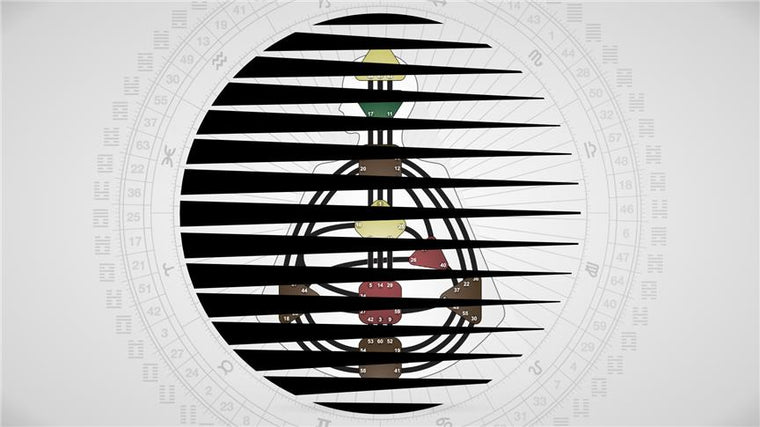
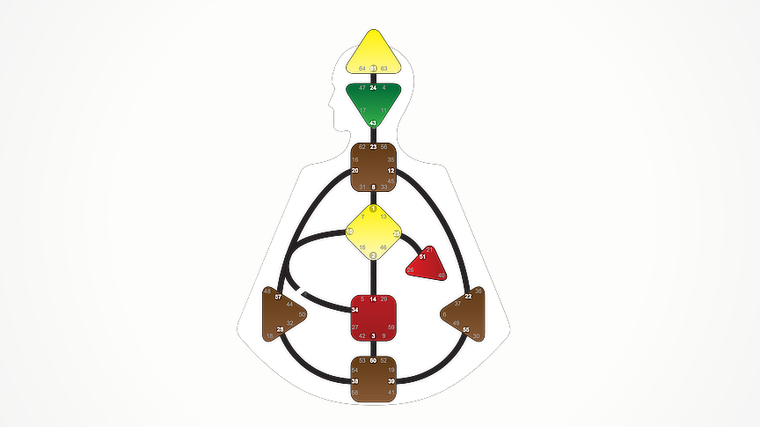
King has Single Definition. This means every defined center in his chart is connected in one continuous flow. There are no gaps that need bridging by other people or by transit. He processes experience as a unified system. Information goes in and gets assimilated without waiting for an external piece to complete the circuit. This is a person who does not need someone else in the room to feel whole or to make sense of what he's working on. For a writer who has spent decades working alone in a room every morning, Single Definition is almost comically fitting. He is self-contained. The energy moves through him in one stream, and what comes out the other end, the books, the stories, the columns, carries that quality of internal consistency. There's no split to resolve, no dependency on a collaborator to feel complete.

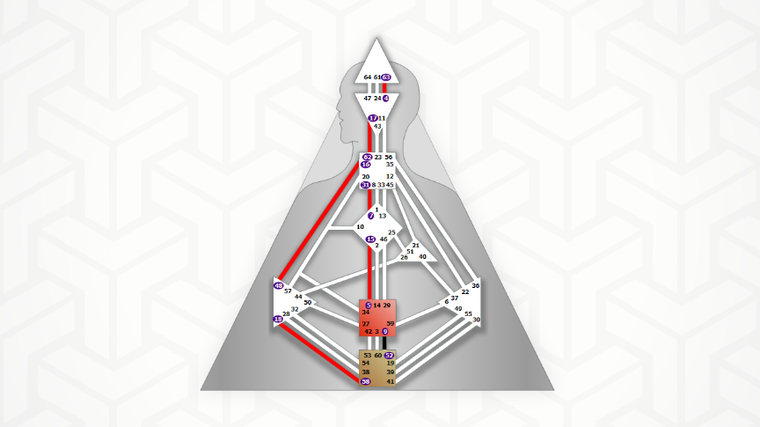
Stephen King's Human Design Chart (A Rodden Rating) Image Source: MaiaMechanics
The Hard Wiring: Definition & Channels
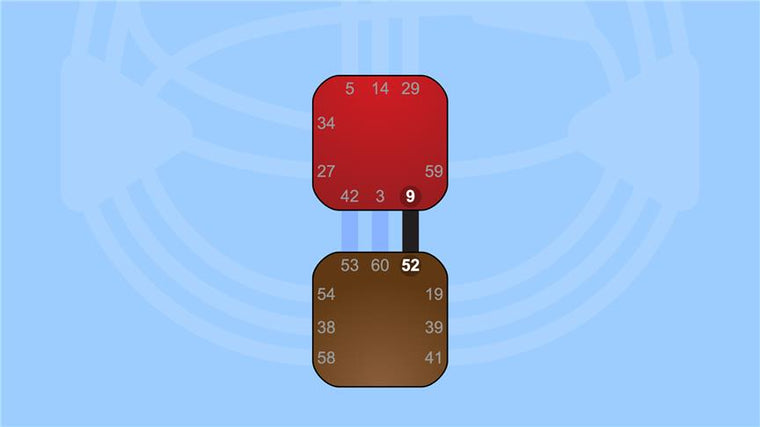
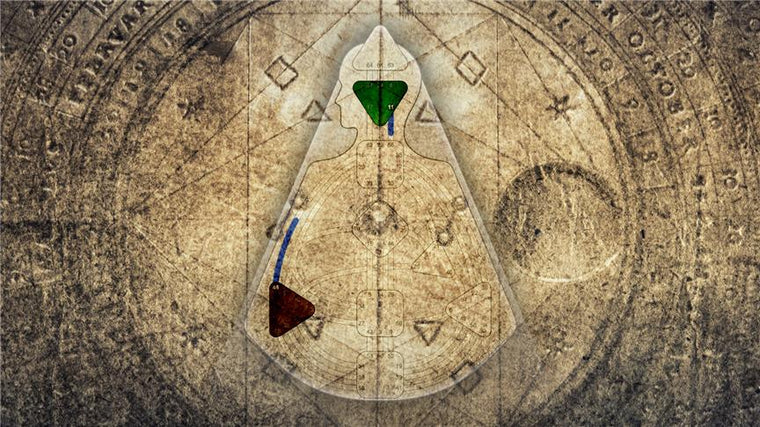
Now look at the channels, because this is where King's design gets remarkable. He carries an extraordinary concentration of Integration Channels, the group of four channels that form the backbone of individuation, of becoming and living as oneself. Most people have one of these, maybe two. King has all four: the Channel of Charisma (20-34), the Channel of Power (34-57), the Channel of Awakening (20-10), and the Channel of Perfected Form (10-57). On top of this, he has the Channel of Exploration (10-34) from the Centering Circuit and the Channel of the Brainwave (20-57) from the Knowing Circuit. The result is a dense, interlocking network between the Throat, Sacral, G Center, and Spleen, all part of one continuous definition.

Stephen King Image Source: Leemage/Corbis via Getty Images
The Channel of Charisma (20-34)
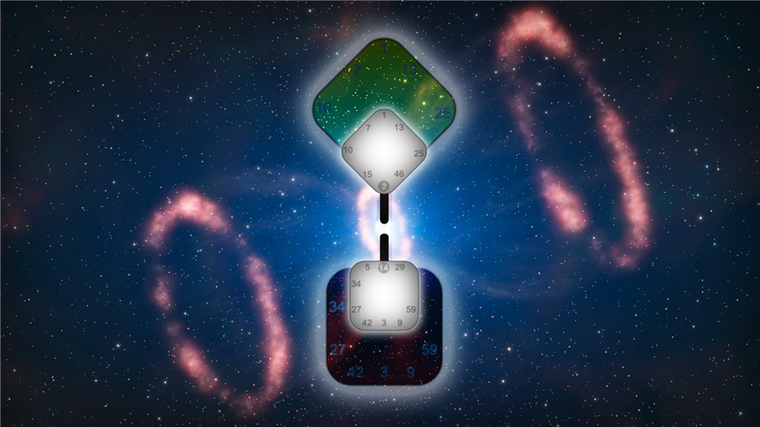
The Channel of Charisma connects King's Sacral motor directly to the Throat. This is the manifesting power in Manifesting Generator made literal, awareness becoming deed, life force becoming expression. The keynote is "a design where awareness must become deed," and in King's case the deed is writing. This channel gives an urge to be continually busy and the energy to sustain that busyness over long periods. King has said he writes two thousand words a day, every day, including holidays. That is the 20-34 at work. When this channel operates correctly, when the busyness is rooted in response rather than compulsion, the activity itself becomes charismatic. People watch King work, read about his process, and feel inspired not by what he says about writing but by the sheer fact of his sustained output. That is true charisma in the Human Design sense: not charm or personality, but the magnetic quality of someone whose life force is visibly and correctly engaged. When it is not functioning correctly, when busyness replaces purpose, you get the books even King admits he doesn't remember writing, the output that kept the machine running without the machine being pointed at anything the body actually chose.
The Channel of Power (34-57)
Paired with the Channel of Charisma is the Channel of Power, running from the Sacral to the Spleen, raw life force meeting moment-to-moment intuitive awareness. This is the archetype of survival through instinct. People with this channel have a potentially perfected capacity for staying alive and staying well, as long as they trust their spontaneous responses rather than what they think is good for them. The 34-57 is not intellectual. It is animal. It operates below thought, reacting to what is happening right now with speed and clarity. King's repeated descriptions of writing as something the body does, not the mind, characters surprising him, plots developing without outlines, the sense that the story knows where it's going even when he doesn't, that is the 34-57 in action. The Splenic intuition moves faster than conscious thought. It assesses, it adjusts, it keeps the organism alive and moving. His best horror isn't intellectual. It's visceral. It comes from a body-level knowing about danger that the Spleen provides and the Sacral empowers. The years of addiction represent what happens when this channel is overridden by something else, when a substance dulls the Splenic awareness and the Sacral motor keeps running without its survival guide. When he got sober in the late 1980s, when he started listening to what was actually good for him rather than what he thought was good for him, the 34-57 could begin to function the way it was designed to. The near-fatal accident a decade later, in 1999, reads from this same angle like the Splenic system demanding his full attention once more, a brutal reminder from the body he had spent years relearning how to trust.
The Channel of Exploration (10-34)
The Channel of Exploration connects the G Center to the Sacral, identity to life force, self to power. Its keynote is "following one's convictions." This is the channel of finding what you truly love to do and then doing it with such authenticity that others are empowered by the example. King followed his convictions in the face of decades of literary snobbery. He chose horror and suspense when the literary establishment treated those genres as disposable. He kept writing about blue-collar Americans in small towns when the publishing world rewarded metropolitan sophistication. He refused to pretend he was something other than what he was. The G Center provides the identity and direction, this is who I am, this is what I stand for, and the Sacral provides the raw creative power to back it up, day after day, year after year. The empowerment this channel carries is not something King does on purpose. He doesn't set out to inspire other writers or readers to trust their own instincts. He does it by being visibly, unmistakably himself in his work. Every aspiring writer who has read "On Writing" and felt permission to just do the work, without pretension, has experienced King's 10-34 in action. The channel also carries a warning: when the mind takes over and starts controlling behavior instead of letting the Sacral respond, the same conviction can look rigid and self-centered in a way that pushes people away. King has had moments of this too, feuds, public statements that generated more heat than light. But over the long arc, the authenticity has won out.
The Channel of Awakening (20-10)
The Channel of Awakening connects the G Center to the Throat, self-awareness expressed through speech and behavior. This is about being awake as yourself, moment to moment, and demonstrating that wakefulness through how you talk, how you act, how you show up. King with this channel has a quality you can observe in interviews going back decades: he says what he thinks, as himself, without performing a version of himself for the camera. Whether he is talking about politics, about addiction, about the craft of writing, or about what he had for breakfast, the voice is the same voice. There is no code-switching into a literary persona. This consistency of self-expression is the 20-10 at work. The channel gives a person the ability to speak for themselves no matter what is happening around them. King has exercised this in situations that ranged from receiving the National Book Award, where his acceptance speech directly challenged literary snobbery, to tweeting blunt political opinions that cost him readers. The 20-10 doesn't care about strategy. It cares about expressing what is true for the self, clearly enough that others can recognize the authenticity. When that clarity is present, it influences people. When it isn't, the words are just noise.
The Channel of Perfected Form (10-57)
The Channel of Perfected Form links the G Center to the Spleen, identity guided by intuition, behavior shaped by instinct rather than by planning or emotion. This is the design of survival through intuitive perfection of one's form. It describes a deep inner creative process, not managed by the mind, not governed by emotion, but arising spontaneously from intuition, that is about refining and perfecting the way one expresses one's uniqueness. People with this channel are often artists, architects, and designers. King is obviously an artist, but the 10-57 points to something more specific than just being creative. It points to the ongoing refinement of how he does what he does. Over sixty-plus years of writing, King has steadily perfected his particular form, not toward some external standard of literary excellence, but toward a more and more precise expression of his own way of seeing and rendering the world. The prose in his later work is leaner, more controlled, more exact than the early books. The characterization has deepened. The structural choices are bolder. This is not the result of taking workshops or following trends. It is the 10-57 doing what it does, an instinct-driven process of perfecting the form, driven by the body's own sense of what is right, what is true, what is more fully itself. The channel also carries that quality of being self-absorbed in a way that is natural and necessary. King behind the closed door, immersed in the work, not available to the world while the work is happening, that is the 10-57's self-centered creative process operating exactly as designed. He has been remarkably unbothered by critical opinion throughout his career, for better and worse.
The Channel of the Brainwave (20-57)
The Channel of the Brainwave connects the Spleen to the Throat, penetrating intuitive awareness expressed spontaneously. This gives King an extremely keen intuition that can penetrate to the core of a situation and act on what it finds, instantly, without needing to think it over. This is a deep-seated survival intelligence, and it is fast. It works in the moment and enables an intuitive assessment of any situation on the spot. In King's fiction, this shows up as the uncanny accuracy of his psychological portraits, the way he can nail a character's motivations or a social dynamic in a single sentence that feels like it cuts through everything extraneous and gets to the bone. He knows how a small town works. He knows what a twelve-year-old boy is afraid of. He knows what a marriage sounds like when it's falling apart. This isn't research. It's intuitive recognition, expressed immediately through the Throat. The Brainwave also carries a mutative quality, the ability to share existential knowing and accumulated wisdom in a way that changes the people who are receptive to it. This is what "On Writing" does. This is what the best of his fiction does. Not instruct. Not explain. Cut to the core and share what is found there. The channel operates through the Knowing Circuit, which means it is individual in nature. It doesn't share in the collective sense of distributing information widely. It shares by being so distinctly itself that the people who need what it carries are transformed by contact with it.
The Channel of Inspiration (1-8)
The Channel of Inspiration connects the G Center to the Throat through the Knowing Circuit. This is the channel of the creative role model. It describes a person who is here to express their individuality in a way that is so unmistakably unique that it sets an example for others. The channel represents the art of expression itself. King's particular version of this is not subtle. He has always stood out. The subject matter, the prolific output, the refusal to write according to anyone else's idea of what serious fiction should look like, even the physical presence, tall, a little rumpled, plainspoken in a way that cuts against the polished author image. This channel requires that the expression come from a place of authenticity that is impervious to outside conditioning, and King's creative output has been remarkably resistant to the pressures that reshape most commercial writers over time. The literary establishment told him he wasn't serious. He kept writing what he wrote. Hollywood distorted his stories. He kept writing what he wrote. Critics dismissed horror as a genre. He kept writing what he wrote. That imperviousness is the 1-8 functioning. The channel also carries a condition: the creative contribution needs to be recognized and invited to have its full impact. King's early career shows this clearly. The talent was there, but until it was recognized, by Tabitha, by the editor who bought "Carrie," by the reading public that responded, the channel couldn't do its work. Once the recognition came, the impact was enormous, and the model he set of what a working writer could be has influenced generations of authors who came after him.
The Channel of the Alpha (31-7)
The Channel of the Alpha connects the Throat to the G Center. This is the channel of leadership, the design of someone who can point out a direction for the collective. This does not have to be formal leadership. It is about exercising influence within a community or a field. King has this, and you can see it operating in two distinct arenas. Within the world of popular fiction, he has been the dominant figure for half a century. His opinions about other writers, about the state of publishing, about what makes a story work, carry weight. When he endorses a younger writer, that writer's career changes. When he criticizes a trend in fiction, people pay attention. In the broader cultural and political sphere, King has increasingly used this channel's potential. His public statements on gun control, on political leadership, on social issues carry the force of someone whose influence was earned over decades, not assumed or imposed. The 31-7 requires being elected to a position of influence, not necessarily through a vote, but through the collective recognizing the person's capacity to represent their interests and point a direction. King was not appointed the spokesperson of American popular fiction or American cultural life. Readers and the broader public gave him that role by continuing to listen to what he had to say, by trusting his judgment, by looking to him when they wanted someone to articulate what they were feeling. That is the Alpha channel being recognized, not imposed.
The Channel of the Wavelength (48-16)
The Channel of the Wavelength runs from the Spleen to the Throat through the Logic Circuit, intuitive depth meeting the expression of skill. This is the channel of talent and mastery, the one that says: find something you care about, practice it relentlessly, and over time achieve a level of skill that transcends the pattern you started with. This is not natural genius in the sense of something that arrives fully formed. It is a process. It demands consistent effort, repeated practice, and the willingness to stay with a skill through all the stages where it is not yet good enough. King's own account of his development as a writer matches this channel precisely. The early stories that didn't work. The years of writing in a laundry room. The slow accumulation of technique through the physical act of putting words on paper every single day. He has said explicitly that talent is cheaper than table salt and that what separates the talented individual from the successful one is hard work. That is the 48-16 talking. The depth comes from the Splenic side, a well of intuitive knowledge about what is healthy, what has depth, what connects to something real. The skill comes from the Throat side, the ability to express, to articulate, to give form to what the intuition provides. Over time, the combination of depth and practice produces mastery that transcends its own patterns. King's best work does this. It follows the conventions of genre fiction and then, through the sheer accumulated mastery of the craft, exceeds them. The emotional precision of a book like "The Shining," the structural ambition of "It," the stripped-down perfection of "Misery," these are the products of a talent that was worked and reworked over years until it could do things that no amount of raw ability alone could accomplish.
The Channel of Structuring (43-23)
The Channel of Structuring connects the Ajna to the Throat, individual conceptual thinking expressed in words. This is "a design of individuality, from genius to freak." It describes a mind that thinks outside established frameworks and can conceptualize things in ways that are genuinely new. The thought process here can produce quantum leaps, insights that don't build incrementally on what came before but jump to something entirely different. King's innovation as a writer was exactly this kind of leap. Before "Carrie," horror fiction occupied a specific, relatively marginalized place in American publishing. What King did was not to improve horror fiction according to existing standards. He reconceptualized what it could be. He brought literary characterization, social realism, and the texture of ordinary American life into a genre that had mostly operated through atmosphere and shock. That is a 43-23 move. The idea didn't come from analyzing what was wrong with horror fiction and fixing it step by step. It came from seeing something nobody else was seeing and finding a way to express it. The channel also carries the genius-to-freak polarity. When the timing is right and the insight is communicated clearly, the impact can be enormous. When the timing is wrong or the communication is unclear, the result is alienation, being seen as strange, being misunderstood, being dismissed. King experienced both sides of this for decades. The literary establishment's long dismissal of his work as unserious was the freak side of the 43-23. The massive popular recognition and the eventual institutional acknowledgment, the National Book Foundation's Medal for Distinguished Contribution to American Letters in 2003, the inclusion in serious critical discourse, was the genius side. The channel requires that the unique perspective be recognized by others in order to have its full effect. For years, it wasn't. Then it was. Both outcomes are built into the same wiring.

Stephen King, a true (43-23)
What is striking about King's chart when you look at all of these channels together is the density of the Integration Channels. Four of them, Charisma (20-34), Power (34-57), Awakening (20-10), and Perfected Form (10-57), form the Integration group, which is the underlying structure for individuation. These are the channels that support the process of becoming and living as oneself. They are not about connecting to others or serving the collective. They are about self-empowerment, self-preservation, and empowering the individual nature and direction of the self. King has all four. That is a complete Integration. The energy flows in a closed loop, Sacral to Spleen to G Center to Throat and back, that sustains itself. This is part of why King has been able to maintain his identity and his creative direction so consistently over so many decades despite massive fame, massive criticism, near-death experiences, and the kinds of pressures that reshape most public figures beyond recognition. The Integration wiring holds. It keeps the self intact.
Add the Knowing Circuit channels, the Brainwave (20-57), Inspiration (1-8), and Structuring (43-23), and you get the mechanism for expressing that individuality outward. These are the channels through which King's unique way of seeing the world reaches other people and, when the timing is right, changes how they see things too. The Knowing Circuit is about empowerment through uniqueness. It doesn't share in the way the Collective circuits share. It mutates. It changes people not by giving them information but by showing them something they hadn't seen before.
Then layer in the two Collective Logic channels, the Alpha (31-7) and the Wavelength (48-16), and you see where King connects to the broader human community. These channels give him the ability to identify patterns, develop mastery through practice, exercise leadership within his field, and share what he has learned in ways that serve collective needs. Without these channels, King might have been just as talented and just as individual, but he would not have had the mechanism for sustained, recognized influence on the wider culture. The Logic channels ground his individuality in something the collective can use.
The picture that emerges is of a design built for exactly the life King has lived: the self-contained creative engine, the intuitive survival intelligence, the relentless refinement of craft, the willingness to follow convictions regardless of external reception, and the capacity to express a unique vision so clearly that it becomes a reference point for others.
Up to this point, we can see that Stephen King is a Manifesting Generator with Sacral Authority and a 6/2 Profile, a self-contained creative engine built almost entirely for individuation, whose relentless, response-driven output, intuitive survival instinct, and refusal to write as anyone but himself have made him, in his Role Model years, the living example of what a working writer actually looks like.
To learn more about the reading services Ryan provides, visit his IHDS professional profile here.

Ryan Hanna



































Teachings by Topic
Type & Strategy
Explore Ra Uru Hu's lectures by Human Design topic.

Basics for Beginners
Sale price$10.00
Are you new to Human Design, or looking for a solid understanding of the BodyGraph, its mechanics, and an overview of the Types and major Inner Authorities? This 1-hour introduction to the basics of Human De...
Generator and Manifesting Generator
Sale price$9.00
The type that is essential to the well-being of our species as a whole is the Generator, who represent around 70% of the human population (Half of which are pure Generators, the other half are Manifesting Ge...
The Way of the Generator
Sale price$57.00
Living our Design involves setting the mind and its Not-Self urgings aside, and relying instead on Strategy and Authority. It’s a process of learning to “surrender to the experiment”, as Ra puts it. That sur...

Fallen Angels
Sale price$9.00
The way of the Generator is everybody's way in the homogenized world while the planet is run by and dominated by the frustrated, enslaved spirit of Generators.
In order for Generators to be able to live acco...
Frustration or Satisfaction | RC8.10
Sale price$19.00
Generators represent almost 70% of the world’s population. As a vital source of productive energy, they generally have a great impact on everyone around them, making their awareness and well-being important ...

The Art of Reading Generators
Sale price$57.00
If you are interested in understanding Generators, either because you are one yourself or you want to learn about the dominant Type on this planet, this package is an excellent learning opportunity. The Art ...
Sex and the Generator
Sale price$19.00
The nature of sexuality varies greatly among the different Types. And the primary difference stems from the Sacral Center itself, which is the core and essence of what a Generator is.
Through response, the n...
Generator Transformation - The Color of Envelopment
Sale price$19.00
A detailed guide to the Generator aura and its unique relationship to each Type, this lecture explores the theme of conditioning through Color Transference and how varied this phenomenon is for Generators—of...
Projector
Sale price$9.00
Projectors are a non-energy Type and represent just over 20% of the population. As a relatively new form, they are only now beginning to come into their natural power and position. Join Ra as he discusses ho...

Projectors - A Clarion's Alert
Sale price$9.00
Projectors, your focused and penetrating aura is needed through invitation to take in knowledge bases and master the systems that organize and hold humanity together. You are needed as an enormous resource f...

The Art of Reading Projectors
Sale price$57.00
The Art of Reading Projectors is an invaluable audio experience for anyone wanting deeper insight into the Projector Aura Type. Ra takes us through six overviews of unique Projectors, each approximately 30 m...

Projector Empowerment 1 | Lectures
Sale price$47.00
Projectors have the potential to make tremendous contributions to those in their lives. By Design, Projectors are about the other. The insight and guidance they bring to others when they are in alignment wit...

Projector Empowerment 2 | Analysis
Sale price$67.00
Acknowledging how each Projector offers their unique guidance to the world can help empower their signature of success.
Projector Empowerment | Part II: Analysis focuses on Ra’s examination of individual Pro...
Projector Transformation - Color Transference Recognition
Sale price$19.00
This lecture dives into substructure, offering the practical value of understanding Personality Motivation and Perspective to Projector success. As the youngest Type historically, Projectors are on the rise,...

Manifestor
Sale price$9.00
Only about 9% of the population are Manifestors. As we move towards 2027, statistically there will be a real burst in the number of their births. This theme of the Manifestor and particularly how to raise Ma...

Manifestor Manifesto
Sale price$67.00
Do you remember the song, “It’s Not Easy Being Green”? The same could be said of the challenges of being a Manifestor. Manifestors currently account for 9% of the population — a small percentage, but with qu...

Manifestor Manifesto (eBook)
Sale price$49.00
This guide for Manifestors came out of a five-week program in which Ra informed Manifestors how to transform their lives and fully embrace their manifesting potential and gifts. Although this material was ex...

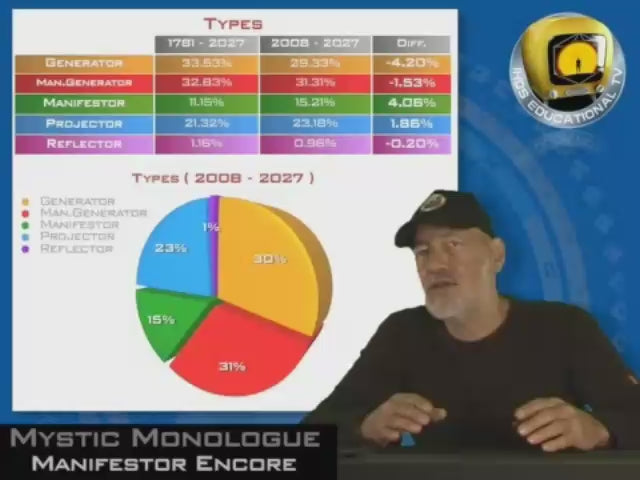
Manifestor Encore
Sale price$9.00
We are living in a time of transition, a time of change, a time of deep mutation. Everything about the nature of the world we live in, in a sense, can be understood from the current background frequency.
The...
Manifestor Transformation - Motivation and Impact
Sale price$19.00
This is a deeper exploration of the Manifestor process through aura and Color, and a guide to correctness for Manifestors and those who are impacted by them.
Historically, Manifestors were the alphas of huma...

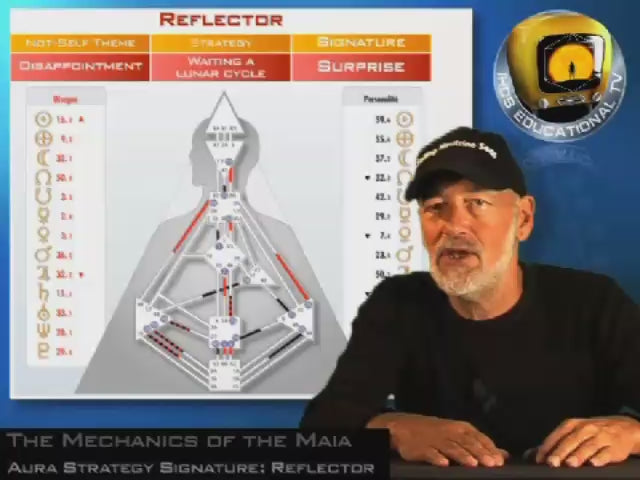
Reflector
Sale price$9.00
Reflectors represent around 1.3 or 1.4% of the human population, and as such are very different from the other Types.
A Reflector’s design is unique in that there is no definition in the Bodygraph, and there...
Reflector Reflections
Sale price$19.00
This is a practical guide to understanding the Reflector process and purpose along with new tools for aiding them in their experiment.
Reflectors are the rarest Type on the planet. WIthout any definition in ...

The Signature Question
Sale price$9.00
Signposts are something that allow you to have a way for your mind to measure. Signature is the positive side of the not-self theme of any Type. In The Signature Question, Ra explains the signposts for each ...

The Type Series: Strategy, Signature and Aura
Sale price$22.00
Regular price$36.00
Everyone has the potential for differentiation in this life.
What is actualized through Type—Generator (and Manifesting Generator), Manifestor, Projector, Reflector—is an extraordinary potential inherent in ...

Type Sexual Signatures
Sale price$19.00
We all have the potential for sexual fulfillment. However, most human beings don't enter into bonds correctly. With most of the population being made up of Generators, this leaves much of the world giving of...

You and the Other
Sale price$19.00
Type is one of the most influential aspects of the connection between two people. The inherent aura mechanics of each person in a partnership determine how each can relate to the other — or how the relations...

A Human Design Guide to Parenting
Sale price$19.00
Raising children can be challenging in many ways. Knowing what to do and how to approach them based on their uniqueness takes awareness of specific techniques that parents are often not equipped with.
Human ...

Raising Children According to Their Design
Sale price$17.00
For many of us, learning to live according to our Design is eye-opening. So many things change and make sense when our approaches and choices are informed by our unique Design. As we recognize more and more ...
Nurturing a Unique Being
Sale price$29.00
There are many perspectives on how children should be raised. How do we know which ones are best?
Everything from what to eat, how to create bedtime habits, and the best methods to educate are often taught i...

Design Concepts
Sale price$97.00
The Maia? The Monopole? And what is the G Center?
If you’re looking for an in-depth introductory teaching to Human Design, the 10-lesson Design Concepts course is a valuable guide to the foundational element...

Design Concepts (eBook)
Sale price$49.00
If you’re new to Human Design, this ebook will greatly expand your understanding of Human Design fundamentals. Taught by Ra Uru Hu, Design Concepts is an ideal opportunity for Human Design students and newco...

The Four Views
Sale price$99.00
Do you want to learn more about Human Design but don’t know where to begin? Knowing how to look at the BodyGraph is key to understanding foundational concepts to start your own experiment.
After years of tea...

The Four Views (eBook)
Sale price$49.00
Do you want to learn more about Human Design but don’t know where to begin? Knowing how to look at the BodyGraph is key to understanding foundational concepts to start your own experiment.
After years of tea...

Keynoting
Sale price$29.00
Looking at a Human Design chart can be overwhelming. There is simply so much information available. Some people see the Gates first, others the Channels, and some the Centers. But, what is the "correct" meth...
The History of the Types - An Evolutionary View | RA 2.10
Sale price$19.00
In 1994, Ra Uru Hu published a collection of graphics and keynotes he called “Rave Anatomy: Mapping the Mechanics of the Maia.” In 2007, he updated those graphics and recorded Rave Anatomy 1. The following y...

Beginner 1: Fundamentals of the Human Design System
Sale price$249.00
Regular price$411.00
Beginner 1 is your gateway into the original teachings of Ra Uru Hu. This immersive course delivers a carefully curated learning experience designed to ground you in the essential mechanics, language, and co...

Beginner 2: Type, Strategy, and Inner Authority
Sale price$249.00
Regular price$426.00
This course offers a clear and practical introduction to the four Human Design Types and the vital role of Strategy and Inner Authority. Through a curated series of Ra Uru Hu’s most accessible teachings, you...

Your Own Authority - A Beginner's Guide to Human Design
Sale price$22.00
Your Own Authority – A Beginner’s Guide to Human Design by Dharmen and Leela Swann Herbert - e-Book with full-color illustrations, 138 pages.
This beginner’s guide is a general introduction to the Human Desi...

Intermediate 3: Relationships, Sex, and Family
Sale price$349.00
Regular price$589.00
Relationships are one of the most powerful mirrors for awakening—and one of the most complex arenas of conditioning. In this course, Ra Uru Hu explores how Human Design reveals the true mechanics of how we b...

Ra's Guide to the Rave Chart
Sale price$29.00
Human Design BodyGraphs display an intricate synthesis of 26 activations across 9 Centers and 64 Gates. Is there a simple way to extract and benefit from the information being displayed without needing to kn...

Ra's Guide to the Movie
Sale price$39.00
Behind its practical aspects, Human Design has roots in deeply mystical concepts. When one is beginning to investigate those deeper aspects of the knowledge, one needs to study the foundational concepts to s...

The Ra Uru Hu Lectures | Ibiza 2009
Sale price$57.00
Regular price$76.00
This 4-part video collection explores how we navigate the changing mechanics of life and consciousness—uncovering the impact of shifting financial structures, the role of the Moon in shaping our experiences,...

The Just About You Series
Sale price$117.00
Regular price$172.00
The Just About You series brings together six essential lectures that explore the many ways Human Design shapes our lives and relationships. From uncovering the wisdom hidden in our shadows and understanding...

The Mystic Monologues Series
Sale price$77.00
Regular price$108.00
The Mystic Monologues invites you into the extraordinary journey of Ra Uru Hu, a skeptic turned mystic, whose life was transformed by a profound encounter with “The Voice” on January 3, 1987. This series of ...
Teachings by Theme
Decision-Making
Explore Ra Uru Hu's lectures categorized into life themes and goals.
Basics for Beginners
Sale price$10.00
Are you new to Human Design, or looking for a solid understanding of the BodyGraph, its mechanics, and an overview of the Types and major Inner Authorities? This 1-hour introduction to the basics of Human De...
Your Own Authority - A Beginner's Guide to Human Design
Sale price$22.00
Your Own Authority – A Beginner’s Guide to Human Design by Dharmen and Leela Swann Herbert - e-Book with full-color illustrations, 138 pages.
This beginner’s guide is a general introduction to the Human Desi...
Generator and Manifesting Generator
Sale price$9.00
The type that is essential to the well-being of our species as a whole is the Generator, who represent around 70% of the human population (Half of which are pure Generators, the other half are Manifesting Ge...
The Way of the Generator
Sale price$57.00
Living our Design involves setting the mind and its Not-Self urgings aside, and relying instead on Strategy and Authority. It’s a process of learning to “surrender to the experiment”, as Ra puts it. That sur...
Fallen Angels
Sale price$9.00
The way of the Generator is everybody's way in the homogenized world while the planet is run by and dominated by the frustrated, enslaved spirit of Generators.
In order for Generators to be able to live acco...
Frustration or Satisfaction | RC8.10
Sale price$19.00
Generators represent almost 70% of the world’s population. As a vital source of productive energy, they generally have a great impact on everyone around them, making their awareness and well-being important ...
Generator Transformation - The Color of Envelopment
Sale price$19.00
A detailed guide to the Generator aura and its unique relationship to each Type, this lecture explores the theme of conditioning through Color Transference and how varied this phenomenon is for Generators—of...
Projector
Sale price$9.00
Projectors are a non-energy Type and represent just over 20% of the population. As a relatively new form, they are only now beginning to come into their natural power and position. Join Ra as he discusses ho...
Projectors - A Clarion's Alert
Sale price$9.00
Projectors, your focused and penetrating aura is needed through invitation to take in knowledge bases and master the systems that organize and hold humanity together. You are needed as an enormous resource f...
Projector Transformation - Color Transference Recognition
Sale price$19.00
This lecture dives into substructure, offering the practical value of understanding Personality Motivation and Perspective to Projector success. As the youngest Type historically, Projectors are on the rise,...
Manifestor
Sale price$9.00
Only about 9% of the population are Manifestors. As we move towards 2027, statistically there will be a real burst in the number of their births. This theme of the Manifestor and particularly how to raise Ma...
Manifestor Manifesto
Sale price$67.00
Do you remember the song, “It’s Not Easy Being Green”? The same could be said of the challenges of being a Manifestor. Manifestors currently account for 9% of the population — a small percentage, but with qu...
Manifestor Manifesto (eBook)
Sale price$49.00
This guide for Manifestors came out of a five-week program in which Ra informed Manifestors how to transform their lives and fully embrace their manifesting potential and gifts. Although this material was ex...
Manifestor Encore
Sale price$9.00
We are living in a time of transition, a time of change, a time of deep mutation. Everything about the nature of the world we live in, in a sense, can be understood from the current background frequency.
The...
Manifestor Transformation - Motivation and Impact
Sale price$19.00
This is a deeper exploration of the Manifestor process through aura and Color, and a guide to correctness for Manifestors and those who are impacted by them.
Historically, Manifestors were the alphas of huma...
Reflector
Sale price$9.00
Reflectors represent around 1.3 or 1.4% of the human population, and as such are very different from the other Types.
A Reflector’s design is unique in that there is no definition in the Bodygraph, and there...
Reflector Reflections
Sale price$19.00
This is a practical guide to understanding the Reflector process and purpose along with new tools for aiding them in their experiment.
Reflectors are the rarest Type on the planet. WIthout any definition in ...
The Signature Question
Sale price$9.00
Signposts are something that allow you to have a way for your mind to measure. Signature is the positive side of the not-self theme of any Type. In The Signature Question, Ra explains the signposts for each ...
The Type Series: Strategy, Signature and Aura
Sale price$22.00
Regular price$36.00
Everyone has the potential for differentiation in this life.
What is actualized through Type—Generator (and Manifesting Generator), Manifestor, Projector, Reflector—is an extraordinary potential inherent in ...
Projector Empowerment 1 | Lectures
Sale price$47.00
Projectors have the potential to make tremendous contributions to those in their lives. By Design, Projectors are about the other. The insight and guidance they bring to others when they are in alignment wit...
Projector Empowerment 2 | Analysis
Sale price$67.00
Acknowledging how each Projector offers their unique guidance to the world can help empower their signature of success.
Projector Empowerment | Part II: Analysis focuses on Ra’s examination of individual Pro...
Solar Plexus Inner Authority
Sale price$9.00
If you have a defined Solar Plexus Center, this is automatically your decision making authority. It is the most common of all inner authorities, belonging to about 51% of humanity.
The Solar Plexus center op...
Sacral Inner Authority
Sale price$9.00
Sacral Authority belongs to non-emotional Generators, including Manifesting Generators, who have an undefined Solar Plexus Center. Correct Sacral Authority responds existentially, in each moment, to what li...
Splenic Inner Authority
Sale price$9.00
In order to have Splenic authority, you cannot have a defined Solar Plexus or Sacral Center but must have a defined Splenic Center.
Splenic authority operates only in the Now. It is not a motor and can be d...
Minor Authorities
Sale price$9.00
Ra looks at a group of rare authorities that represent about 4% of people. They can be quickly recognized as designs with at least one defined channel and an open Solar Plexus Center, an open Sacral Center a...

No Direct Inner Authority
Sale price$9.00
Definition is what leads us to see both Type and where the decision making Authority lies. In this lecture, Ra takes us through the two very different variations of those who have no direct inner authority: ...

The Inner Authority Series
Sale price$27.00
Regular price$45.00
Inner Authority is a transformative series where Ra Uru Hu guides you through the core mechanics of decision-making within the Human Design System. This series provides a comprehensive understanding of Inner...

Outer Authority - The Truth About Mind
Sale price$19.00
How much do you trust your mind when making decisions? Human Design states that giving the Mind this authority frequently leads to resistance and getting stuck in the themes of our open centers.
When using S...
The Just About You Series
Sale price$117.00
Regular price$172.00
The Just About You series brings together six essential lectures that explore the many ways Human Design shapes our lives and relationships. From uncovering the wisdom hidden in our shadows and understanding...
Design Concepts
Sale price$97.00
The Maia? The Monopole? And what is the G Center?
If you’re looking for an in-depth introductory teaching to Human Design, the 10-lesson Design Concepts course is a valuable guide to the foundational element...
Design Concepts (eBook)
Sale price$49.00
If you’re new to Human Design, this ebook will greatly expand your understanding of Human Design fundamentals. Taught by Ra Uru Hu, Design Concepts is an ideal opportunity for Human Design students and newco...
The Four Views
Sale price$99.00
Do you want to learn more about Human Design but don’t know where to begin? Knowing how to look at the BodyGraph is key to understanding foundational concepts to start your own experiment.
After years of tea...
The Four Views (eBook)
Sale price$49.00
Do you want to learn more about Human Design but don’t know where to begin? Knowing how to look at the BodyGraph is key to understanding foundational concepts to start your own experiment.
After years of tea...

The Human Design System: A Complete Guide Series
Sale price$197.00
Regular price$285.00
In this multi-lesson video series Ra Uru Hu offers a profound and comprehensive journey through the full architecture of Human Design. Spanning topics from the origin of consciousness and the mechanics of th...
Beginner 1: Fundamentals of the Human Design System
Sale price$249.00
Regular price$411.00
Beginner 1 is your gateway into the original teachings of Ra Uru Hu. This immersive course delivers a carefully curated learning experience designed to ground you in the essential mechanics, language, and co...
Beginner 2: Type, Strategy, and Inner Authority
Sale price$249.00
Regular price$426.00
This course offers a clear and practical introduction to the four Human Design Types and the vital role of Strategy and Inner Authority. Through a curated series of Ra Uru Hu’s most accessible teachings, you...

Beginner 3: The Not-Self and Conditioned Mind
Sale price$199.00
Regular price$307.00
Beginner 3 offers an essential introduction to one of the most transformative teachings in Human Design: the Not-Self. Through Ra Uru Hu’s foundational lectures and in-depth analysis, you’ll explore how ment...
The Mystic Monologues Series
Sale price$77.00
Regular price$108.00
The Mystic Monologues invites you into the extraordinary journey of Ra Uru Hu, a skeptic turned mystic, whose life was transformed by a profound encounter with “The Voice” on January 3, 1987. This series of ...