


















































Generate your free Human Design chart—personal, relationship, or transit—and start exploring your design with guided insights.
Part 3: Stephen King's Openness & Conditioning
Jul 7, 2026
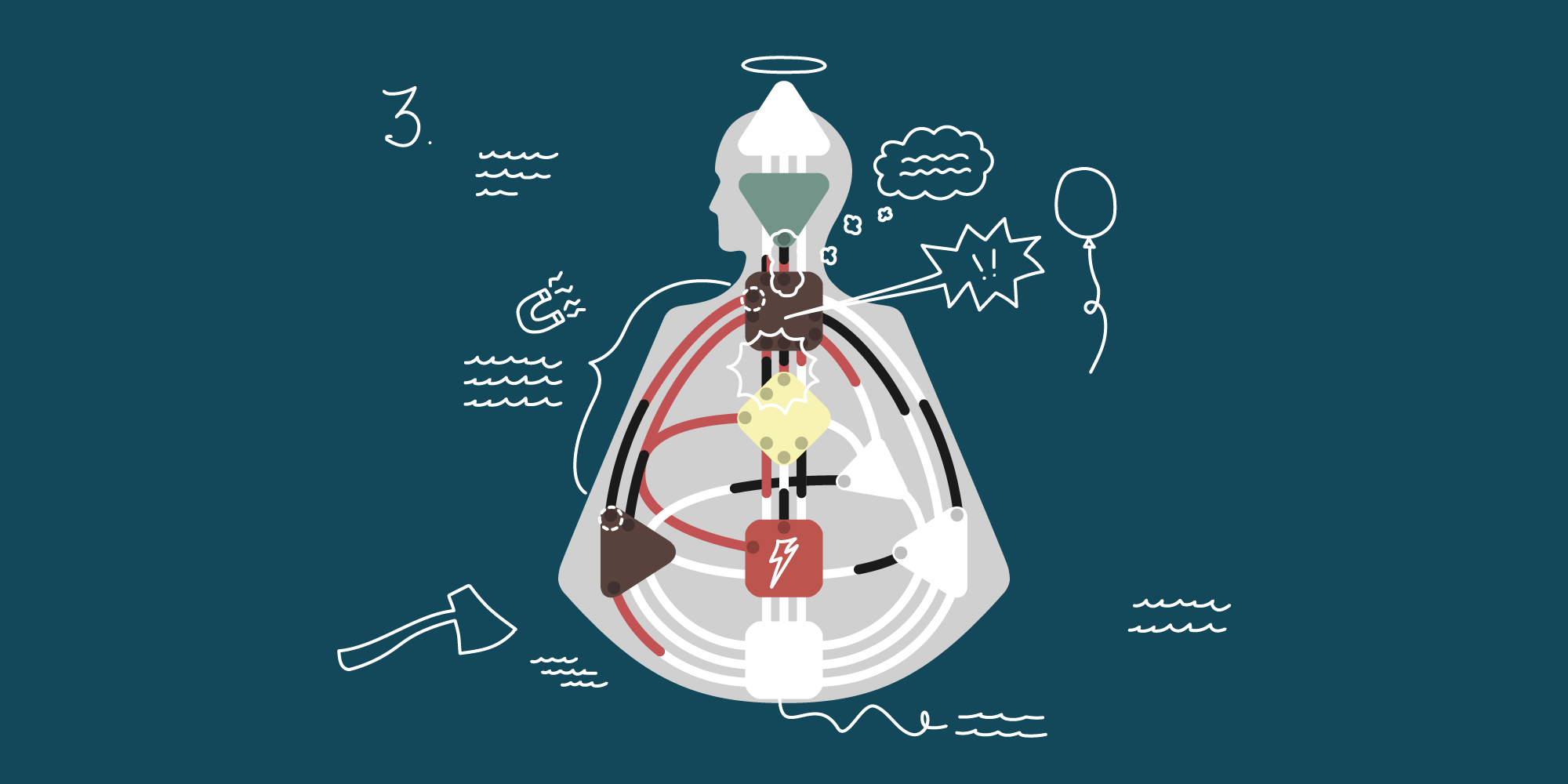
Keynoting Stephen King's Human Design - Part 3
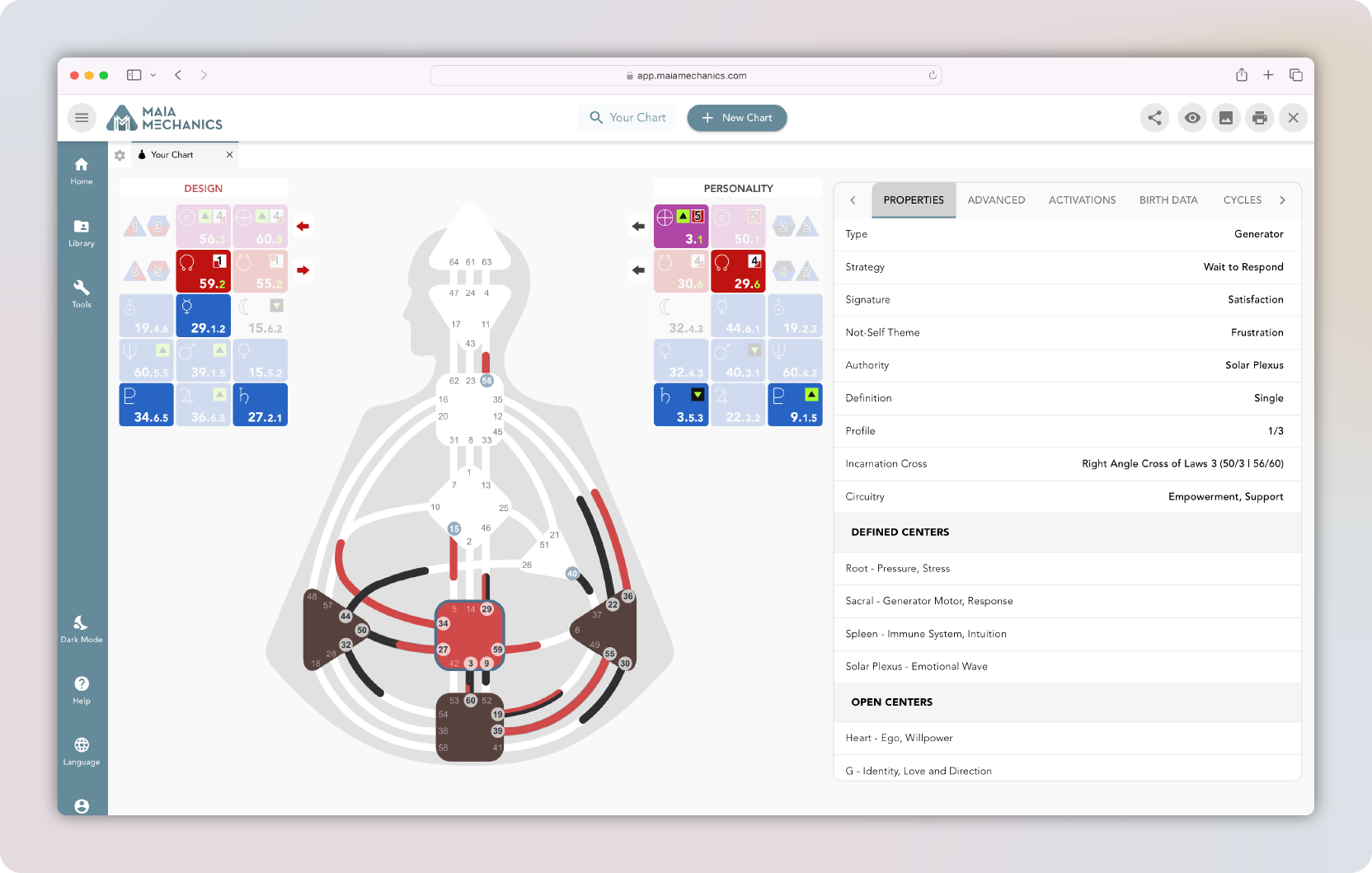
But all of that defined wiring, those channels, the Sacral motor, the Splenic awareness, the G Center identity, the Throat's capacity for expression, only tells half the story. The other half is what King does not have defined. The open and completely open centers in his chart are where he has been conditioned by the world his entire life, and they reveal dimensions of his personality and his struggles that the defined channels alone cannot explain.

Stephen King's BodyGraph Image Source: MaiaMechanics
His Open Solar Plexus Center
King has an open Solar Plexus Center. This means he does not generate his own consistent emotional wave. He is not, by design, an emotional being in the way that roughly half of humanity is. What he is, instead, is a receiver and amplifier of other people's emotions. He walks into a room and picks up whatever emotional weather is happening there. He sits across from someone in conversation and absorbs what that person is feeling, often at a higher intensity than the person generating it. The open Solar Plexus takes in emotion and turns up the volume.
This is one of the most powerful conditioning dynamics in the human experience, and in King's case, the evidence of it runs through almost everything he has done. Consider the fiction itself. King's ability to render emotional states, terror, grief, rage, the sick dread of knowing something terrible is about to happen, is often described as his greatest strength as a writer. That intensity does not come from King being a deeply emotional person in his own right. It comes from a lifetime of absorbing and amplifying the emotional states of everyone around him. He has been soaking up other people's feelings since childhood, his mother's anxiety, his students' frustrations, his readers' fears, his family's moods, and what comes out in the fiction is that accumulated, amplified material. He is, in effect, an emotional antenna with a massive amplifier attached, and his Sacral motor and Throat channels give him the means to pour all of that received emotional energy onto the page.
The shadow side of the open Solar Plexus is equally visible. The not-self theme for this center is avoiding confrontation and truth. A person with an open Solar Plexus learns early that emotional environments can be overwhelming, and the instinct is to keep the peace, not rock the boat, stay away from anything that might provoke an emotional eruption. King has talked about this dynamic in his own life, the years of not confronting his drinking, the way the people around him avoided confronting it too, the elaborate system of denial that kept everyone comfortable until it nearly killed him. That avoidance pattern is textbook open Solar Plexus conditioning. When King got sober and began speaking more directly, about addiction, about politics, about what he actually thought of other writers or cultural trends, he was, in Human Design terms, moving toward the healthy expression of this open center. The healthy open Solar Plexus does not avoid confrontation. It does not avoid truth. It absorbs the emotional environment without identifying with it, stays calm at the center of the storm, and says what needs to be said regardless of the emotional reaction it might provoke. King in his later decades has become known for exactly this quality. He says things that make people uncomfortable. He picks public fights he could easily avoid. That willingness to confront is the open Solar Plexus operating correctly, not generating emotion, but refusing to be intimidated by other people's emotions.
The other piece of this is that the open Solar Plexus, when it is functioning well, gives a person extraordinary emotional wisdom. Not emotional depth in the personal sense, but the ability to read the emotional states of others with precision and to know which emotions belong to whom. King's characterization depends on this. His villains are terrifying in large part because he understands exactly how fear works in other people, not because he walks around in a constant state of fear himself, but because he has been reading fear in others his entire life. His sympathetic characters feel real because he can pick up on the subtle emotional textures of ordinary people and render them accurately. This is the wisdom potential of the open Solar Plexus turned into art.
His Completely Open Root Center
Below the Solar Plexus, King carries a completely open Root Center. Not just undefined, completely open. No activations at all. No dormant gates to give even a loose framework for processing the energy that flows through it. The Root is the adrenal system. It is pressure itself, the biological drive to act, to move, to get things done, to respond to deadlines and demands and survival imperatives. When this center is completely open, the person has no inherent relationship to pressure. They do not know what pressure is. They do not recognize it when it arrives. They cannot use it in a consistent or predictable way.
This creates a specific pattern: oscillation between hyperactivity and total stillness, without understanding what triggers either state. The person with a completely open Root is entirely at the mercy of the pressure environment. When they are around driven, stressed, deadline-focused people, they absorb and amplify that pressure and can become frantic, unable to stop moving, unable to rest. When the pressure lifts, when they are alone, or when the environment goes quiet, they can collapse into inactivity so complete that it looks like paralysis.
King's writing life, looked at through this lens, makes a particular kind of sense. The periods of superhuman output, multiple books a year, screenplays, columns, short stories, all running simultaneously, were not just the Sacral motor doing its thing. They were also the completely open Root absorbing the pressure of the publishing industry, the expectations of editors and agents and fans, the sheer momentum of a commercial operation built around his name, and amplifying all of that into a pace that no person could sustain indefinitely. The flip side is there too. King has talked about the periods when he simply could not work, when the energy dried up and nothing came. Those are not writer's block in the romantic sense. Those are the completely open Root in its quiet phase, having discharged all the borrowed pressure with nothing coming in to replace it.
The completely open Root also carries the danger of not knowing when to hurry. This sounds paradoxical for a writer known for his speed, but speed and hurry are not the same thing. King's speed comes from the Sacral motor and the Manifesting Generator's natural pace. The Root issue is about being unable to calibrate urgency, not knowing which deadlines matter, which pressures deserve a response, which demands should be met with action and which should be let go. In the years of heaviest addiction, this inability to sort real pressure from borrowed pressure contributed to the overwork. Everything felt urgent. The body had no internal mechanism for saying, "This pressure is not mine. I can let it pass through." The sobriety and the accident and the aging process have, over the decades, taught King something about this. His pace in recent years is still productive by any standard, but it is more measured. There are gaps between books. There are projects he starts and sets aside. That is a person who has learned, through experience if not through explicit knowledge of his design, that not every pressure requires a response.
The wisdom potential of the completely open Root is significant. Without any thematic framework for pressure, a person with this configuration can develop an unusually clear perception of what is genuinely urgent and what is manufactured stress. They can see through the artificial deadlines, the performative busyness, the cultural obsession with productivity for its own sake, because none of that is natural to them. King's opinions about the writing life, his insistence that it should be regular but not frantic, his repeated advice to young writers to have a life outside the work, his skepticism about the hustle culture that surrounds modern publishing, reflect this wisdom. He knows, from decades of being conditioned by pressure that was never his own, what happens when you let other people's urgency run your life.
His Open Heart Center
King also carries an open Heart Center, also called the Ego Center. This is the center of willpower, self-worth, and the capacity to make and keep promises. When it is open, willpower is not a consistent resource. The person cannot reliably call upon it. They absorb the willful energy of people around them and can temporarily feel like they have the drive to push through anything, but when the conditioning lifts, the willpower goes with it.
This is one of the most counterintuitive aspects of King's chart, because from the outside, his career looks like a monument to willpower. Sixty-plus novels. Daily writing sessions maintained for decades. Coming back from near-fatal injury and addiction to keep producing. How can that not be willpower? It is not willpower. It is the Sacral motor. Those are different things. The Sacral provides life force energy, the raw capacity to do work, to engage with creative tasks, to sustain effort day after day. Willpower, in the Human Design sense, is the Ego Center's energy, the ability to commit, to promise, to exert control over circumstances through sheer force of will. King does not have that as a consistent resource. What he has is something that looks similar from the outside but operates completely differently on the inside. The Sacral responds. The Ego wills. King's productivity is response-driven, not will-driven. He does not muscle his way through books by promising himself he will finish. He sits down, the energy is there because the Sacral said yes, and the work gets done. When the energy is not there, forcing it through willpower would be borrowing someone else's fuel, and it would not last.
The not-self theme of the open Heart Center is feeling unworthy and undervalued. The question it asks is: do I think I have something to prove? King's entire relationship with the literary establishment can be read through this lens. For decades, he was the most commercially successful novelist in America and also one of the most critically dismissed. The literary world treated him as a hack, a genre writer, someone whose popularity was evidence of his lack of seriousness. King responded to this dismissal in ways that reveal the open Heart Center's conditioning. He talked about it constantly. He brought it up in interviews unprompted. He made it a theme of his National Book Award acceptance speech. He was, for years, visibly bothered by the sense that the establishment did not value him.
A person with a defined Heart Center might have shrugged this off. Their self-worth would have been internally generated, consistent, not dependent on external validation. But King's self-worth, energetically speaking, was open to conditioning. When he was around people who valued him, his readers, his family, his peers in the horror and thriller world, the worth was there. When he was around people who dismissed him, literary critics, prize committees, academics, the worth wavered. The energy of those encounters amplified his sense of having something to prove, and he responded by working harder, producing more, trying to demonstrate through sheer volume and ambition that he deserved recognition. That is classic open Heart Center behavior, overachieving to compensate for an inconsistent sense of worth.
The healthy expression of the open Heart Center is having nothing to prove. It is the realization that worth is not something that needs to be earned through willpower and promises and competitive striving. King has moved significantly toward this in his later years. He no longer seems to care much about what the literary world thinks of him. He writes what he wants. He praises other writers generously without positioning himself in competition with them. He has described, in various interviews, a kind of peace with his own place in the literary landscape that was not available to him in his forties or fifties. That peace is the open Heart Center settling into wisdom, the accumulated understanding, gathered from decades of absorbing other people's willful energy, of who is genuinely capable of committing and delivering and who is performing confidence they do not actually possess.
His Completely Open Head Center
The fourth open center in King's chart is the most unusual: a completely open Head Center. Like the Root, this center has no activations at all. No gates, no themes, no framework for processing the mental pressure that flows into it from the outside world. The Head Center is about inspiration, about the pressure to think, to make sense of things, to find answers. When it is completely open, the person has no fixed relationship to any of these things. They do not know, in a reliable way, what is interesting to them. They do not have a consistent mental theme. They are open to thinking about anything and everything, without a filter to distinguish what matters from what does not.
This sounds like it should be a disability for a writer, but it functions as something closer to a superpower, provided the person does not try to use the Head Center to make decisions. King has never been a writer who works from ideas. He has said this explicitly, many times. He does not start with a theme or a concept or an intellectual framework. He starts with a situation, an image, a what-if that the Sacral responds to, and then follows where the energy takes him. The Head Center is not driving the bus. It is along for the ride. And because it is completely open, it can go anywhere. There is no intellectual predisposition filtering out certain kinds of thought or privileging certain kinds of inquiry. King can write about small-town Maine and about the nature of evil and about marital breakdown and about interdimensional cosmic horror and about prison and about a dog and about the Kennedy assassination and about cell phones turning people into zombies, and none of these topics are more natural to him than any other. They all arrived from outside. They all passed through a mind with no fixed agenda. The ones that stuck were the ones the Sacral responded to. The rest passed through and were forgotten.
The completely open Head Center also explains something about King's public intellectual life, or rather, the relative absence of one. Unlike many writers of his stature, King has never been particularly interested in playing the public intellectual. He does not write essays about the nature of fiction or the state of the novel. He does not have a developed aesthetic philosophy that he articulates in interviews. When asked about such things, he tends to give plain, practical answers that deflect the intellectual framing. This is not anti-intellectualism. It is a completely open Head Center that does not have a fixed theme to hold on to, and so does not pretend to have one. What he can do, and does brilliantly, is recognize when other people are using their minds well and when they are not. That is the wisdom potential of the completely open Head Center. After a lifetime of absorbing everyone else's mental pressure without having a framework of his own, King has developed an extremely fine sense of who is thinking clearly and who is generating noise. His recommendations of other writers, his criticisms of political figures, his assessments of cultural trends carry weight not because he has a superior intellectual framework but because he has spent a lifetime watching minds operate from a position of total openness, and he knows the difference between genuine insight and performance.

King doing what he does best, scaring people. Image Source: Reddit
In Summary
Taken together, these four open centers, Solar Plexus, Root, Heart, and Head, form a specific pattern of vulnerability and potential wisdom that complements the defined channels. The defined channels give King his creative engine, his identity, his survival intelligence, his capacity for expression. The open centers give him his sensitivity to the emotional, pressurized, competitive, and mentally chaotic world around him. The fiction works because both sides are operating. The defined channels produce the work. The open centers provide the raw material, the absorbed emotions, the borrowed urgency, the amplified sense of what is at stake, the indiscriminate openness to whatever the world throws into the mind. King's genius, if you want to call it that, is not in the defined wiring alone or the open centers alone. It is in the combination: a self-contained creative engine running on fuel gathered from a lifetime of being wide open to everything the human environment has to offer, and being unable to shut any of it out.
To learn more about the reading services Ryan provides, visit his IHDS professional profile here.

Ryan Hanna



























Teachings by Topic
Type & Strategy
Explore Ra Uru Hu's lectures by Human Design topic.

Basics for Beginners
Sale price$10.00
Are you new to Human Design, or looking for a solid understanding of the BodyGraph, its mechanics, and an overview of the Types and major Inner Authorities? This 1-hour introduction to the basics of Human De...
Generator and Manifesting Generator
Sale price$9.00
The type that is essential to the well-being of our species as a whole is the Generator, who represent around 70% of the human population (Half of which are pure Generators, the other half are Manifesting Ge...
The Way of the Generator
Sale price$57.00
Living our Design involves setting the mind and its Not-Self urgings aside, and relying instead on Strategy and Authority. It’s a process of learning to “surrender to the experiment”, as Ra puts it. That sur...

Fallen Angels
Sale price$9.00
The way of the Generator is everybody's way in the homogenized world while the planet is run by and dominated by the frustrated, enslaved spirit of Generators.
In order for Generators to be able to live acco...
Frustration or Satisfaction | RC8.10
Sale price$19.00
Generators represent almost 70% of the world’s population. As a vital source of productive energy, they generally have a great impact on everyone around them, making their awareness and well-being important ...

The Art of Reading Generators
Sale price$57.00
If you are interested in understanding Generators, either because you are one yourself or you want to learn about the dominant Type on this planet, this package is an excellent learning opportunity. The Art ...
Sex and the Generator
Sale price$19.00
The nature of sexuality varies greatly among the different Types. And the primary difference stems from the Sacral Center itself, which is the core and essence of what a Generator is.
Through response, the n...
Generator Transformation - The Color of Envelopment
Sale price$19.00
A detailed guide to the Generator aura and its unique relationship to each Type, this lecture explores the theme of conditioning through Color Transference and how varied this phenomenon is for Generators—of...
Projector
Sale price$9.00
Projectors are a non-energy Type and represent just over 20% of the population. As a relatively new form, they are only now beginning to come into their natural power and position. Join Ra as he discusses ho...
Projectors - A Clarion's Alert
Sale price$9.00
Projectors, your focused and penetrating aura is needed through invitation to take in knowledge bases and master the systems that organize and hold humanity together. You are needed as an enormous resource f...
The Art of Reading Projectors
Sale price$57.00
The Art of Reading Projectors is an invaluable audio experience for anyone wanting deeper insight into the Projector Aura Type. Ra takes us through six overviews of unique Projectors, each approximately 30 m...

Projector Empowerment 1 | Lectures
Sale price$47.00
Projectors have the potential to make tremendous contributions to those in their lives. By Design, Projectors are about the other. The insight and guidance they bring to others when they are in alignment wit...

Projector Empowerment 2 | Analysis
Sale price$67.00
Acknowledging how each Projector offers their unique guidance to the world can help empower their signature of success.
Projector Empowerment | Part II: Analysis focuses on Ra’s examination of individual Pro...
Projector Transformation - Color Transference Recognition
Sale price$19.00
This lecture dives into substructure, offering the practical value of understanding Personality Motivation and Perspective to Projector success. As the youngest Type historically, Projectors are on the rise,...
Manifestor
Sale price$9.00
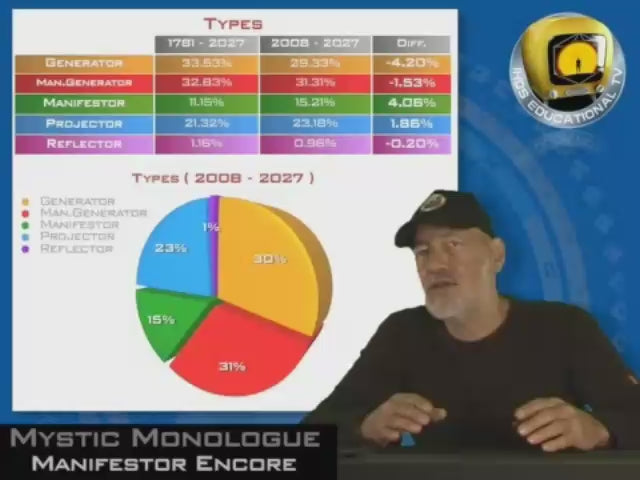
Only about 9% of the population are Manifestors. As we move towards 2027, statistically there will be a real burst in the number of their births. This theme of the Manifestor and particularly how to raise Ma...

Manifestor Manifesto
Sale price$67.00
Do you remember the song, “It’s Not Easy Being Green”? The same could be said of the challenges of being a Manifestor. Manifestors currently account for 9% of the population — a small percentage, but with qu...

Manifestor Manifesto (eBook)
Sale price$49.00
This guide for Manifestors came out of a five-week program in which Ra informed Manifestors how to transform their lives and fully embrace their manifesting potential and gifts. Although this material was ex...

Manifestor Encore
Sale price$9.00
We are living in a time of transition, a time of change, a time of deep mutation. Everything about the nature of the world we live in, in a sense, can be understood from the current background frequency.
The...
Manifestor Transformation - Motivation and Impact
Sale price$19.00
This is a deeper exploration of the Manifestor process through aura and Color, and a guide to correctness for Manifestors and those who are impacted by them.
Historically, Manifestors were the alphas of huma...
Reflector
Sale price$9.00
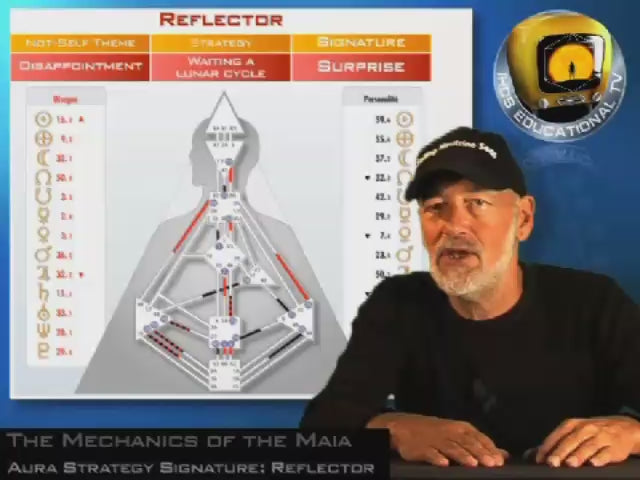
Reflectors represent around 1.3 or 1.4% of the human population, and as such are very different from the other Types.
A Reflector’s design is unique in that there is no definition in the Bodygraph, and there...
Reflector Reflections
Sale price$19.00
This is a practical guide to understanding the Reflector process and purpose along with new tools for aiding them in their experiment.
Reflectors are the rarest Type on the planet. WIthout any definition in ...
The Signature Question
Sale price$9.00
Signposts are something that allow you to have a way for your mind to measure. Signature is the positive side of the not-self theme of any Type. In The Signature Question, Ra explains the signposts for each ...

The Type Series: Strategy, Signature and Aura
Sale price$22.00
Regular price$36.00
Everyone has the potential for differentiation in this life.
What is actualized through Type—Generator (and Manifesting Generator), Manifestor, Projector, Reflector—is an extraordinary potential inherent in ...
Type Sexual Signatures
Sale price$19.00
We all have the potential for sexual fulfillment. However, most human beings don't enter into bonds correctly. With most of the population being made up of Generators, this leaves much of the world giving of...

You and the Other
Sale price$19.00
Type is one of the most influential aspects of the connection between two people. The inherent aura mechanics of each person in a partnership determine how each can relate to the other — or how the relations...

A Human Design Guide to Parenting
Sale price$19.00
Raising children can be challenging in many ways. Knowing what to do and how to approach them based on their uniqueness takes awareness of specific techniques that parents are often not equipped with.
Human ...

Raising Children According to Their Design
Sale price$17.00
For many of us, learning to live according to our Design is eye-opening. So many things change and make sense when our approaches and choices are informed by our unique Design. As we recognize more and more ...
Nurturing a Unique Being
Sale price$29.00
There are many perspectives on how children should be raised. How do we know which ones are best?
Everything from what to eat, how to create bedtime habits, and the best methods to educate are often taught i...

Design Concepts
Sale price$97.00
The Maia? The Monopole? And what is the G Center?
If you’re looking for an in-depth introductory teaching to Human Design, the 10-lesson Design Concepts course is a valuable guide to the foundational element...

Design Concepts (eBook)
Sale price$49.00
If you’re new to Human Design, this ebook will greatly expand your understanding of Human Design fundamentals. Taught by Ra Uru Hu, Design Concepts is an ideal opportunity for Human Design students and newco...

The Four Views
Sale price$99.00
Do you want to learn more about Human Design but don’t know where to begin? Knowing how to look at the BodyGraph is key to understanding foundational concepts to start your own experiment.
After years of tea...

The Four Views (eBook)
Sale price$49.00
Do you want to learn more about Human Design but don’t know where to begin? Knowing how to look at the BodyGraph is key to understanding foundational concepts to start your own experiment.
After years of tea...
Keynoting
Sale price$29.00
Looking at a Human Design chart can be overwhelming. There is simply so much information available. Some people see the Gates first, others the Channels, and some the Centers. But, what is the "correct" meth...
The History of the Types - An Evolutionary View | RA 2.10
Sale price$19.00
In 1994, Ra Uru Hu published a collection of graphics and keynotes he called “Rave Anatomy: Mapping the Mechanics of the Maia.” In 2007, he updated those graphics and recorded Rave Anatomy 1. The following y...

Beginner 1: Fundamentals of the Human Design System
Sale price$249.00
Regular price$411.00
Beginner 1 is your gateway into the original teachings of Ra Uru Hu. This immersive course delivers a carefully curated learning experience designed to ground you in the essential mechanics, language, and co...

Beginner 2: Type, Strategy, and Inner Authority
Sale price$249.00
Regular price$426.00
This course offers a clear and practical introduction to the four Human Design Types and the vital role of Strategy and Inner Authority. Through a curated series of Ra Uru Hu’s most accessible teachings, you...

Your Own Authority - A Beginner's Guide to Human Design
Sale price$22.00
Your Own Authority – A Beginner’s Guide to Human Design by Dharmen and Leela Swann Herbert - e-Book with full-color illustrations, 138 pages.
This beginner’s guide is a general introduction to the Human Desi...

Intermediate 3: Relationships, Sex, and Family
Sale price$349.00
Regular price$589.00
Relationships are one of the most powerful mirrors for awakening—and one of the most complex arenas of conditioning. In this course, Ra Uru Hu explores how Human Design reveals the true mechanics of how we b...
Ra's Guide to the Rave Chart
Sale price$29.00
Human Design BodyGraphs display an intricate synthesis of 26 activations across 9 Centers and 64 Gates. Is there a simple way to extract and benefit from the information being displayed without needing to kn...

Ra's Guide to the Movie
Sale price$39.00
Behind its practical aspects, Human Design has roots in deeply mystical concepts. When one is beginning to investigate those deeper aspects of the knowledge, one needs to study the foundational concepts to s...

The Ra Uru Hu Lectures | Ibiza 2009
Sale price$57.00
Regular price$76.00
This 4-part video collection explores how we navigate the changing mechanics of life and consciousness—uncovering the impact of shifting financial structures, the role of the Moon in shaping our experiences,...

The Just About You Series
Sale price$117.00
Regular price$172.00
The Just About You series brings together six essential lectures that explore the many ways Human Design shapes our lives and relationships. From uncovering the wisdom hidden in our shadows and understanding...

The Mystic Monologues Series
Sale price$77.00
Regular price$108.00
The Mystic Monologues invites you into the extraordinary journey of Ra Uru Hu, a skeptic turned mystic, whose life was transformed by a profound encounter with “The Voice” on January 3, 1987. This series of ...
Teachings by Theme
Decision-Making
Explore Ra Uru Hu's lectures categorized into life themes and goals.
Basics for Beginners
Sale price$10.00
Are you new to Human Design, or looking for a solid understanding of the BodyGraph, its mechanics, and an overview of the Types and major Inner Authorities? This 1-hour introduction to the basics of Human De...
Your Own Authority - A Beginner's Guide to Human Design
Sale price$22.00
Your Own Authority – A Beginner’s Guide to Human Design by Dharmen and Leela Swann Herbert - e-Book with full-color illustrations, 138 pages.
This beginner’s guide is a general introduction to the Human Desi...
Generator and Manifesting Generator
Sale price$9.00
The type that is essential to the well-being of our species as a whole is the Generator, who represent around 70% of the human population (Half of which are pure Generators, the other half are Manifesting Ge...
The Way of the Generator
Sale price$57.00
Living our Design involves setting the mind and its Not-Self urgings aside, and relying instead on Strategy and Authority. It’s a process of learning to “surrender to the experiment”, as Ra puts it. That sur...
Fallen Angels
Sale price$9.00
The way of the Generator is everybody's way in the homogenized world while the planet is run by and dominated by the frustrated, enslaved spirit of Generators.
In order for Generators to be able to live acco...
Frustration or Satisfaction | RC8.10
Sale price$19.00
Generators represent almost 70% of the world’s population. As a vital source of productive energy, they generally have a great impact on everyone around them, making their awareness and well-being important ...
Generator Transformation - The Color of Envelopment
Sale price$19.00
A detailed guide to the Generator aura and its unique relationship to each Type, this lecture explores the theme of conditioning through Color Transference and how varied this phenomenon is for Generators—of...
Projector
Sale price$9.00
Projectors are a non-energy Type and represent just over 20% of the population. As a relatively new form, they are only now beginning to come into their natural power and position. Join Ra as he discusses ho...
Projectors - A Clarion's Alert
Sale price$9.00
Projectors, your focused and penetrating aura is needed through invitation to take in knowledge bases and master the systems that organize and hold humanity together. You are needed as an enormous resource f...
Projector Transformation - Color Transference Recognition
Sale price$19.00
This lecture dives into substructure, offering the practical value of understanding Personality Motivation and Perspective to Projector success. As the youngest Type historically, Projectors are on the rise,...
Manifestor
Sale price$9.00
Only about 9% of the population are Manifestors. As we move towards 2027, statistically there will be a real burst in the number of their births. This theme of the Manifestor and particularly how to raise Ma...
Manifestor Manifesto
Sale price$67.00
Do you remember the song, “It’s Not Easy Being Green”? The same could be said of the challenges of being a Manifestor. Manifestors currently account for 9% of the population — a small percentage, but with qu...
Manifestor Manifesto (eBook)
Sale price$49.00
This guide for Manifestors came out of a five-week program in which Ra informed Manifestors how to transform their lives and fully embrace their manifesting potential and gifts. Although this material was ex...
Manifestor Encore
Sale price$9.00
We are living in a time of transition, a time of change, a time of deep mutation. Everything about the nature of the world we live in, in a sense, can be understood from the current background frequency.
The...
Manifestor Transformation - Motivation and Impact
Sale price$19.00
This is a deeper exploration of the Manifestor process through aura and Color, and a guide to correctness for Manifestors and those who are impacted by them.
Historically, Manifestors were the alphas of huma...
Reflector
Sale price$9.00
Reflectors represent around 1.3 or 1.4% of the human population, and as such are very different from the other Types.
A Reflector’s design is unique in that there is no definition in the Bodygraph, and there...
Reflector Reflections
Sale price$19.00
This is a practical guide to understanding the Reflector process and purpose along with new tools for aiding them in their experiment.
Reflectors are the rarest Type on the planet. WIthout any definition in ...
The Signature Question
Sale price$9.00
Signposts are something that allow you to have a way for your mind to measure. Signature is the positive side of the not-self theme of any Type. In The Signature Question, Ra explains the signposts for each ...
The Type Series: Strategy, Signature and Aura
Sale price$22.00
Regular price$36.00
Everyone has the potential for differentiation in this life.
What is actualized through Type—Generator (and Manifesting Generator), Manifestor, Projector, Reflector—is an extraordinary potential inherent in ...
Projector Empowerment 1 | Lectures
Sale price$47.00
Projectors have the potential to make tremendous contributions to those in their lives. By Design, Projectors are about the other. The insight and guidance they bring to others when they are in alignment wit...
Projector Empowerment 2 | Analysis
Sale price$67.00
Acknowledging how each Projector offers their unique guidance to the world can help empower their signature of success.
Projector Empowerment | Part II: Analysis focuses on Ra’s examination of individual Pro...
Solar Plexus Inner Authority
Sale price$9.00
If you have a defined Solar Plexus Center, this is automatically your decision making authority. It is the most common of all inner authorities, belonging to about 51% of humanity.
The Solar Plexus center op...
Sacral Inner Authority
Sale price$9.00
Sacral Authority belongs to non-emotional Generators, including Manifesting Generators, who have an undefined Solar Plexus Center. Correct Sacral Authority responds existentially, in each moment, to what li...
Splenic Inner Authority
Sale price$9.00
In order to have Splenic authority, you cannot have a defined Solar Plexus or Sacral Center but must have a defined Splenic Center.
Splenic authority operates only in the Now. It is not a motor and can be d...
Minor Authorities
Sale price$9.00
Ra looks at a group of rare authorities that represent about 4% of people. They can be quickly recognized as designs with at least one defined channel and an open Solar Plexus Center, an open Sacral Center a...
No Direct Inner Authority
Sale price$9.00
Definition is what leads us to see both Type and where the decision making Authority lies. In this lecture, Ra takes us through the two very different variations of those who have no direct inner authority: ...

The Inner Authority Series
Sale price$27.00
Regular price$45.00
Inner Authority is a transformative series where Ra Uru Hu guides you through the core mechanics of decision-making within the Human Design System. This series provides a comprehensive understanding of Inner...
Outer Authority - The Truth About Mind
Sale price$19.00
How much do you trust your mind when making decisions? Human Design states that giving the Mind this authority frequently leads to resistance and getting stuck in the themes of our open centers.
When using S...
The Just About You Series
Sale price$117.00
Regular price$172.00
The Just About You series brings together six essential lectures that explore the many ways Human Design shapes our lives and relationships. From uncovering the wisdom hidden in our shadows and understanding...
Design Concepts
Sale price$97.00
The Maia? The Monopole? And what is the G Center?
If you’re looking for an in-depth introductory teaching to Human Design, the 10-lesson Design Concepts course is a valuable guide to the foundational element...
Design Concepts (eBook)
Sale price$49.00
If you’re new to Human Design, this ebook will greatly expand your understanding of Human Design fundamentals. Taught by Ra Uru Hu, Design Concepts is an ideal opportunity for Human Design students and newco...
The Four Views
Sale price$99.00
Do you want to learn more about Human Design but don’t know where to begin? Knowing how to look at the BodyGraph is key to understanding foundational concepts to start your own experiment.
After years of tea...
The Four Views (eBook)
Sale price$49.00
Do you want to learn more about Human Design but don’t know where to begin? Knowing how to look at the BodyGraph is key to understanding foundational concepts to start your own experiment.
After years of tea...

The Human Design System: A Complete Guide Series
Sale price$197.00
Regular price$285.00
In this multi-lesson video series Ra Uru Hu offers a profound and comprehensive journey through the full architecture of Human Design. Spanning topics from the origin of consciousness and the mechanics of th...
Beginner 1: Fundamentals of the Human Design System
Sale price$249.00
Regular price$411.00
Beginner 1 is your gateway into the original teachings of Ra Uru Hu. This immersive course delivers a carefully curated learning experience designed to ground you in the essential mechanics, language, and co...
Beginner 2: Type, Strategy, and Inner Authority
Sale price$249.00
Regular price$426.00
This course offers a clear and practical introduction to the four Human Design Types and the vital role of Strategy and Inner Authority. Through a curated series of Ra Uru Hu’s most accessible teachings, you...

Beginner 3: The Not-Self and Conditioned Mind
Sale price$199.00
Regular price$307.00
Beginner 3 offers an essential introduction to one of the most transformative teachings in Human Design: the Not-Self. Through Ra Uru Hu’s foundational lectures and in-depth analysis, you’ll explore how ment...
The Mystic Monologues Series
Sale price$77.00
Regular price$108.00
The Mystic Monologues invites you into the extraordinary journey of Ra Uru Hu, a skeptic turned mystic, whose life was transformed by a profound encounter with “The Voice” on January 3, 1987. This series of ...